
Is E20 and E85 Petrol Safe for Cars and Two-Wheelers? The Full Truth (2026)
If you ride a two-wheeler or drive a car in India, you have almost certainly heard the term E20 petrol
If you ride a two-wheeler or drive a car in India, you have almost certainly heard the term E20 petrol by now — and increasingly, E85 petrol too. Both are part of the government’s aggressive ethanol-blending push, and both have triggered a genuine wave of confusion and concern among everyday vehicle owners. The question on everyone’s mind is simple: is E20 and E85 petrol safe for cars and two-wheelers?
The honest answer is more layered than a simple yes or no. E20 is largely safe for modern vehicles, but the government’s rollout has left real gaps that owners deserve to understand. E85, meanwhile, is safe only for a small category of specially built vehicles. In this article, we explain exactly what E20 and E85 petrol are, break down the real safety picture for both cars and two-wheelers, examine what critics say the government has gotten wrong in its rollout, and look at how electric vehicles fit into this entire conversation.
What Is E20 Petrol?
E20 petrol is a fuel blend made of 80% petrol and 20% ethanol, with a minimum Research Octane Number (RON) of 95. Ethanol is a renewable biofuel produced mainly from sugarcane and maize. Since April 1, 2026, E20 has been mandated as the default petrol sold at virtually every fuel pump in India, as part of the government’s National Policy on Biofuels.
Notably, India actually hit its 20% ethanol blending target in 2025 — five years ahead of its original 2030 deadline. While this is being presented as a major policy success, the speed of the rollout is also at the centre of much of the criticism we will cover later in this article.
What Is E85 Petrol?
E85 petrol is a much higher ethanol blend — typically 85% ethanol and 15% petrol — designed exclusively for Flex-Fuel Vehicles (FFVs), which have specialised sensors and engine control systems that detect the ethanol ratio in the tank and adjust fuel delivery accordingly. E85 was formally launched in India in June 2026, with the government pricing it roughly ₹20 per litre cheaper than regular petrol at its first outlet.
Unlike E20, which works in any modern petrol engine, E85 absolutely requires a dedicated FFV. India’s flex-fuel ecosystem remains in its early stages, with the Maruti Suzuki WagonR Flex Fuel being the most prominent example showcased so far. Putting E85 in a normal petrol vehicle is genuinely unsafe and can cause real engine damage.
Is E20 Petrol Safe for Cars?
For cars manufactured from April 2023 onwards (BS6 Phase 2), the answer is a confident yes. These vehicles are built with ethanol-tolerant fuel system materials and corrosion inhibitors by regulation, and government-backed testing by ARAI, the Indian Institute of Petroleum, and Indian Oil R&D has shown no significant durability or power issues in compliant vehicles tested up to 1,00,000 km.
For older cars, the picture is genuinely more complicated — and this is where most of the public concern is concentrated. Real-world reports range widely: government estimates point to a modest 1-2% mileage drop in compatible vehicles, while independent tests on older, non-rated cars have shown far more dramatic results. One widely reported case involved a 10-year-old Maruti Suzuki Dzire showing a 35% mileage drop on E20 compared to regular petrol. Corrosion of rubber seals, fuel lines, and metal components remains a genuine long-term risk for vehicles not built with ethanol-tolerant materials.
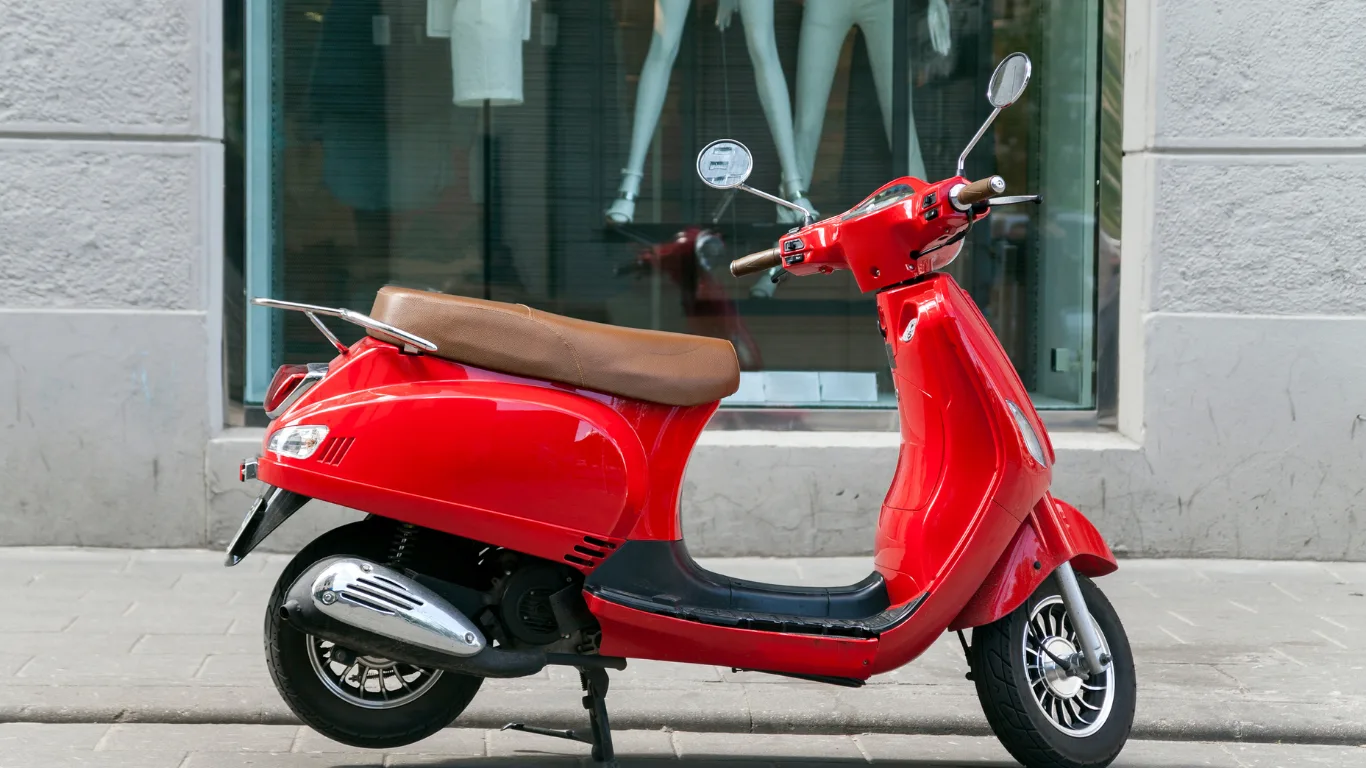
Is E20 Petrol Safe for Two-Wheelers? (Bikes and Scooters)
India is the largest two-wheeler market in the world, which makes this question especially important — and the honest picture for two-wheelers carries somewhat more risk than for cars.
All major two-wheeler manufacturers — Hero MotoCorp, Honda, TVS, Bajaj, Suzuki, and Royal Enfield — have confirmed that motorcycles and scooters manufactured from April 2023 onwards are fully E20 compliant, with no impact on engine life or warranty. Royal Enfield has gone a step further, confirming its full lineup has been E20-compliant since BS6 implementation in 2020, and is even working on upgrade kits for older models still on the road.
For older two-wheelers, however, the reported mileage drop is notably wider and less predictable than for cars: anywhere from 3% to as much as 20%, depending on the bike’s age, maintenance history, and riding style. Government estimates suggest a more modest 3-4% drop for two-wheelers originally calibrated for E10, but real-world rider accounts on platforms like Reddit have reported complaints of loss of engine compression, jerky performance, and increased highway vibration in older, non-compliant bikes — particularly carburetted models and vintage two-strokes, where ethanol deposits can clog fuel delivery systems entirely.
| Vehicle Type | Built After April 2023 | Built Before April 2023 |
| Cars (BS6 Phase 2) | ✅ Fully E20 compliant, no concerns | ⚠️ Generally safe short-term, 1-35% mileage drop reported, corrosion risk over time |
| Two-wheelers | ✅ Fully E20 compliant per manufacturer confirmation | ⚠️ 3-20% mileage drop reported, higher risk for carburetted/older models |
| Any vehicle | ❌ E85 unsafe unless explicitly a certified Flex-Fuel Vehicle (FFV) | |
To check compatibility, look for an “E20” marking near your fuel cap, consult your owner’s manual, or contact an authorised service centre with your Vehicle Identification Number (VIN).
Why Is the Government Pushing E20 and E85 So Hard?
The reasoning behind India’s ethanol push is straightforward and, on its own merits, genuinely sound. India imports over 85% of the crude oil it consumes, making the country’s economy highly exposed to volatile global oil prices. Ethanol, by contrast, is produced domestically from sugarcane and maize.
According to the Ministry of Petroleum and Natural Gas, ethanol blending has already saved India more than ₹1.4 lakh crore in fuel imports since 2014-15, cut CO₂ emissions by an estimated 700 lakh tonnes, and compensated farmers over ₹1.2 lakh crore under the ethanol supply programme — a meaningful boost to rural agricultural income. Ethanol also has a higher octane rating (100-105) than pure petrol (91), which can genuinely improve combustion smoothness in compatible engines.
These are real, substantial benefits. The genuine controversy is not about whether ethanol blending is a good long-term idea — it’s about how the rollout was executed, and that is where serious gaps emerge.
What Is the Government Missing? The Real Gaps in India’s E20 Rollout
This is the part of the story that most coverage glosses over. India’s E20 rollout has faced genuine, well-documented criticism — including a Public Interest Litigation (PIL) in the Supreme Court — centred on several specific failures:
1. No Ethanol-Free Petrol Option Anywhere Near Affordable
Unlike the United States, where standard E10 petrol coexists alongside pure, ethanol-free petrol at the same pumps, India has effectively removed plain petrol from the market. The only alternative — ethanol-free premium petrol sold as XP100, Speed 100, or Power100 — costs roughly ₹160 per litre, a price gap that makes it inaccessible for the average vehicle owner. A Supreme Court PIL filed by advocate Akshay Malhotra argued this violates the Right to Informed Consumer Choice under Article 19 and the Consumer Protection Act, 2019 — though the Supreme Court ultimately declined to intervene.
2. No Price Relief Despite Promising Cheaper Fuel
This is perhaps the most pointed criticism. Ethanol is cheaper to produce than crude-oil-derived petrol, and India’s own policy think tank, NITI Aayog, recommended in a 2021 report that consumer acceptance of higher ethanol blends would depend on pricing them lower than pure petrol, alongside tax breaks — closely following the model Brazil used successfully starting in the 1970s. These pricing recommendations were never implemented for E20. Indian consumers continue paying the same price per litre for a fuel blend that costs less to produce, with no portion of that savings passed back to them — even as some are simultaneously experiencing reduced mileage.
3. No Mandatory Ethanol Content Labelling at the Pump
The PIL specifically alleged that the Ministry of Consumer Affairs has not mandated clear labelling of ethanol content at fuel dispensing units, leaving consumers unaware of exactly what they are putting in their tanks. Mongabay India’s review of vehicle owner manuals found that several popular models — including the 2015 Maruti Celerio and 2018 Vitara Brezza — explicitly state a maximum of E10, with no clear in-pump warning system to stop incompatible owners from accidentally filling up with E20.
4. No Independent, Publicly Released Testing Data
Despite repeated public demand, the government has not released detailed, independent test data addressing real-world consumer complaints. In a Local Circles survey of 36,000 vehicle owners conducted in August 2025, nearly 66% opposed the national E20 rollout, with 44% explicitly demanding a withdrawal and 22% asking for more fuel choice at the pump. India’s Road Transport Minister has publicly challenged critics to “prove widespread damage” and attributed the backlash to a “petrol lobby” — a response many consumer advocates felt sidestepped the actual data transparency being requested.
5. No Clarity on Warranty and Insurance Liability
For vehicles not certified for E20, any engine damage linked to ethanol use may not be covered by manufacturer warranties or motor insurance policies, since using a non-recommended fuel can be classified as a policy violation. With no nationwide ethanol-free alternative readily available and no compensation mechanism in place, owners of older or incompatible vehicles are effectively left to absorb this risk alone.
Put simply: the strategic logic behind ethanol blending is sound, but the consumer-facing execution has skipped several steps that countries like Brazil took decades to get right — gradual rollout, price incentives, and clear public communication chief among them.
Is E85 Petrol Safe? A Stricter Answer
E85 carries a much simpler, stricter safety rule than E20: it is safe only in a genuine Flex-Fuel Vehicle, full stop. Unlike E20, where most BS6 Phase 2 vehicles are broadly compatible, E85-compatible does not follow automatically from E20-compatible. FFVs require fundamentally different fuel system materials — often stainless steel lines rather than rubber or aluminium — along with dedicated sensors and ECU calibration that detect the real-time ethanol ratio in the tank.
Putting E85 in a non-FFV vehicle can cause a dangerously lean fuel mixture, engine knocking, and accelerated component wear, because the engine has no way to compensate for ethanol’s significantly lower energy density at that concentration. As of 2026, very few production vehicles in India are certified FFVs, so E85 should remain strictly off-limits for the average car or bike owner until the ecosystem matures further.
How Do EV Cars and EV Bikes Fit Into This Picture?
Here is where the bigger strategic picture comes together. India’s government is not relying on ethanol blending alone to solve its oil-import problem — it is running electric vehicles and ethanol fuels as two parallel tracks of the same long-term mission.
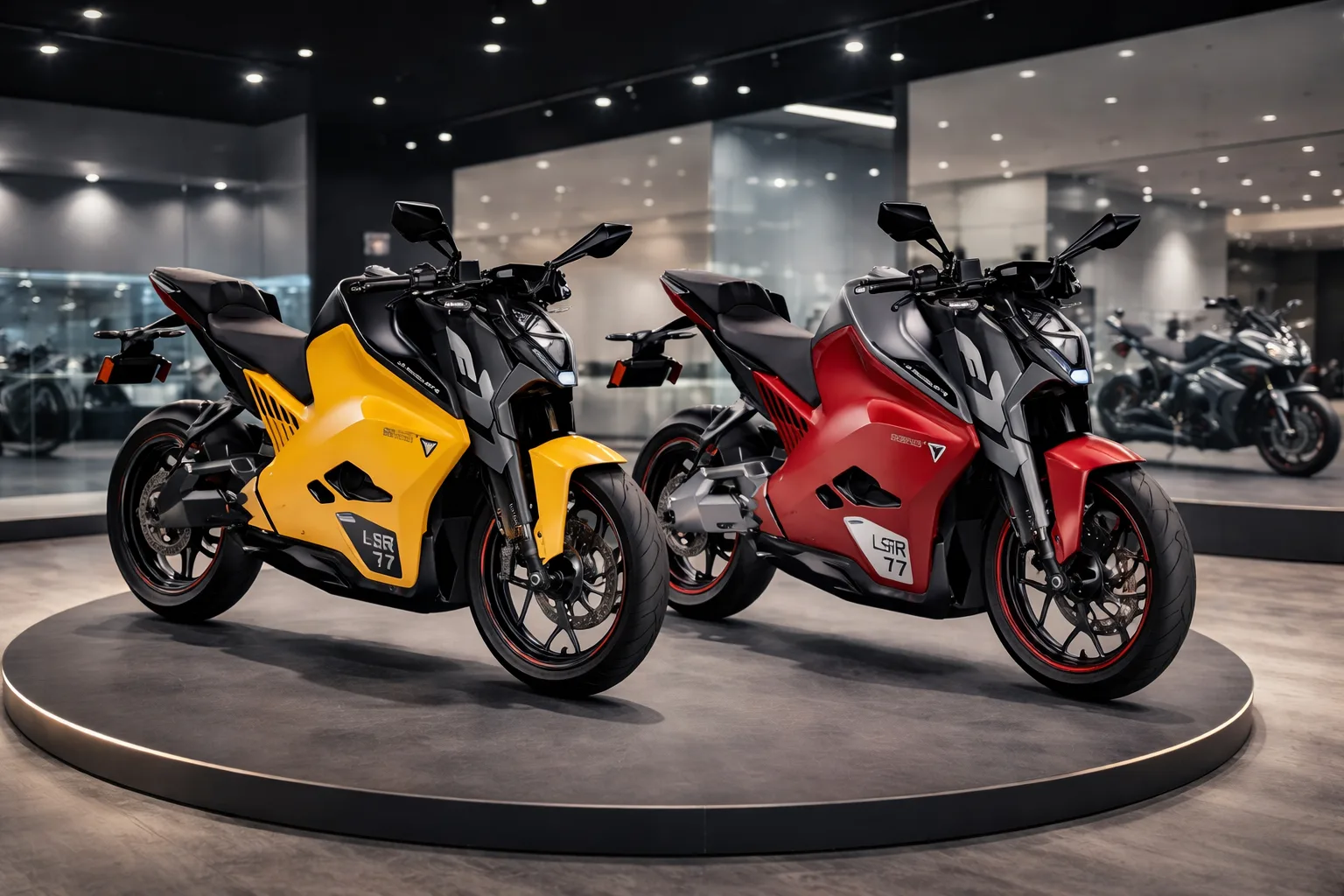
Electric vehicles produce zero tailpipe emissions and require no crude oil to operate, making them the cleanest long-term destination for India’s vehicle fleet. The government backs EV adoption through the PM E-DRIVE scheme (₹10,900 crore outlay), a concessional 5% GST on EVs versus 28-43% on petrol/diesel vehicles, and expanding charging infrastructure targets of over 72,000 new stations. Popular EV cars like the Tata Punch EV, Tata Nexon EV, and Mahindra BE 6 are now genuinely competitive on range, safety, and price. On the two-wheeler side, EV bikes and scooters from brands like Ola Electric, Ather, TVS, and Bajaj have grown rapidly, directly targeting the same daily commuter segment most affected by E20 mileage concerns.
But EVs alone cannot solve the problem fast enough. India has over 34 crore registered vehicles, the overwhelming majority of which run on petrol and will remain on the road for a decade or more. This is exactly why ethanol blending exists alongside the EV push — it reduces oil dependency across the existing fleet immediately, without requiring anyone to buy a new vehicle, while EVs handle the long-term transition for new purchases. NITI Aayog has even classified ethanol-based Flex-Fuel Vehicles as “zero-emission vehicles” for regulatory purposes, given their near-zero particulate matter output, placing E85-ready FFVs in a similar policy bracket to battery EVs.
For a consumer deciding what to do next, the honest comparison looks like this:
| Option | Upfront Cost | Running Cost | Best For |
| Stick with E20-compliant petrol vehicle | Low (already own it) | Moderate, ~₹7/km | Existing vehicle owners, short-term |
| Buy a new EV car/bike | Higher upfront, offset by 5% GST | Very low, ~₹1.2/km on home charging | New buyers, long-term savings |
| Wait for E85/FFV vehicles to mature | Uncertain, ecosystem still nascent | Potentially lower fuel cost, but reduced mileage | Early adopters, not yet mainstream |
Practical Advice: What Should You Actually Do?
- If your car or two-wheeler was made after April 2023: Use E20 with confidence. It is genuinely safe and manufacturer-backed.
- If your vehicle is older: Check your owner’s manual for ethanol limits, consider a quality ethanol-compatible fuel additive, and stick to your regular service schedule to catch corrosion or wear early.
- Never use E85 unless your vehicle is explicitly certified as a Flex-Fuel Vehicle — check for “FFV” or “Flex Fuel” badging, not just an E20 sticker.
- If you’re due for a vehicle upgrade, seriously weigh an EV. The running-cost gap over E20 petrol has only widened, and India’s charging infrastructure is expanding quickly.
- Document any suspected ethanol-related damage — service records and dated photos may matter if warranty or insurance disputes arise.
Frequently Asked Questions
Q1. Is E20 petrol safe for cars in India?
Yes, for cars manufactured from April 2023 onwards (BS6 Phase 2), which are built with ethanol-tolerant materials. Older cars are generally safe in the short term but face a higher risk of mileage reduction and gradual corrosion.
Q2. Is E20 petrol safe for two-wheelers?
Yes, for bikes and scooters manufactured after April 2023, confirmed by Hero MotoCorp, Honda, TVS, Bajaj, Suzuki, and Royal Enfield. Older or carburetted two-wheelers face a wider reported mileage drop, ranging from 3% to 20%.
Q3. What is E20 petrol made of?
E20 petrol is a blend of 80% petrol and 20% ethanol, a renewable biofuel produced mainly from sugarcane and maize, with a minimum octane rating of 95 RON.
Q4. What is E85 petrol made of?
E85 petrol is a blend of approximately 85% ethanol and 15% petrol, designed exclusively for Flex-Fuel Vehicles (FFVs) with specialised sensors and engine calibration.
Q5. Why doesn’t the government offer ethanol-free petrol at regular prices?
This is one of the most criticised gaps in the policy. India only offers ethanol-free petrol as a premium product (around ₹160/litre), unlike the US, which keeps ethanol-free petrol available alongside E10 at standard pumps. This has been challenged in a Supreme Court PIL on consumer choice grounds.
Q6. Did the government reduce fuel prices because ethanol is cheaper to produce?
No. Despite NITI Aayog’s own 2021 recommendation to price higher ethanol blends below pure petrol to build consumer trust, this was never implemented for E20. Consumers pay the same price per litre regardless of ethanol content.
Q7. Will E20 void my vehicle’s warranty?
For BS6-era vehicles, SIAM has confirmed manufacturers will generally honour warranties since E20 is now the nationwide standard. For older vehicles explicitly rated for E10 only, warranty coverage for ethanol-related damage may be excluded — confirm directly with your manufacturer.
Q8. How much does E20 reduce mileage in cars?
Government estimates suggest 1-2% in compliant vehicles, but real-world reports vary widely, with one independent test on a 10-year-old non-rated car showing a 35% mileage drop.
Q9. How much does E20 reduce mileage in two-wheelers?
Reports range from 3% to 20%, depending on the bike’s age, maintenance, and engine type, with carburetted and older models facing the highest variability.
Q10. Is there a Supreme Court case against the E20 policy?
Yes. A PIL filed by advocate Akshay Malhotra challenged the mandatory E20 rollout on consumer rights grounds, citing lack of ethanol-free alternatives, no fuel labelling, and potential vehicle damage without compensation. The Supreme Court declined to intervene in the case.
Q11. Can I use E85 in my E20-compatible vehicle?
No. E20 compatibility does not extend to E85. E85 requires entirely different fuel system materials and ECU calibration found only in certified Flex-Fuel Vehicles.
Q12. Are EVs a better option than dealing with E20 mileage concerns?
For new vehicle purchases, EVs offer substantially lower running costs (around ₹1.2/km on home charging versus ₹7/km for petrol) and avoid ethanol-related concerns entirely, backed by a 5% GST rate and government subsidies under PM E-DRIVE.
Q13. Are any production vehicles in India actually E85 compatible right now?
Very few. The Maruti Suzuki WagonR Flex Fuel has been showcased as an early example, but India’s flex-fuel vehicle ecosystem remains in a nascent stage as of 2026, with broader commercial availability still developing.
Q14. What should I do if I think E20 has damaged my older vehicle?
Document the issue with service records and dated evidence, consult your manufacturer’s authorised service centre, and check your insurance policy’s fuel-related exclusions before filing any claim, since non-compliant fuel use may not be covered.
Q15. Why is the government pushing E20 and E85 if it causes consumer pushback?
The core motivation is reducing India’s dependence on imported crude oil (over 85% of consumption), cutting emissions, and supporting domestic farmers through ethanol production — benefits estimated at over ₹1.4 lakh crore in saved fuel imports since 2014-15. Critics argue the goals are sound but the rollout speed and consumer communication have been poorly managed.
Final Verdict
E20 petrol is genuinely safe for the majority of modern cars and two-wheelers in India — particularly anything built from April 2023 onwards — but the government’s rollout has left real, well-documented gaps: no affordable ethanol-free alternative, no price relief despite ethanol being cheaper to produce, no mandatory pump labelling, and no independent public testing data to settle the ongoing consumer trust deficit. These are legitimate criticisms that deserve continued public pressure, regardless of how sound the underlying strategic goal is.
E85, meanwhile, remains strictly limited to certified Flex-Fuel Vehicles and should not be used by regular car or bike owners until India’s FFV ecosystem genuinely matures. And for anyone due for a vehicle upgrade, the rise of capable, affordable EV cars and EV bikes offers a way to sidestep the entire ethanol debate altogether — at a running cost that beats both E20 and E85 by a wide margin.
What’s your experience been with E20 petrol on your vehicle? Share it in the comments — your data point might help another reader make a more informed decision.
*This article reflects publicly available government data, manufacturer statements, and reported court proceedings as of June 2026. Always confirm fuel compatibility directly with your vehicle’s manufacturer.


0 Comments