
Nothing Phone 4b vs Nothing Phone 4a: Which Should You Buy?
Nothing has done something genuinely unusual with its 2026 smartphone lineup — it has launched a newer, more expensive phone
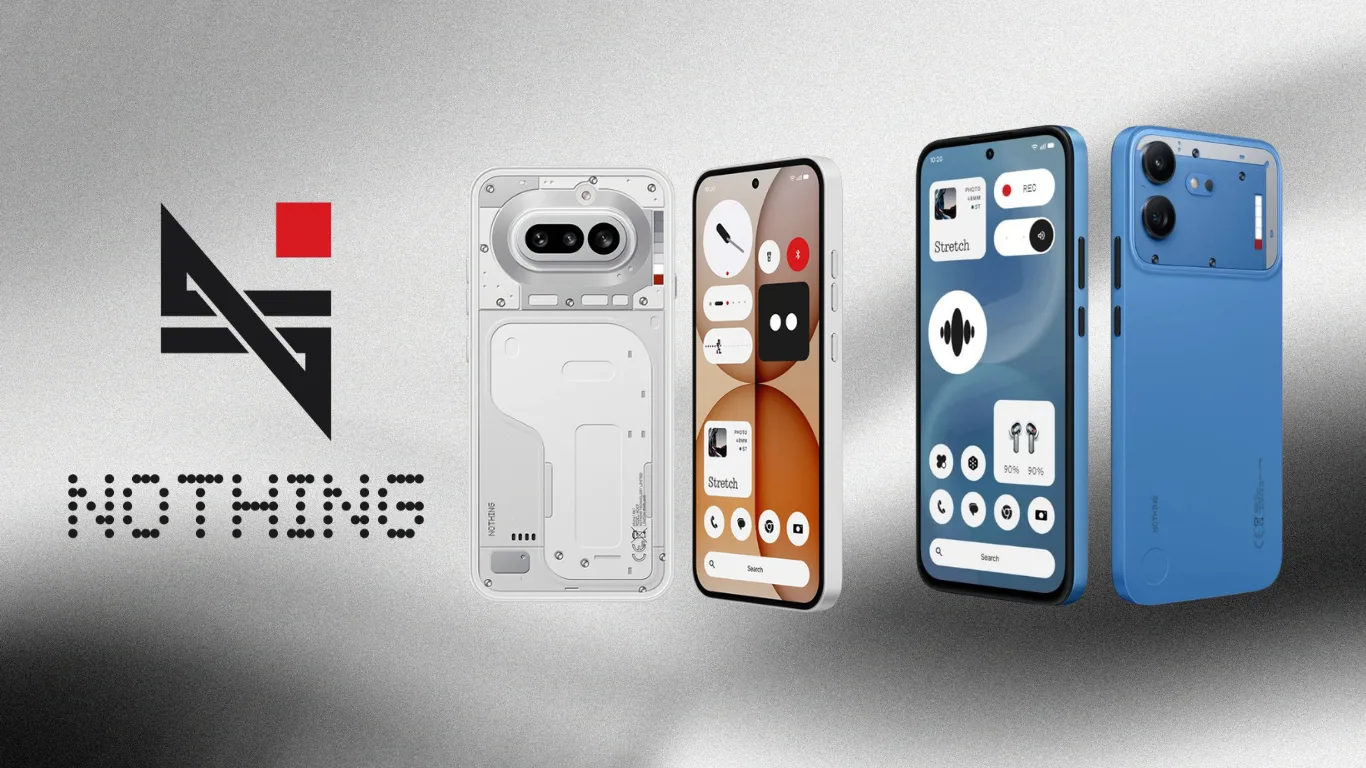
Nothing has done something genuinely unusual with its 2026 smartphone lineup — it has launched a newer, more expensive phone that is actually less powerful than the model it sits alongside. The Nothing Phone (4b), launched in July 2026, starts at ₹34,999 in India. The Nothing Phone (4a), launched earlier in March 2026, starts at ₹31,999. The newer phone costs more. But the older phone has a faster chip, a better camera, a brighter display, and faster charging.
This is not a mistake. It is a deliberate strategy — the Phone (4b) trades processing muscle and camera versatility for a much larger battery, a more vibrant new design language, and a lower global price that makes Nothing accessible in markets where the (4a)’s pricing felt stretched. But in India, where the (4b) actually costs more than the (4a), the choice becomes genuinely confusing. Which Nothing phone should you actually buy in 2026?
This article answers that question with a complete, honest, head-to-head comparison. We cover design, display, performance, cameras, battery and charging, software, price, and give you a clear verdict for every type of buyer. Both phones can be explored and purchased directly on Nothing India’s official website.
Nothing Phone 4b vs Nothing Phone 4a — Full Specs Comparison
| Specification | Nothing Phone (4b) | Nothing Phone (4a) |
| Launch Date | July 2026 | March 2026 |
| Starting Price India | ₹34,999 (8GB/128GB) | ₹31,999 (8GB/128GB) |
| Display | 6.77-inch Super AMOLED, 120Hz | 6.78-inch Flexible AMOLED, 144Hz, 3,000 nits |
| Chipset | Snapdragon 6 Gen 4 (2.3GHz) | Snapdragon 7s Gen 4 (2.7GHz) |
| RAM / Storage | 8GB / 128GB or 256GB | 8GB or 12GB / 128GB or 256GB |
| Main Camera | 50MP primary + 8MP ultrawide | 50MP primary + 50MP ultrawide + 50MP telephoto |
| Front Camera | 16MP | 32MP |
| Battery | 6,000mAh (India) / 5,200mAh (Global) | 5,400mAh |
| Charging | 33W wired | 50W wired |
| Glyph Interface | 4-zone Glyph Bar | 6-zone Glyph Interface |
| Water Resistance | IP64 | IP65 |
| Build | Polycarbonate unibody, vibrant colours | Glass rear, premium transparent finish |
| OS | Nothing OS 4.1 (Android 16) | Nothing OS 4.1 (Android 16) |
| Software Updates | 4 years OS + 5 years security | 4 years OS + 5 years security |
Design and Build Quality: Phone (4b) Gets Bolder, Phone (4a) Stays Premium
Both phones wear Nothing’s signature transparent-inspired design language — the brand’s most distinctive identity marker in a sea of identical-looking Android slabs. But they interpret that identity very differently in 2026.
The Nothing Phone (4a) preserves the original formula that made Nothing famous: a glass rear panel with transparent accents, a 6-zone Glyph Interface with full LED customisation, and a premium finish that makes the phone feel like it costs significantly more than it does. The IP65 rating means it can handle rain and splashes with confidence. The Phone (4a) simply feels more premium without being dramatically more expensive — a judgement shared widely across tech media that has reviewed both phones.
The Nothing Phone (4b) takes a different direction. It ditches the glass rear for a polycarbonate unibody and introduces a more vibrant, expressive colour palette — available in Black, White, and a bold Blue that immediately signals this is a different kind of Nothing phone. The Glyph system is simplified to just 4 zones on a new Glyph Bar design, trading the complex multi-zone customisation of the (4a) for a cleaner, faster notification indicator system. The IP64 rating offers slightly less water resistance than the (4a)’s IP65.
Winner: Nothing Phone (4a). If premium feel and the full Glyph experience matter to you, the (4a)’s glass construction and 6-zone Glyph Interface win outright. The (4b) is not ugly — it is genuinely distinctive — but it trades tactile quality for colour personality.
Display: Phone (4a) Wins on Paper, Phone (4b) Has a Trick Up Its Sleeve
The display comparison is close but decisive. The Nothing Phone (4a) has a 6.78-inch Flexible AMOLED panel with a 144Hz refresh rate and an exceptional 3,000 nits peak brightness — one of the best outdoor visibility specs in its price bracket. The Flexible AMOLED technology also offers slightly better viewing angles and flexibility in the panel construction compared to standard rigid AMOLED.
The Nothing Phone (4b) runs a 6.77-inch Super AMOLED panel at 120Hz. The refresh rate difference (144Hz vs 120Hz) is genuinely perceptible during fast-paced gaming and rapid scrolling — the (4a) feels noticeably smoother to anyone who switches between the two. The brightness ceiling is also lower on the (4b), making outdoor readability in bright Indian summer sunlight a real difference between the two phones.
The (4b)’s Super AMOLED panel is not a bad display by any measure — it produces vivid colours and deep blacks. But against the (4a)’s 144Hz Flexible AMOLED at 3,000 nits, it loses on almost every measurable axis.
Winner: Nothing Phone (4a). 144Hz vs 120Hz and 3,000 nits brightness vs lower ceiling — the (4a) display is genuinely superior for everyday use, gaming, and outdoor visibility.
Performance: Phone (4a) Is Clearly Faster — And That Matters
This is the most consequential difference between the two phones, and the one that drives most of the buying recommendations toward the (4a). The Nothing Phone (4a) runs on the Snapdragon 7s Gen 4 clocked at 2.7GHz — a meaningfully more capable processor that offers better thermal management, significantly better gaming performance, and improved AI processing capabilities. Nothing Phone 4a runs at a higher processing speed of 2.7GHz, while Nothing Phone 4b runs at 2.3GHz, making Nothing Phone 4a the better performer.
The Nothing Phone (4b) uses the Snapdragon 6 Gen 4 clocked at 2.3GHz — a capable chip for everyday tasks but noticeably less powerful in CPU-intensive workloads, gaming, and multi-tasking. The storage is also faster on the (4a), which matters for app launch times and file transfers even though both phones offer the same 128GB/256GB options.
For most everyday use — social media, streaming, calls, messaging — both phones will feel smooth and responsive. The gap widens when gaming (especially with GPU-intensive titles that India’s growing gaming audience cares deeply about), running heavy apps simultaneously, or processing AI-powered features that are increasingly being baked into Android apps in 2026.
Given that the (4a) costs less than the (4b) in India while being faster, this is an unusual situation where the budget recommendation and the performance recommendation point to the same phone.
Winner: Nothing Phone (4a) — by a significant margin.
Cameras: Phone (4a) Wins Convincingly With a Triple Camera System
The camera gap between these two phones is the starkest difference on the spec sheet. The Nothing Phone (4a) has a triple camera system: a 50MP primary, a 50MP ultrawide with autofocus, and a 50MP telephoto. All three sensors are 50MP — an unusually egalitarian camera setup that ensures quality remains consistent regardless of which lens you are using. The 32MP front camera is excellent for selfies and video calls.
The Nothing Phone (4b) has a dual camera system: a 50MP primary and an 8MP ultrawide. There is no telephoto. The front camera drops to 16MP. The absence of a telephoto lens means zoom photography beyond 2x relies entirely on digital crop — producing noticeably softer results compared to the (4a)’s dedicated optical zoom. The 8MP ultrawide also produces lower-quality wide shots compared to the (4a)’s 50MP ultrawide, particularly in low light.
Nothing’s image processing software is genuinely good on both phones — vibrant colours, strong HDR handling, and reliable low-light performance on the primary camera. But the (4b) is missing an entire camera, and that gap cannot be closed by software.
Winner: Nothing Phone (4a) — and it is not close. A triple 50MP camera system with a telephoto versus a dual camera with an 8MP ultrawide is a meaningful, real-world difference for anyone who cares about photography.
Battery and Charging: Phone (4b) Wins on Capacity, Phone (4a) on Speed
This is the one category where the Nothing Phone (4b) decisively wins — and it is a big win. The (4b) packs a 6,000mAh battery in India (5,200mAh globally) — a massive capacity that comfortably delivers 1.5 to 2 days of typical use for most people. For heavy users who frequently find themselves charging twice a day, this alone could tip the scales toward the (4b).
The Nothing Phone (4a) has a 5,400mAh battery — still a generous size that handles a full day of heavy use without issue, but noticeably smaller than the (4b)’s India-specific 6,000mAh cell. The real twist is in charging speed: the (4a) charges at 50W, while the (4b) is limited to 33W. This means despite having a larger battery, the (4b) takes longer to top up. A 5,400mAh cell at 50W charges faster than a 6,000mAh cell at 33W — so if you rely on quick top-ups throughout the day rather than overnight charging, the (4a) is actually more practical.
Neither phone supports wireless charging, which is worth noting given both sit at a premium mid-range price point in India.
Winner: Nothing Phone (4b) for raw battery life. Nothing Phone (4a) for charging speed and daily flexibility. Choose based on whether you charge overnight (4b) or do quick top-ups throughout the day (4a).
Software: Both Run Nothing OS 4.1 — Identical Experience
This is the one category that is a genuine tie. Both the Nothing Phone (4a) and (4b) run Nothing OS 4.1 layered over Android 16 — and both offer the same 4 years of guaranteed Android OS updates plus 5 years of security patches. Nothing OS is widely regarded as one of the cleanest, most distinctive Android skins available in 2026 — minimal bloatware, a cohesive monochrome design language, and a deep integration with the Glyph lighting system.
The only software difference between the two phones is in what the Glyph system can do: the (4a)’s 6-zone Glyph Interface offers more granular customisation and notification differentiation than the (4b)’s simplified 4-zone Glyph Bar. But the core Nothing OS experience — launcher, apps, AI features, lock screen widgets — is identical.
Winner: Tie.
Nothing Phone 4b vs 4a Price in India — The Twist That Changes Everything
Here is where the India-specific buying decision becomes genuinely unusual. Globally, the Phone (4b) is positioned as the more affordable phone. In India, the pricing flips that narrative:
| Variant | Nothing Phone (4b) | Nothing Phone (4a) |
| 8GB / 128GB | ₹34,999 | ₹31,999 |
| 8GB / 256GB | ₹38,999 | ~₹35,999 |
| With Bank Offer | ~₹29,999 (effective) | Lower effective price |
Ultimately, the pricing structure creates an unusual dynamic where the premium Nothing Phone (4a) is actually the superior value proposition, starting at a highly competitive ₹31,999 for the 8GB/128GB base variant, undercutting the Phone (4b).
The Phone (4b) costs ₹3,000 more than the (4a) in India — and delivers a slower chip, fewer cameras, a slower display, and less camera versatility in return for a larger battery. For an Indian buyer evaluating these two phones side by side, the math strongly favours the (4a).
🔗 Buy Nothing Phone (4a) — Official Nothing India: in.nothing.tech/products/phone-4a
🔗 Buy Nothing Phone (4b) — Official Nothing India: in.nothing.tech/products/phone-4b
🔗 Compare both on Flipkart: flipkart.com — search Nothing Phone 4
Nothing Phone 4b vs 4a — Category-by-Category Scorecard
| Category | Winner | Why |
| Design | 📱 Nothing Phone (4a) | Glass build, 6-zone Glyph, IP65, premium finish |
| Display | 📱 Nothing Phone (4a) | 144Hz Flexible AMOLED, 3,000 nits — brighter and smoother |
| Performance | 📱 Nothing Phone (4a) | Snapdragon 7s Gen 4 vs Snapdragon 6 Gen 4 — faster, better thermals |
| Cameras | 📱 Nothing Phone (4a) | Triple 50MP system vs dual 50MP+8MP — telephoto makes the difference |
| Battery Life | 🔋 Nothing Phone (4b) | 6,000mAh vs 5,400mAh — 1.5-2 day battery advantage |
| Charging Speed | ⚡ Nothing Phone (4a) | 50W vs 33W — faster top-ups despite smaller battery |
| Software | 🤝 Tie | Both run Nothing OS 4.1 with identical update promises |
| Value in India | 📱 Nothing Phone (4a) | Costs ₹3,000 LESS while being more capable in 5 of 7 categories |
Who Should Buy the Nothing Phone (4a)?
- Photography enthusiasts — the triple 50MP camera system with a dedicated telephoto is a real-world advantage no software can compensate for
- Gamers — the Snapdragon 7s Gen 4’s superior GPU and thermal management makes a noticeable difference in demanding titles
- Users who do quick charging top-ups — 50W charging keeps you topped up in under an hour during lunch breaks or commutes
- Anyone on a budget — in India, the (4a) is literally ₹3,000 cheaper than the (4b) while delivering more features
- Display-obsessed users — the 144Hz AMOLED at 3,000 nits peak brightness is visibly better in real use
Who Should Buy the Nothing Phone (4b)?
- Heavy users who charge overnight — the 6,000mAh India-edition battery genuinely delivers 1.5-2 days of typical use
- People who hate charging anxiety — if your biggest frustration with smartphones is battery running out, the (4b)’s 6,000mAh cell directly solves that problem
- Style-first buyers — the (4b)’s bold Blue colourway and the new Glyph Bar design is genuinely distinctive and more fashion-forward than the (4a)’s classic aesthetic
- Light camera users — if you rarely zoom and mostly take wide daylight shots, the dual camera system is perfectly adequate
How Do These Phones Fit Into India’s Mid-Range Market?
Both the Nothing Phone (4a) and (4b) sit in the ₹30,000–₹40,000 bracket — one of India’s most competitive smartphone price segments in 2026. At this price, they compete directly with the phones launching in August 2026 including the Redmi Note 17 Pro and Vivo V80, both of which offer compelling mid-range packages. Nothing’s real advantage over these competitors is software — Nothing OS 4.1 is genuinely cleaner and more distinctive than anything Xiaomi or Vivo offer at this price, and the Glyph interface remains a unique design differentiator that no other brand has successfully replicated.
If you are upgrading from an older phone and are trying to decide between budget EVs or tech purchases, understanding your priorities is key — the same principle we explored in our guide to the best value purchases in India in 2026. For buyers who want to understand how Android phones compare across price segments, our comprehensive upcoming phones guide gives broader market context.
It is also worth noting that Nothing’s 105% year-on-year growth in India (Counterpoint Research, Q2 2026) shows the brand is finding its audience — and both the (4a) and (4b) are evidence of a company that knows how to design phones that feel distinctive in a market crowded with identical-looking devices.
Frequently Asked Questions
Q1. Which is better — Nothing Phone 4b or Nothing Phone 4a?
The Nothing Phone (4a) is better in almost every measurable category — faster chip, better display, superior triple camera system, faster charging, and premium build. In India specifically, it also costs ₹3,000 less than the (4b). The only category where the (4b) wins is raw battery capacity (6,000mAh vs 5,400mAh).
Q2. What is the price of Nothing Phone 4b in India?
The Nothing Phone (4b) starts at ₹34,999 for the 8GB/128GB variant and ₹38,999 for the 8GB/256GB variant in India. With bank card offers, effective prices can drop to around ₹29,999 for the base model.
Q3. What is the price of Nothing Phone 4a in India?
The Nothing Phone (4a) starts at ₹31,999 for the 8GB/128GB variant in India — ₹3,000 less than the Phone (4b) base variant, despite being the more capable phone.
Q4. Why is the Nothing Phone 4b more expensive than the 4a in India?
Globally, the Phone (4b) is positioned as a more affordable alternative to the (4a). However, in India, Nothing priced the (4b) at ₹34,999 versus the (4a)’s ₹31,999 — creating an unusual situation where the newer, lower-spec phone costs more in the Indian market. This is largely due to India-specific pricing decisions and the (4b)’s larger 6,000mAh battery configuration for the Indian market.
Q5. Does Nothing Phone 4b have a telephoto camera?
No. The Nothing Phone (4b) has only two cameras — a 50MP primary and an 8MP ultrawide. There is no telephoto lens. Zoom photography beyond 2x relies on digital crop. The Nothing Phone (4a) has a full triple camera system including a dedicated 50MP telephoto.
Q6. What is the battery of Nothing Phone 4b vs 4a?
The Nothing Phone (4b) has a 6,000mAh battery in India (5,200mAh globally), while the Nothing Phone (4a) has a 5,400mAh battery. However, the (4a) charges at 50W while the (4b) charges at a slower 33W — so despite having a larger battery, the (4b) takes longer to fully charge.
Q7. Which Nothing phone has a better display?
The Nothing Phone (4a) has a better display — a 6.78-inch Flexible AMOLED at 144Hz with 3,000 nits peak brightness. The Phone (4b) has a 6.77-inch Super AMOLED at 120Hz with a lower brightness ceiling. The 144Hz vs 120Hz difference is noticeable in gaming and scrolling.
Q8. Which Nothing phone has a faster chipset?
The Nothing Phone (4a) has a faster chip — the Snapdragon 7s Gen 4 clocked at 2.7GHz. The Phone (4b) uses the Snapdragon 6 Gen 4 at 2.3GHz — a less powerful processor, particularly for gaming and multi-tasking.
Q9. Does the Nothing Phone 4b have Glyph interface?
Yes, but a simplified version. The Nothing Phone (4b) has a 4-zone Glyph Bar — fewer zones than the (4a)’s full 6-zone Glyph Interface. Both phones support Glyph notifications, but the (4a) offers more granular customisation across more zones.
Q10. What is the water resistance of Nothing Phone 4b vs 4a?
The Nothing Phone (4a) is rated IP65 (protected against water jets), while the Nothing Phone (4b) is rated IP64 (protected against water splashes). Both ratings are suitable for everyday use including rain, but the (4a) offers marginally better protection.
Q11. How long will Nothing Phone 4b and 4a receive software updates?
Both phones receive 4 years of Android OS updates and 5 years of security patches — identical update commitments from Nothing. This is competitive but slightly below Samsung’s 7-year promise on its flagship Galaxy S and Z series.
Q12. Should I buy the Nothing Phone 4b or wait for the Nothing Phone 4a Pro?
If you need a phone now, the Nothing Phone (4a) is the better buy in India. If you are interested in the Nothing Phone (4a) Pro — a premium variant with higher specs — it is expected later in 2026. Check Nothing India’s official website for the latest lineup updates.
Final Verdict: Which Nothing Phone Should You Buy in India?
The answer is almost unambiguous for Indian buyers: buy the Nothing Phone (4a).
It costs ₹3,000 less than the (4b). It is faster. It has a better display. It has a triple camera system with a telephoto that the (4b) lacks entirely. It charges faster. It feels more premium. The only category where the (4b) genuinely wins is battery capacity — and even then, the (4a)’s 5,400mAh battery with 50W charging is more practically flexible for most daily use patterns than the (4b)’s 6,000mAh battery charging at 33W.
The Nothing Phone (4b) makes more sense in global markets where it is priced below the (4a) and the 6,000mAh battery is a strong differentiator in value. In India, where it costs more despite being less capable in five of seven measurable categories, it is a difficult sell for most buyers. The one buyer who should genuinely consider it: someone who charges their phone overnight and finds themselves running out of battery by the end of a heavy day regardless of what phone they use. For that specific profile, the 6,000mAh cell is a real solution to a real problem.
For everyone else — buy the Nothing Phone (4a). It is one of the best value smartphones available in India right now.
Which Nothing phone are you considering? Drop your use case in the comments and we’ll give you a personalised recommendation.
*Prices mentioned are based on publicly available India launch pricing as of July 2026. Bank card offers and exchange deals change frequently — always check current prices on Nothing India’s official website and Flipkart before purchasing.




0 Comments