
Meta VR Glasses 2026
On September 23, 2026, Mark Zuckerberg walked onto the stage at Meta Connect in Menlo Park — and held up what might be the most consequential piece of consumer hardware since the original iPhone.…
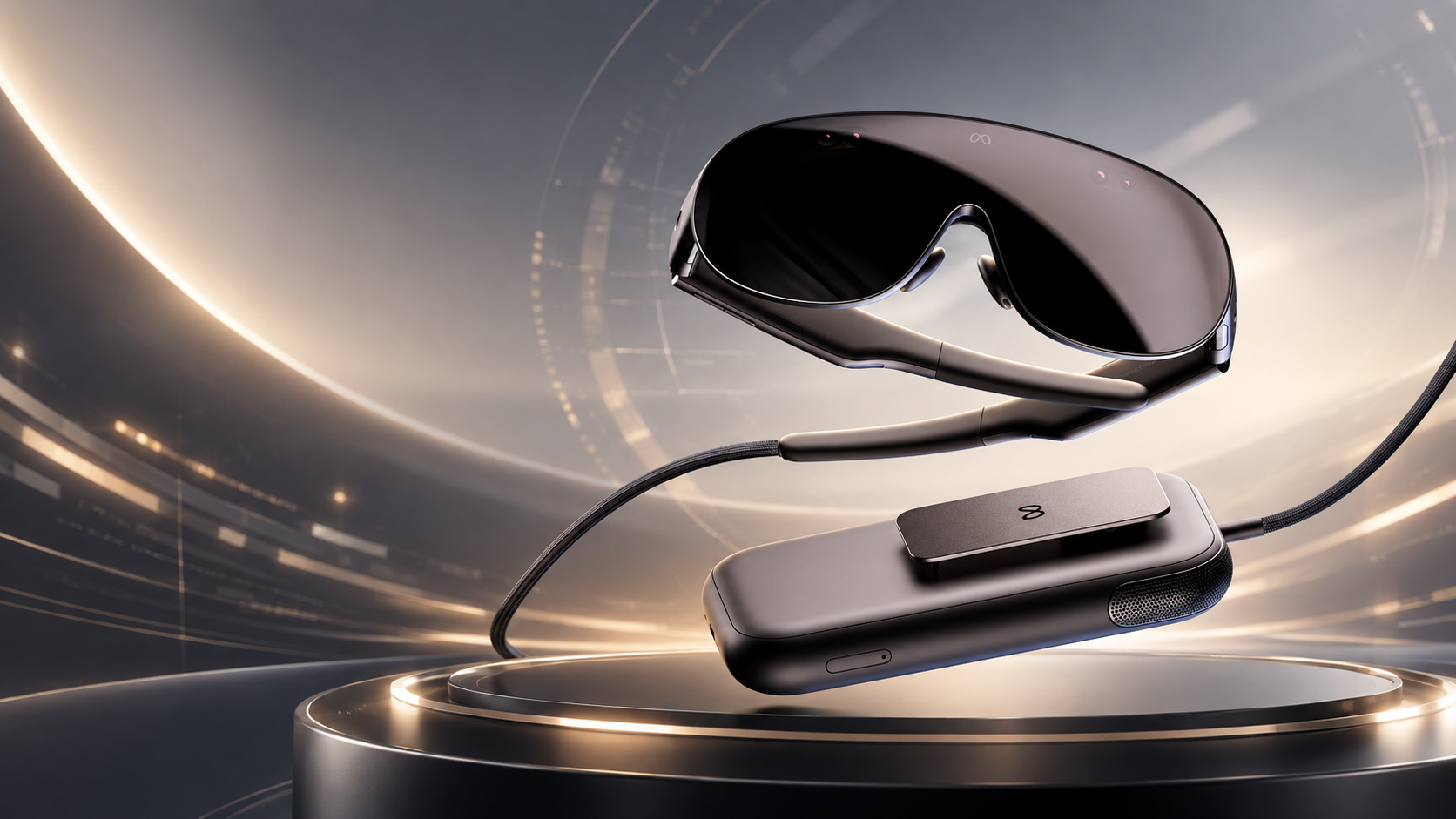
On September 23, 2026, Mark Zuckerberg walked onto the stage at Meta Connect in Menlo Park — and held up what might be the most consequential piece of consumer hardware since the original iPhone. Not because of what it can do (though that list is extraordinary), but because of what it weighs: just 100 grams. About the weight of a deck of cards. Five times lighter than the Meta Quest 3. Lighter than most sunglasses you own.
This is the Meta VR Glasses — and it changes everything about how we think about virtual reality. For years, the single biggest barrier to mainstream VR adoption has not been the price, not the content library, and not the display quality. It has been the weight. Strapping 500+ grams to your face for an extended period is uncomfortable, socially strange, and physically limiting. Nobody wears a Meta Quest 3 on a flight, in a cafe, or at a sports event. The Meta VR Glasses are engineered specifically to change that reality — by making the most radical design decision any VR company has ever taken: moving the battery, processor, and storage completely off the face and into a separate puck that clips to your pocket.
What you get on your face is 100 grams of magnesium-alloy frame holding dual micro-OLED displays, pancake lenses, cameras, and sensors. What lives in your pocket is a 300-gram compute puck housing a Qualcomm Snapdragon Reality Elite chip, 12GB RAM, 128GB storage, and a battery — connected by a thin fibre-optic cable. The result is a VR experience that is genuinely wearable as everyday eyewear — not something you put on for a demo session, but something you could wear on a long-haul flight, at your desk for a full work day, or courtside at an IPL match.
We have already covered the smart glasses space extensively — from Samsung Galaxy Glasses launching on Android XR to our piece on the future of spatial computing — but the Meta VR Glasses represent something genuinely new. Samsung's Galaxy Glasses are screenless smart glasses. Meta VR Glasses are a full virtual reality headset that happens to weigh the same as a pair of sunglasses. Here is everything you need to know.
Meta VR Glasses — Full Specs at a Glance
|
Specification |
Detail |
|
Announced |
September 23, 2026 — Meta Connect, Menlo Park |
|
Launch Date |
Spring 2027 |
|
Price (US) |
$1,299.99 |
|
Glasses Weight |
~100g (on face) |
|
Compute Puck Weight |
~300g (in pocket/bag) |
|
Display |
Dual micro-OLED, 2,412 × 2,288 per eye, 120Hz |
|
Display Name |
5K Infinite Display |
|
Pixel Density |
37 pixels per degree (PPD) |
|
HDR / Colour |
Dolby Vision, HDR |
|
Audio |
Dolby Atmos spatial audio — built into frames |
|
Chipset (Puck) |
Qualcomm Snapdragon Reality Elite |
|
RAM |
12GB |
|
Storage |
128GB (expandable via microSD up to 1TB) |
|
Battery Life |
Up to 3 hours continuous high-resolution playback |
|
Charging |
45W fast charging |
|
Frame Material |
Magnesium alloy |
|
Connection |
Thin fibre-optic cable (glasses to puck) |
|
Field of View |
~70 degrees |
|
Passthrough |
Colour cameras — mixed reality capable |
|
Light Blockers |
Optional — closes off outside world for full immersion |
|
Controllers |
Hand gesture tracking (primary) + optional Touch Plus controllers |
|
Gaming at Launch |
75+ titles optimised for hand gestures + Xbox Cloud Gaming |
|
Certifications |
IMAX Enhanced, Dolby Vision |
|
Connectivity |
DisplayPort over USB-C |
The Compute Puck: The Most Important Design Decision in VR History
Every VR headset before the Meta VR Glasses made the same architectural choice: put everything on the face. Processor, battery, storage, displays, sensors, cooling — all of it strapped to your head. This approach produces a self-contained device that is wireless and socially complete — no cables, no pockets, no second object to manage. But it comes with a ceiling on weight that you simply cannot engineer past without sacrificing performance.
By moving the processor, battery, and storage out of the headset frame and into a 300-gram puck that connects via fibre-optic cable, Meta reduced the facial weight to just 100 grams. The glasses themselves contain only the displays, lenses, cameras, and sensors inside a magnesium-alloy frame. The decision to separate compute and battery into a pocketable puck is the key design move — and it is a deliberate trade-off Meta has been open about.
The engineering achievement here is genuinely significant. The fibre-optic cable transmits the massive amount of data required to drive dual 2,412 × 2,288 pixel displays at 120Hz without introducing latency that would cause motion sickness. The cable is thin enough to drape comfortably over a shoulder without being obtrusive. The puck clips securely to a bag, jacket pocket, or waistband. Independent journalists who tried the glasses at Meta Connect reported sharp text, clear virtual monitors, and a form factor that felt easier to wear and remove than conventional headsets.
The Trade-Off: What the Puck Design Costs You
Meta has been refreshingly honest about what this design requires you to accept:
-
A cable: You are physically tethered to the puck. The cable is thin and manageable, but it exists. Fully wireless VR at this performance level does not yet exist.
-
A second object to carry: Putting on the glasses means also managing the puck — clipping it somewhere and keeping the cable routed appropriately.
-
70-degree field of view: Narrower than conventional VR headsets, which typically offer 90-110 degrees. For cinema and workspace use cases this is acceptable; for gaming it is a meaningful limitation.
-
3-hour battery: Enough for a long-haul flight movie, a working session, or a sporting event, but not all-day continuous use. The puck charges at 45W, so recovery is fast.
5K Infinite Display — The Sharpest VR Display in Consumer Hardware
Meta VR Glasses feature a 5K Infinite Display built on dual micro-OLED panels at 2,412 × 2,288 pixels per eye, running at 120Hz — with 37 pixels per degree (PPD). The ultra-compact pancake lenses built specifically for this device are the reason cinema-grade clarity can live in something that looks like glasses.
To put 37 PPD in context: the Apple Vision Pro — currently the benchmark for VR display quality at $3,499 — offers approximately 34 PPD. The Meta Quest 3 offers around 25 PPD. At 37 PPD, the Meta VR Glasses' display is sharp enough that individual pixels are not visible to the human eye under normal viewing conditions, and text renders as clearly as a high-resolution monitor.
This matters enormously for the use cases Meta is targeting — reading documents, working across virtual monitors, watching subtitled content — all of which demand text sharpness that earlier VR displays failed to deliver. The dual 120Hz refresh rate eliminates motion blur and judder that made earlier VR headsets uncomfortable for extended sessions. Dolby Vision HDR support means content encoded in Dolby Vision — covering the majority of Netflix, Disney+, and Amazon Prime's premium catalogue — is displayed with cinema-grade colour accuracy and contrast. Dolby Atmos spatial audio is integrated directly into the frames themselves, delivering positional sound without requiring separate headphones.
What Can You Actually Do With Meta VR Glasses?
Mark Zuckerberg pitched the device as a private cinema, a multi-monitor workspace, and a game console in one. Here is what that actually means in practice:
1. Private Cinema — Watch Anything, Anywhere
The Meta VR Glasses create what amounts to a private 100-inch cinema screen wherever you are wearing them. On a train, on a flight, in a hotel room — put on the glasses, open a movie, and the dual micro-OLED displays render a cinema-grade viewing experience that no one around you can see. IMAX Enhanced certification means certain content renders at IMAX aspect ratios with optimised colour profiles — making Meta VR Glasses the first VR device to receive this certification.
VR Enhanced Cinema takes this further — a film plays in 3D with spatial audio while the physical room around you responds dynamically to what is on screen, with immersive environments and ambient effects tied to the content. This is not a gimmick; it represents a genuinely new category of film-watching experience.
2. Multi-Monitor Workspace — Unlimited Screens
For professionals who work across multiple applications, Meta VR Glasses function as an infinite virtual monitor array. DisplayPort over USB-C allows you to mirror or extend your laptop's display into the virtual environment — giving you as many virtual screens as you need, at whatever size and arrangement you prefer, in any physical environment. On a small laptop on a flight, you can work across what feels like three 32-inch monitors simultaneously.
This use case is the one most directly competitive with Apple Vision Pro's productivity angle — and at $1,299.99 versus Vision Pro's $3,499, the price difference is significant. The trade-off is field of view (70 degrees versus Vision Pro's ~100 degrees) and the puck tether, but for stationary desk or laptop work, both limitations are manageable. For professionals already exploring AI productivity tools in 2026, adding a spatial computing layer through Meta VR Glasses represents the next evolution of how we interact with technology at work.
3. Gaming — 75+ Titles at Launch, Xbox Cloud Gaming Included
For gaming, there will be more than 75 games at launch that you can play solely with hand gestures, and with Xbox Cloud Gaming, you can stream hundreds more. The hand-gesture-first gaming design is a natural consequence of the glasses form factor — you are not holding controllers while wearing what looks like sunglasses. Xbox Cloud Gaming integration means the full Game Pass library is available via streaming, without requiring the local processing power to run demanding titles natively.
4. Live Sports — Courtside From Your Couch
Meta has confirmed partnerships for immersive live sports content — placing wearers virtually courtside at NBA games, ringside at UFC events, and at pitch-level for football matches. With the 100-gram form factor, wearing the glasses for a 90-minute football match is plausible in a way that wearing a Quest 3 for the same duration is not. This is the use case that most directly justifies Zuckerberg's claim that the VR Glasses could make spatial computing part of everyday entertainment rather than an occasional novelty experience.
5. Social Presence — Holographic Calls
Interacting with someone who also owns Meta VR Glasses places their projection directly before you, whereas users on standard devices simply view your avatar on their display. Meta is building a tiered social experience — glasses-to-glasses interactions are photorealistic volumetric projections of the other person, while cross-device calls display as high-quality avatars. This creates a social incentive for adoption that Apple Vision Pro's more expensive, less social ecosystem has struggled to generate.
Meta VR Glasses vs Apple Vision Pro vs Meta Quest 3 — Full Comparison
|
Feature |
Meta VR Glasses |
Apple Vision Pro |
Meta Quest 3 |
|
Weight (on face) |
100g |
~600g (with head strap) |
~515g |
|
Display |
Dual micro-OLED, 37 PPD, 120Hz |
Dual micro-OLED, ~34 PPD, 90/96Hz |
LCD, ~25 PPD, 90/120Hz |
|
Chipset |
Snapdragon Reality Elite (puck) |
Apple M2 + R1 |
Snapdragon XR2 Gen 2 |
|
Storage |
128GB (expandable to 1TB) |
256GB–1TB (non-expandable) |
128GB/512GB |
|
Field of View |
~70 degrees |
~100 degrees |
~110 degrees |
|
Battery Life |
3 hours (puck battery) |
2-2.5 hours |
2-3 hours |
|
Price |
$1,299.99 |
$3,499 |
$499 |
|
Cable Required |
Yes (glasses to puck) |
Optional (external battery) |
No (fully standalone) |
|
IMAX Certification |
✅ Yes (first VR device) |
❌ No |
❌ No |
|
Dolby Vision |
✅ Yes |
✅ Yes |
❌ No |
|
Xbox Cloud Gaming |
✅ Yes |
❌ No |
✅ Yes |
|
Video Recording |
❌ No (intentional) |
✅ Yes |
✅ Yes |
|
microSD Expansion |
✅ Yes (up to 1TB) |
❌ No |
❌ No |
|
Launch Status |
Spring 2027 (announced) |
Available now |
Available now |
The comparison reveals Meta's positioning clearly. The VR Glasses are not trying to beat the Quest 3 on field of view or the Vision Pro on social acceptance — they are targeting a specific gap: a fully immersive VR experience at a significantly lower price than Vision Pro, in a form factor light enough for extended, mobile use.
Meta VR Glasses in India — What Indian Buyers Need to Know
Meta has not confirmed an official India launch date for the VR Glasses beyond the global Spring 2027 timeline. Based on how Meta has handled previous India hardware launches — the Quest 3 reached India several months after its global launch — Indian buyers should plan for a late 2027 India availability at the earliest, with import-duty and GST premiums adding approximately 30-40% to the US price.
At an estimated ₹1,20,000–₹1,40,000 India pricing, the Meta VR Glasses sit in the same bracket as a premium flagship smartphone. For Indian users specifically, the most compelling use cases are:
-
Private cinema on long-haul flights — India's growing outbound travel market means more Indians spending 10+ hours on international flights, where a 100g personal cinema is genuinely transformative compared to a small seatback screen
-
Remote work multi-monitor setup — India's large WFH professional population can replicate a multi-monitor office with just a laptop and the VR Glasses
-
Cricket and IPL live immersive coverage — Meta has confirmed sports content partnerships; if BCCI and IPL streaming rights are secured, this becomes one of the most compelling India-specific use cases imaginable
-
Access to world-class content — IMAX Enhanced and Dolby Vision content available at home cinema quality at a fraction of what a real home cinema costs
India's rapidly expanding spatial computing ecosystem makes this an exciting time to follow this space. Our earlier coverage of the Lenskart and Meta AI sunglasses collaboration in India shows how Meta is already building its India wearable strategy — the VR Glasses represent the next significant step in that journey.
What Is Genuinely Impressive and What Are the Real Limitations
What Is Genuinely Impressive
-
The weight engineering — 100g on your face is a paradigm shift. No caveats. This is the most significant VR hardware achievement in years
-
Display quality — 37 PPD at 120Hz with Dolby Vision on dual micro-OLED panels surpasses the Apple Vision Pro's pixel density
-
IMAX Enhanced certification — no other VR device has this. For film enthusiasts, this is a significant and unique differentiator
-
Price vs Vision Pro — at $1,299.99 versus Vision Pro's $3,499, Meta is offering a genuinely competitive experience at 37% of the price
-
Storage expandability — microSD expansion to 1TB is a practical feature that Vision Pro completely lacks
-
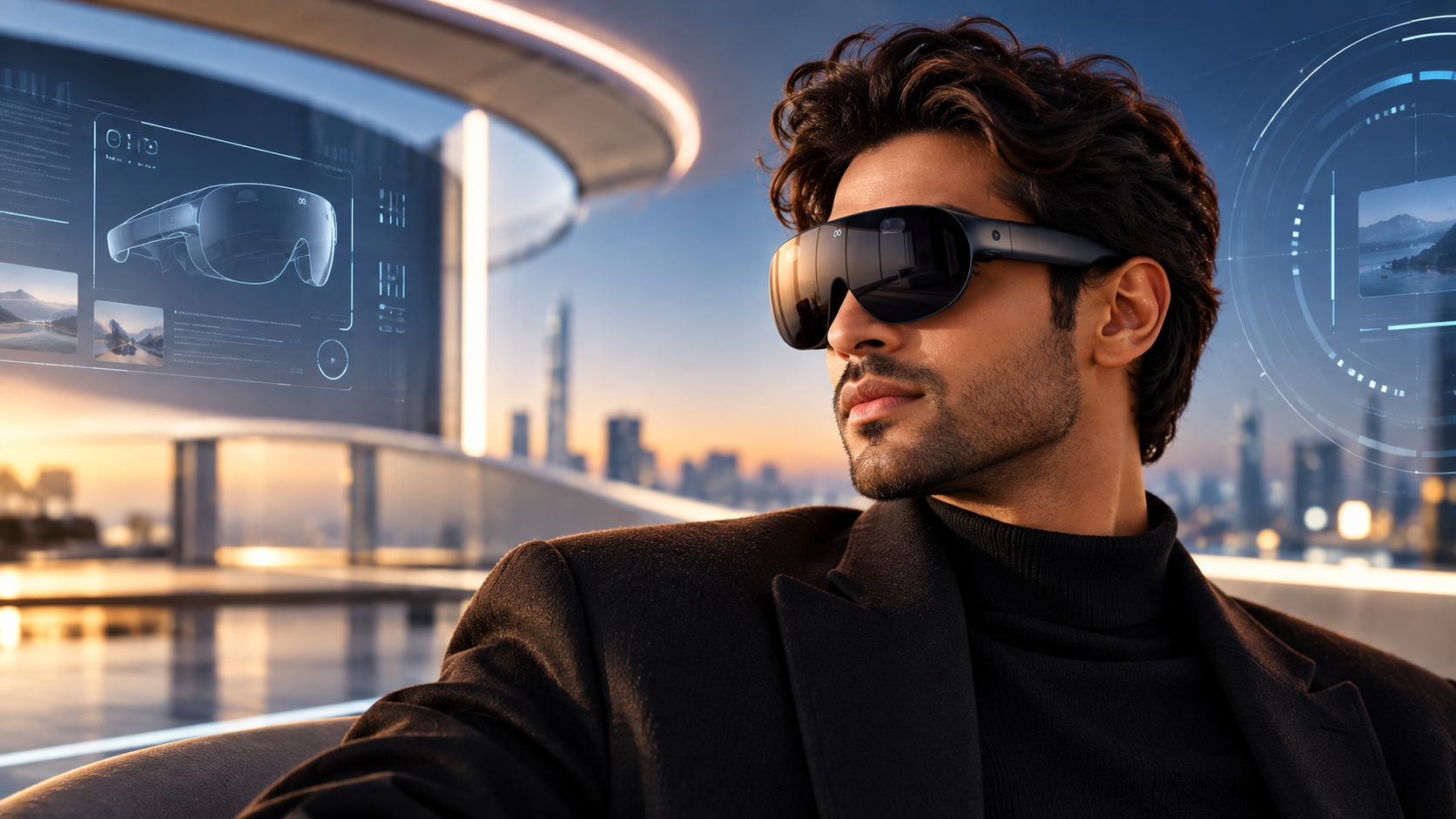
Familiar form factor — wearing something that looks like oversized sunglasses in public is infinitely more socially acceptable than any headset before it
What You Should Think Hard About Before Buying
-
The cable is real — every early reviewer mentioned it. It is manageable, but it is never invisible. If cable-free wireless experience is a priority, this device does not deliver it
-
70-degree FOV — acceptable for cinema and desk work, limited for gaming compared to Quest 3's 110-degree field
-
No video recording — a deliberate decision by Meta. This limits the device's usefulness for content creators
-
3-hour battery — sufficient for most individual sessions, but not all-day continuous wear
-
Spring 2027 — not available yet — these are announced specifications, and details may change before the launch date
-
India wait — Indian buyers should realistically expect late 2027 at the earliest for official availability
Why Meta VR Glasses Matter Beyond the Specs
The significance of the Meta VR Glasses announcement extends beyond what the device itself does. It represents a design philosophy that acknowledges the real barrier to mainstream VR adoption: not content, not price, but comfort and wearability. Every attempt to reduce headset weight while keeping compute on the face had hit physical limits. The compute puck solves this by reframing the problem entirely.
Instead of asking "how do we make a full VR computer lighter?" Meta asked "what if the VR computer did not need to be on your head at all?" The answer — a tethered external compute module — is not perfect, but it is genuinely novel and genuinely effective at achieving the stated goal. This approach is likely to influence every VR and AR headset that follows over the next 3-5 years.
Apple's competing smart glasses (codename N50) are reportedly targeting a late 2027 launch — almost certainly with awareness of Meta's puck architecture. As we explored in our analysis of the top technology trends reshaping daily life in 2026, the shift from screen-based to spatial computing is one of the most consequential technology transitions currently underway. The Meta VR Glasses are the clearest signal yet that spatial computing is leaving the early adopter phase and entering the early majority.
For those tracking how AI and spatial computing are converging, this is a particularly fascinating moment. The combination of AI assistants embedded in spatial hardware — Zuckerberg demonstrated Meta AI integrated throughout the VR Glasses interface — represents the next generation of human-computer interaction. Our piece on the best AI tools of 2026 covers the AI layer that will increasingly power these spatial experiences.
Frequently Asked Questions
Q1. What are Meta VR Glasses?
Meta VR Glasses are a 100-gram virtual reality headset announced at Meta Connect 2026 on September 23. The glasses contain only displays, lenses, cameras, and sensors, while a separate 300-gram compute puck — connected by a thin fibre-optic cable and worn in a pocket or clipped to a bag — houses the Snapdragon Reality Elite processor, 12GB RAM, 128GB storage, and battery.
Q2. What is the price of Meta VR Glasses?
Meta VR Glasses are priced at $1,299.99 in the United States. India pricing has not been confirmed — based on import duties and GST historically applied to Meta hardware, expect approximately ₹1,20,000–₹1,40,000 in India when they become available.
Q3. When do Meta VR Glasses release?
Meta VR Glasses are scheduled to launch globally in Spring 2027. India availability will likely follow 3-6 months after the global launch, based on Meta's historical India hardware rollout timeline.
Q4. Why do Meta VR Glasses weigh only 100 grams?
The glasses achieve 100 grams by moving all heavy components — processor, battery, and storage — out of the headset frame and into a separate 300-gram compute puck worn in a pocket. The glasses themselves contain only the displays, lenses, cameras, and sensors. This makes them five times lighter than the Meta Quest 3.
Q5. What display do Meta VR Glasses use?
Meta VR Glasses use dual micro-OLED panels at 2,412 × 2,288 pixels per eye, running at 120Hz — branded as the "5K Infinite Display." At 37 pixels per degree, this is the highest pixel density of any consumer VR headset, surpassing even the Apple Vision Pro's approximately 34 PPD.
Q6. How long is the battery life of Meta VR Glasses?
The compute puck battery delivers up to 3 hours of continuous high-resolution media playback, with 45W fast charging. Battery life will vary with use case — lower intensity tasks like virtual desktop work will likely extend this.
Q7. Can Meta VR Glasses record video?
No. Meta has deliberately excluded video recording from the Meta VR Glasses — likely driven by privacy considerations around a lightweight camera-equipped wearable. The glasses have cameras for mixed reality passthrough and hand tracking, but these do not support user-facing video recording.
Q8. What is the compute puck in Meta VR Glasses?
The compute puck is a separate 300-gram module that connects to the glasses via a thin fibre-optic cable. It contains the Qualcomm Snapdragon Reality Elite processor, 12GB RAM, 128GB storage (expandable via microSD to 1TB), battery, and 45W fast charging. It clips to a bag, pocket, or waistband.
Q9. How does Meta VR Glasses compare to Apple Vision Pro?
Meta VR Glasses offer higher pixel density (37 PPD vs ~34 PPD), a much lower price ($1,299 vs $3,499), expandable storage (microSD to 1TB), IMAX Enhanced certification, and a radically lighter on-face weight (100g vs ~600g). Apple Vision Pro has a wider field of view (~100° vs 70°), no cable requirement, video recording, and is available now rather than spring 2027.
Q10. Can you use Meta VR Glasses as a work monitor?
Yes. Meta VR Glasses support DisplayPort over USB-C — you can connect to a laptop and use the glasses as a virtual multi-monitor workspace, with as many virtual screens as you need at whatever size and arrangement you prefer. This is one of Meta's primary use case pitches alongside cinema and gaming.
Q11. Does Meta VR Glasses support Xbox Cloud Gaming?
Yes. Xbox Cloud Gaming integration is confirmed for Meta VR Glasses at launch, giving users access to hundreds of Game Pass titles via cloud streaming without requiring local hardware to run them. Additionally, 75+ titles specifically optimised for hand-gesture controls will be available at launch.
Q12. What is IMAX Enhanced certification on Meta VR Glasses?
IMAX Enhanced is a certification standard that ensures certified devices display IMAX-mastered content at the correct aspect ratios and with optimised colour and audio profiles. Meta VR Glasses are the first VR device to receive IMAX Enhanced certification — meaning certain films appear in their full IMAX presentation with cinema-grade colour.
Q13. Is Meta VR Glasses better than Ray-Ban Meta smart glasses?
They are completely different product categories. Ray-Ban Meta smart glasses are screenless audio-and-camera wearables for everyday use at approximately $299-399. Meta VR Glasses are a full virtual reality headset that renders immersive 3D environments — a fundamentally different experience at a significantly higher price. The Ray-Ban Meta glasses complement daily life; Meta VR Glasses replace your screen for specific experiences.
Final Verdict: Is Meta VR Glasses a Game-Changer?
Yes — with a qualifier. The compute puck architecture is genuinely game-changing as a design philosophy. The 100-gram form factor is something no other company has achieved at anywhere near this performance level, and the display quality at 37 PPD with Dolby Vision and IMAX Enhanced certification is the best ever shipped in consumer VR hardware. For the use cases Meta is targeting — private cinema, virtual workspace, live sports, casual gaming — it makes a compelling case.
The qualifiers are real: the cable, the 70-degree FOV, the 3-hour battery, and the spring 2027 ship date all represent genuine trade-offs and genuine uncertainty. Hardware announced today and shipping in six months can change significantly between announcement and retail. Early adopter caution is always warranted.
But the fundamental achievement here is worth stating clearly: Meta has made a VR headset that weighs 100 grams and delivers a better display than Apple Vision Pro at 37% of the price. If it works as demonstrated when it ships in Spring 2027, it is the most important VR hardware announcement since the original Oculus Rift — and potentially the product that finally makes spatial computing a mainstream category rather than an expensive enthusiast niche.
🔗 Follow Meta's official VR Glasses updates: Meta's official Meta VR Glasses announcement
🔗 Check Meta's full hardware lineup: meta.com — Smart Glasses
🔗 Read more about the Qualcomm Snapdragon Reality Elite chip: Qualcomm XR Chipsets
Are you planning to buy Meta VR Glasses when they launch? Tell us in the comments which use case excites you most — private cinema, workspace productivity, gaming, or live sports — and whether the compute puck trade-off is acceptable for you.
*All specifications, pricing, and launch details are based on Meta's official announcements at Meta Connect on September 23, 2026. Hardware specifications and features may change between announcement and the spring 2027 retail launch. Always verify current details at meta.com before purchasing.



0 Comments