
How Will Humans Get Electricity on the Moon?
Solar arrays, nuclear fission, fuel cells and panels made from Moon dust — how a lunar base will actually be powered through a 14-day night, and what Chandrayaan-3 taught us about the cold.
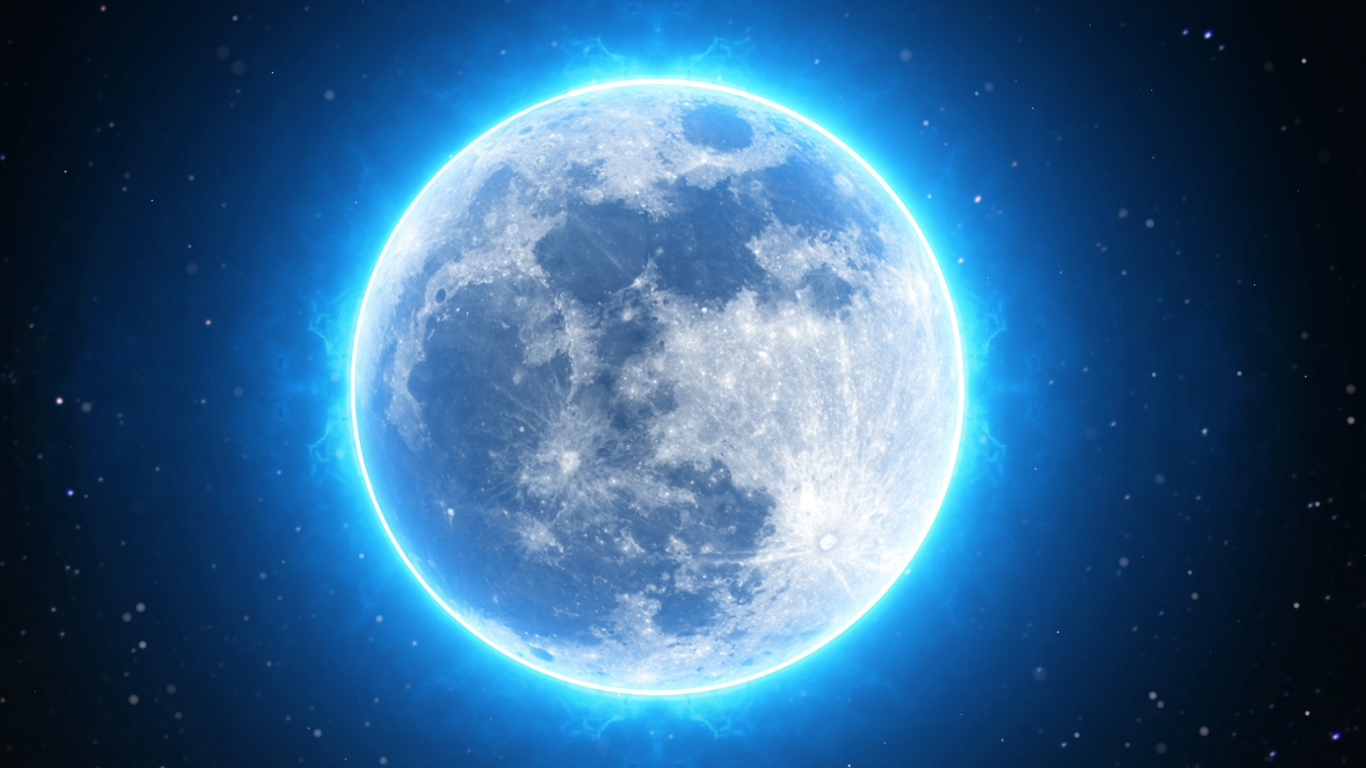
Every photograph of a future Moon base shows the same thing: a cluster of white habitats, a rover, a flag, and a horizon that drops away far too soon. What the pictures never show is the hardest problem in the entire picture — where the electricity comes from.
On Earth, power is something you assume. You plug in. On the Moon there is no grid, no fuel delivery, no generator you can refill, and for roughly two Earth weeks at a stretch, no sunlight. Everything a crew needs — heat, oxygen, water extraction, communications, the pumps that keep them alive — runs on electricity that has to be generated on site, with equipment that arrived folded up inside a rocket.
This is not a distant engineering puzzle. NASA's Artemis programme aims to establish a sustained human presence near the lunar south pole, and China has stated similar intentions for its International Lunar Research Station. Both plans live or die on the same question. Here is how it is actually being solved.
Why Powering the Moon Is So Hard
The Moon looks like a simple place to put solar panels. No clouds, no atmosphere to scatter light, no weather. In practice it is one of the most hostile power environments humans have ever tried to work in, for three reasons that compound each other.
The night lasts fourteen Earth days
The Moon takes about 29.5 Earth days to rotate once relative to the Sun. At most locations on the surface that works out to roughly 14 days of continuous sunlight followed by 14 days of continuous darkness. A solar-powered system that works beautifully for two weeks then has to survive two weeks with no input at all.
This is the single fact that shapes every lunar power decision. It is not a brownout or an overnight dip. It is a fortnight with the lights off, every month, forever.
Temperatures that destroy ordinary hardware
With no atmosphere to retain heat, surface temperatures swing from around 127°C in direct sunlight to about −173°C in darkness. Lithium-ion cells stop working long before they reach that lower figure — their electrolytes thicken, internal resistance climbs, and below roughly −40°C most consumer chemistries simply will not deliver current.
So a battery on the Moon cannot merely store energy through the night. It has to spend some of that stored energy keeping itself warm enough to function, which eats into the capacity it was carrying in the first place. The same applies to the electronics, the valves, the seals and the lubricants.
Dust that sticks to everything
Lunar regolith is not like sand. It has never been weathered by wind or water, so its grains are jagged, and constant micrometeorite bombardment plus solar radiation leaves it electrostatically charged. It clings to surfaces, works into mechanisms, and abrades anything it touches.
On the Apollo missions, dust degraded radiator performance within hours and coated the astronauts' suits so thoroughly that it could not be brushed off. For a solar array expected to operate for a decade, dust accumulation is a slow, relentless loss of output with no rain to wash it away.
Why the Lunar South Pole Changes the Arithmetic
Almost every serious lunar base proposal now points at the same region, and power is a large part of why.
Peaks of near-eternal light
The Moon's axis is tilted barely 1.5 degrees, compared with Earth's 23.4. That tiny tilt means the Sun at the lunar poles never climbs far above the horizon — but it also never sets far below it. On certain crater rims and ridges near the south pole, particularly around Shackleton crater, the Sun stays visible for most of the year.
These spots are often called "peaks of eternal light", which overstates it. Illumination at the best sites runs in the region of 80 to 90 percent over a year, interrupted by outages that can last several days. That is a transformative improvement on a 14-day blackout, but it is not continuous power, and any system placed there still needs to ride through the gaps.
The craters that never see the Sun
The same shallow axial tilt produces the opposite extreme. Crater floors near the poles sit in permanent shadow — regions that have not seen sunlight in perhaps two billion years, where temperatures hover near −230°C.
These are simultaneously the most valuable and least powerable places on the Moon. The cold has trapped water ice, and water means drinking water, breathable oxygen and rocket propellant. Any plan to use that ice requires getting power into a place where solar energy is, by definition, unavailable.
India's Chandrayaan-3 mission landed in this broader south polar region in August 2023 precisely because of what might be frozen there, and ISRO's own mission page documents the science that followed.
Option 1: Solar Power, Rebuilt From Scratch
Solar remains the obvious starting point. Sunlight at the Moon's distance delivers about 1,361 watts per square metre with no atmosphere to filter it, which is roughly 35 percent more than reaches a panel at sea level on Earth. The engineering problem is not the sunlight. It is everything else.
Why lunar arrays stand upright
At the poles the Sun skims the horizon rather than passing overhead, so a panel laid flat catches almost nothing. The answer is to stand the arrays vertically, like sails, and rotate them to track the Sun as it circles the sky.
NASA has funded several companies to develop exactly this: tall, self-deploying vertical arrays that unfold from a lander to heights of up to around 10 metres, lifting the panels above the worst of the surface dust and letting them see over local terrain. The work sits within NASA's Space Technology Mission Directorate, which funds the hardware that has to exist before a base can.
Panel efficiency matters more here than on Earth, because every extra percent is mass you did not have to launch. Research into squeezing more out of each cell — the kind covered in our piece on improving solar cell efficiency — translates directly into smaller, lighter lunar arrays.
What solar cannot do
Solar generates nothing during the lunar night, nothing inside a permanently shadowed crater, and progressively less as dust accumulates. It is an excellent primary source at a well-chosen polar site, and it is useless on its own anywhere else. Which brings us to the real problem.
Option 2: Storing Two Weeks of Darkness
If you generate power in daylight and need it at night, you need storage. The scale of the storage is what surprises people.
Why batteries do not scale to a fortnight
Consider a modest outpost drawing a steady 10 kilowatts — about what a few small households use, and far below what a real base with life support and ice processing would need. Across 14 days of darkness that is roughly 3,360 kilowatt-hours.
Good lithium-ion cells store something like 250 watt-hours per kilogram. Ignoring the structure, cabling, thermal management and the heaters needed to stop the cells freezing, that is over 13 tonnes of batteries — for 10 kilowatts, at one site, before anyone has extracted a gram of ice.
Launch costs are falling, but not to the point where you ship thirteen tonnes of battery to the Moon to survive one night. Batteries will absolutely be there, buffering short outages and smoothing demand peaks, in the way our article on energy-storing innovation describes for terrestrial grids. They are not the answer to a fourteen-day night.
Regenerative fuel cells
A more promising approach stores energy as chemistry rather than charge. During daylight, surplus solar power electrolyses water into hydrogen and oxygen. During the night, a fuel cell recombines them, producing electricity and water again, which is then stored for the next cycle.
The appeal is that the energy capacity depends on how much hydrogen and oxygen you store, not on the size of the converter. Scaling to longer durations means bigger tanks rather than proportionally more hardware, which is exactly the right shape for a 14-day problem. Hydrogen fuel cells are already moving from laboratories into commercial transport — Germany's hydrogen passenger trains are one example — and the lunar version is the same physics in a far less forgiving setting.
The drawbacks are real. Round-trip efficiency is modest, cryogenic storage on a surface that swings 300 degrees is its own engineering programme, and hydrogen leaks through almost anything given time.
Heat stored in the ground itself
A third idea skips electricity entirely for part of the cycle. Concentrated sunlight heats a mass of regolith or molten salt during the day; at night, that heat drives a turbine or thermoelectric converter.
The attraction is that the storage medium is already there — you are heating Moon dirt, not shipping batteries. The efficiency is lower than a chemical system, but when the raw material costs nothing to deliver, efficiency is not the only measure that counts.
Option 3: Nuclear Fission on the Surface
Every analysis of sustained lunar operations arrives at the same conclusion: for a base that must run continuously, through the night and inside shadowed craters, fission is the only mature technology that does the job.
NASA's Fission Surface Power programme
NASA, working with the US Department of Energy, has been developing a small surface reactor with a deliberately specific set of requirements: around 40 kilowatts of electrical output, a design life of ten years, and a package compact and light enough to fly on a lunar lander — a mass budget in the region of six tonnes.
Forty kilowatts sounds small. It is roughly what a few dozen homes draw. But it is continuous, location-independent power that does not care whether the Sun is up, and that changes what a base can attempt. The DOE's Office of Nuclear Energy has been the partner on the reactor side, where the relevant expertise has lived for decades.
The concept has precedent. NASA's earlier Kilopower project demonstrated a 1-kilowatt-class reactor on the ground, validating the compact uranium core, passive heat pipes and Stirling converters that the larger design builds on.
Why fission suits the Moon specifically
- It ignores the night. Output is identical at lunar noon and lunar midnight.
- It works in permanent shadow. A reactor can sit beside an ice-mining operation in a crater that has not seen sunlight in two billion years.
- It is compact. Forty kilowatts from a six-tonne package beats any solar-plus-storage system of comparable capability on mass alone.
- It supplies heat as well as power. Waste heat is a liability on Earth and an asset at −173°C.
- Its fuel lasts. A ten-year core means no resupply flights for a decade.
The honest objections
Launching nuclear material requires containment that survives a launch failure, and the review process is correspondingly slow. Reactors need radiation shielding, which is heavy — though burying the unit in regolith, which is free and abundant, handles much of it. And the political and public-acceptance questions around nuclear launches are genuine, not merely procedural.
It is also worth being clear about what this technology is not. Lunar fission is a small, well-understood fission reactor, not fusion. Fusion remains an unsolved terrestrial problem, as our piece on harnessing nuclear fusion sets out, and nothing about the Moon makes it easier. The interest in compact, reliable nuclear power is not limited to space either — the same logic now drives nuclear energy for AI data centres here on Earth.
Option 4: Radioisotope Generators for the Small Stuff
There is a nuclear option that has already worked on the Moon. Radioisotope thermoelectric generators, or RTGs, contain no reactor and no moving parts. They convert the heat of decaying plutonium-238 directly into electricity through thermocouples.
Apollo missions 12 through 17 left RTG-powered science stations on the surface, several of which transmitted data for years. The same technology powers Voyager, New Horizons and the Curiosity and Perseverance rovers.
The limitation is scale. A typical RTG produces tens to low hundreds of watts, not kilowatts, and plutonium-238 is scarce, expensive and slow to produce. RTGs will keep instruments alive through the lunar night and keep a rover's electronics from freezing in a shadowed crater. They will not run a base.
Option 5: Beaming Power Where Sunlight Cannot Reach
If a crater floor has no sunlight but the rim above it does, the obvious move is to generate power on the rim and send it down. Two approaches are being studied.
Cables are simple and efficient, and awkward in practice: kilometres of conductor must be unrolled across broken terrain by robots, then survive thermal cycling and dust.
Beamed power avoids the cable entirely. A laser or microwave transmitter on an illuminated ridge directs energy to a receiver on a rover below. There is no physical connection to install or maintain, and the beam can be redirected as the rover moves. Efficiency over distance and pointing accuracy are the open problems, and the technology remains experimental rather than flight-ready.
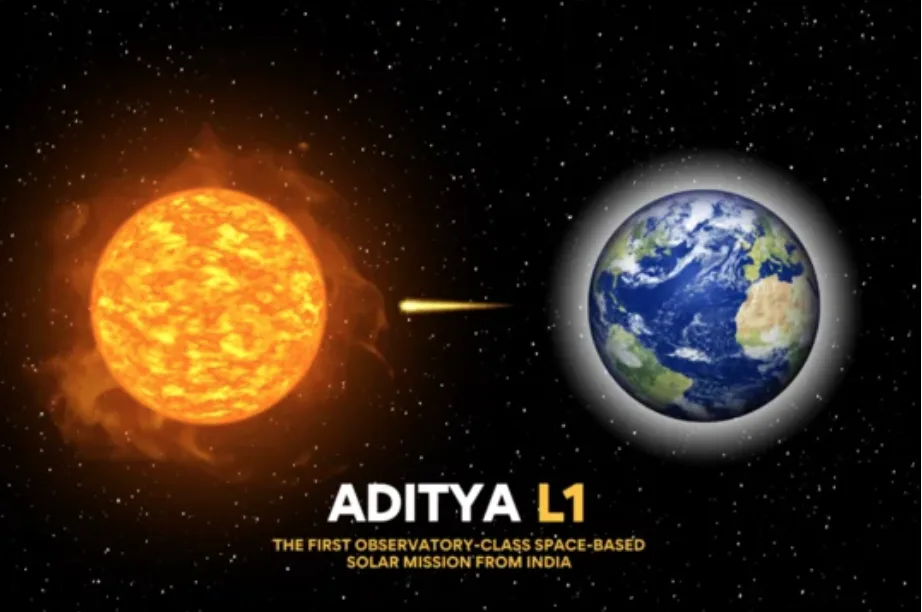
A more ambitious variant places solar collectors in lunar orbit and beams power to the surface, sidestepping the night problem altogether. ESA's lunar exploration programme has examined architectures along these lines, and India's solar observation work on the Aditya-L1 mission feeds the same body of knowledge about what the Sun actually delivers in space.
Option 6: Making Solar Panels Out of Moon Dust
The most elegant idea on the list attacks the real constraint, which is not energy but mass. Every kilogram launched from Earth costs enormously. So why launch solar panels at all?
Lunar regolith is rich in silicon, aluminium, iron and oxygen — the raw ingredients of a solar cell. Researchers have demonstrated melting simulated regolith into a glass substrate, sometimes called "moonglass", and depositing a thin-film solar material onto it. The resulting cells are considerably less efficient than terrestrial panels.
That trade is worth taking. A less efficient panel that costs nothing to deliver beats an excellent one that costs a fortune to launch, and you can simply make more of them. This remains laboratory-stage work, but it points at the only version of a lunar base that eventually becomes self-sustaining: one that manufactures its own power infrastructure from the ground it stands on. NASA's broader lunar science programme continues to map what the regolith actually contains, region by region.
How the Options Compare
| Method | Typical Output | Works at Night? | Main Advantage | Main Limitation |
|---|---|---|---|---|
| Vertical solar arrays | 1–20 kW | No | Proven, no fuel, light | Useless in darkness; dust |
| Lithium-ion batteries | Buffer only | Briefly | Mature and simple | ~13 t for 10 kW over one night |
| Regenerative fuel cells | 1–10 kW | Yes | Scales by tank size | Round-trip losses; cryogenics |
| Thermal / regolith storage | Varies | Yes | Storage medium is free | Low efficiency; early stage |
| Fission surface power | ~40 kW target | Yes | Continuous, location-free | Shielding, launch approval |
| RTGs | 0.1–0.3 kW | Yes | No moving parts; decades | Tiny output; scarce fuel |
| Beamed power | Experimental | Via relay | Reaches shadowed craters | Pointing, range, immaturity |
| Regolith-made solar | Unproven | No | Almost no launch mass | Low efficiency; lab stage |
What Chandrayaan-3 Taught Us About the Lunar Night
India's Chandrayaan-3 provides the clearest real-world lesson available, and it is a sobering one.
The Vikram lander and Pragyan rover touched down near the lunar south pole on 23 August 2023 and worked exactly as intended. Both were solar-powered and designed for a single lunar day — roughly 14 Earth days of operation. As darkness approached, ISRO put both into sleep mode with their batteries charged and receivers oriented to catch the returning Sun.
They never woke up. ISRO attempted to re-establish contact when sunlight returned and received no response. The most likely cause is the simplest one: temperatures around −200°C for two weeks, beyond what the electronics were rated to survive.
This was not a failure of the mission, which achieved everything it set out to do. It is a demonstration of the central problem. The lunar night does not merely stop power generation — it can permanently end a mission that has no way to keep itself warm. Any system intended to last years, rather than days, needs a heat source that works in darkness. That is the argument for nuclear power on the Moon, made more convincingly by one silent rover than by any amount of analysis.
China has been working the same problem from a different angle, including ground facilities that simulate lunar conditions to test hardware before it flies.
What a Working Lunar Power System Will Actually Look Like
No single technology wins. The realistic answer is a hybrid, built in stages.
Early missions will stay solar, land at well-lit polar sites, and accept that they work through the lunar day and hibernate through the night, with RTGs keeping critical electronics alive.
A permanent base will add fission. One or two 40-kilowatt reactors provide the continuous floor that life support and ice processing require, while solar arrays handle daytime peaks and keep the reactors from being the single point of failure.
A mature settlement will distribute power across sites through cables and beamed links, store surplus as hydrogen and oxygen, and — eventually — manufacture its own panels from regolith, at which point the system stops depending on launches from Earth.
What a lunar grid has to be, above all, is redundant. On Earth a power cut is an inconvenience. On the Moon it is a countdown.
Frequently Asked Questions
How long is a night on the Moon?
About 14 Earth days at most locations. The Moon takes roughly 29.5 Earth days to rotate once relative to the Sun, giving approximately two weeks of continuous daylight followed by two weeks of continuous darkness. Near the poles the pattern is different: some ridges receive sunlight for most of the year, while some crater floors receive none at all.
Why can solar panels not simply power a Moon base?
They can, for part of the time. Solar works well during the lunar day and at well-chosen polar sites, but it generates nothing during the 14-day night and nothing inside permanently shadowed craters. Storing two weeks of energy in batteries is prohibitively heavy, so solar needs to be paired with another source for continuous operation.
Will there be a nuclear reactor on the Moon?
That is the plan. NASA, working with the US Department of Energy, is developing a fission surface power system targeting around 40 kilowatts of electrical output with a ten-year design life, compact enough to be delivered by a lunar lander. China has stated similar intentions for its planned research station.
How much electricity does a Moon base need?
It depends entirely on ambition. A small research outpost might run on tens of kilowatts. Extracting water ice and converting it into rocket propellant is energy-hungry and would push demand into the hundreds of kilowatts. Early systems are being designed around the 40-kilowatt mark as a practical starting point.
Why did Chandrayaan-3's rover stop working?
The Vikram lander and Pragyan rover were solar-powered and designed to operate for one lunar day. They were put into sleep mode before the lunar night and did not respond when sunlight returned. Temperatures near the south pole fall to around −200°C during the night, which is almost certainly beyond what their electronics could survive.
Can batteries store enough power for the lunar night?
Not at any practical scale. Running a modest 10-kilowatt system through 14 days of darkness requires roughly 3,360 kilowatt-hours, which works out to more than 13 tonnes of lithium-ion cells before accounting for structure or the heaters needed to stop them freezing. Batteries are useful for short outages and demand peaks, not for the full night.
What is a peak of eternal light?
A high point near a lunar pole that receives sunlight for most of the year because the Moon's axis is tilted only about 1.5 degrees. Several such ridges exist near the south pole. The name overstates the case — illumination typically runs around 80 to 90 percent over a year, with outages lasting several days — but it is far better than a 14-day night.
Why is water ice on the Moon connected to power?
Water ice sits in permanently shadowed craters that never receive sunlight, so extracting it requires power delivered from somewhere else — a reactor placed beside the operation, a cable from an illuminated ridge, or beamed energy. The ice is valuable because it yields drinking water, breathable oxygen and rocket propellant, which is why solving the power problem matters so much.
Can solar panels be manufactured on the Moon?
Researchers have demonstrated the principle using simulated regolith, melting it into a glass substrate and depositing a thin-film solar material onto it. The resulting cells are much less efficient than terrestrial panels, but they would cost almost nothing to deliver because the raw material is already there. The work is at laboratory stage, not flight stage.
What is the difference between a lunar reactor and nuclear fusion?
A lunar surface reactor uses nuclear fission — splitting uranium atoms — which is well-understood, proven technology that has powered submarines and spacecraft for decades. Fusion, which combines light atomic nuclei, is still an unsolved engineering problem on Earth and is not part of any near-term lunar plan.
The Bottom Line
Humans will get electricity on the Moon the same way we get it anywhere difficult: not from one clever solution but from several ordinary ones, arranged so that no single failure is fatal.
Solar arrays standing upright on a polar ridge will catch a Sun that never rises far. A small fission reactor, buried in regolith, will carry the load through the night and into the shadows where the ice is. Fuel cells will hold the surplus. Radioisotope units will keep the instruments breathing. And if the regolith research pays off, the Moon will eventually make its own panels from the ground beneath the base.
None of it is exotic. Most of it exists today in some form. The difficulty was never inventing lunar power — it was making it light enough to launch, tough enough to survive, and reliable enough that people can live on the other end of it.
Pragyan fell silent after one lunar day. The next generation will be designed so that it does not have to.

0 Comments