
What Happens When a Satellite Stops Working in Orbit?
A dead satellite does not stop moving. Where it ends up — burning on reentry, parked in a graveyard orbit, or circling as a hazard for centuries — depends almost entirely on how high…
What "Stops Working" Actually Means
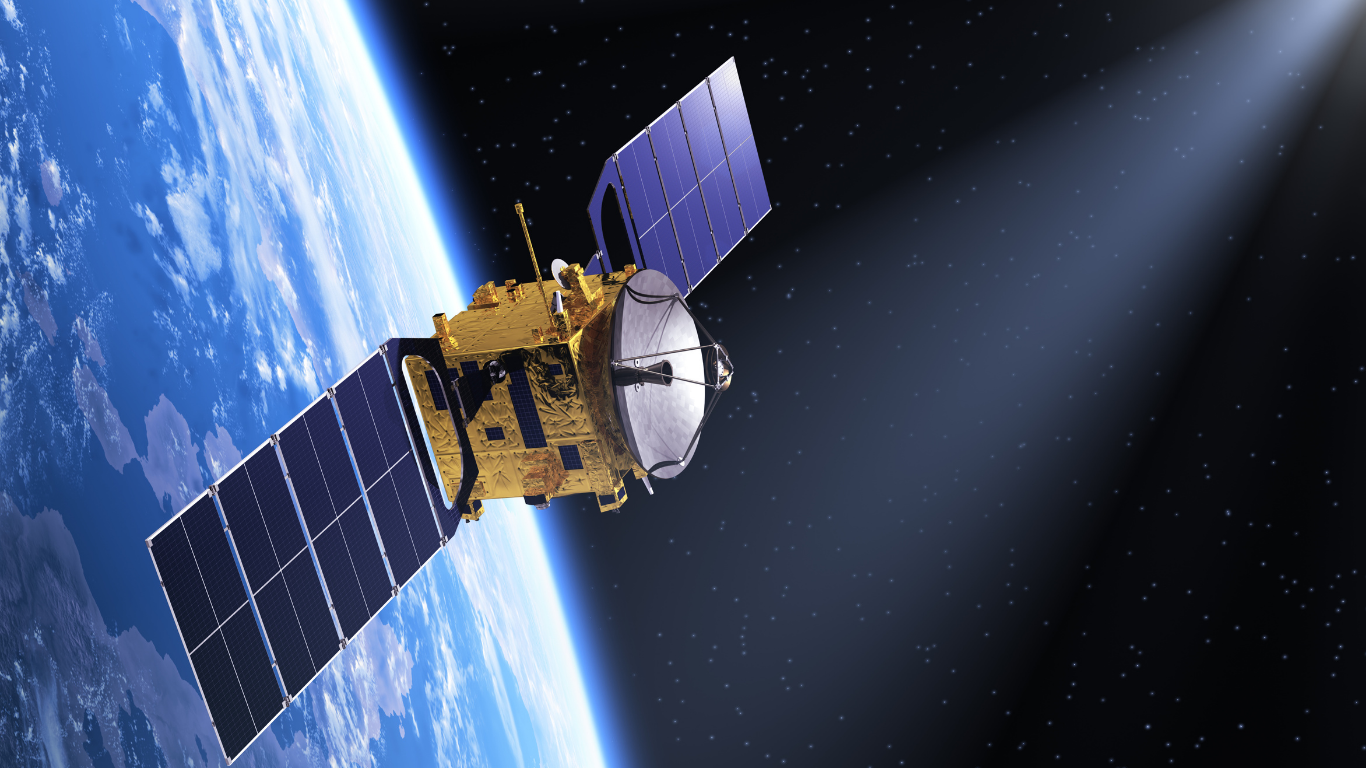
Satellites rarely fail dramatically. Most simply run out of the ability to do their job, in one of four ways.
It runs out of fuel
This is the most common ending. A satellite in orbit is constantly nudged off course — by atmospheric drag, by the Moon and Sun's gravity, by the fact that Earth is not a perfect sphere. Keeping it in the right place requires small thruster burns, and the propellant for those burns is finite.
A geostationary communications satellite may be structurally fine after fifteen years, with working transponders and healthy solar panels, and still be retired because it cannot hold its slot any more. The hardware outlives the fuel.
Something breaks
Space is a brutal environment. Solar panels degrade a few percent a year under constant radiation. Batteries lose capacity through thousands of charge cycles. Reaction wheels — the spinning flywheels that point a satellite — seize. A single radiation strike can corrupt a processor.
Famously, the Kepler space telescope lost two of its four reaction wheels and could no longer hold a steady gaze, though engineers found an ingenious workaround using sunlight pressure. Not every mission gets that lucky.
Something hits it
At orbital velocity, a fleck of paint carries the energy of a rifle bullet. A 1 cm fragment carries roughly the energy of a hand grenade. There is no shielding practical against that at full orbital closing speed, and most of the objects that size cannot even be tracked from the ground.
It simply becomes obsolete
A twenty-year-old communications satellite still works, but it carries twenty-year-old electronics. Modern constellations move far more data at lower cost. Sometimes a satellite is retired because its replacement is better, not because it failed — which is part of why SpaceX and others are building satellite constellations designed from the outset for short lifespans and frequent replacement.
Where a Dead Satellite Goes Depends Entirely on Its Orbit
This is the single most important thing to understand. The same failure at two different altitudes produces completely different outcomes.
Low Earth orbit: the atmosphere does the work
Below about 2,000 km — where the International Space Station, most Earth-observation satellites and the entire Starlink constellation live — there is still a trace of atmosphere. It is unimaginably thin, but over thousands of orbits it drags on a satellite, lowering it until it reenters and burns up.
How long that takes varies enormously with altitude:
- Below 300 km — weeks to months. The ISS at around 400 km needs regular reboosts just to stay up.
- 500–600 km — years to a few decades. Most Starlink satellites fly here deliberately, so a dead one clears itself within about five years.
- 800–1,000 km — centuries. This band is already the most congested and most dangerous region in orbit.
- Above 1,200 km — effectively permanent on any human timescale.
That altitude choice is a deliberate safety decision, and it is why the newest constellations — including the service now reaching consumers through Starlink's direct-to-iPhone connectivity — fly low enough to fall on their own.
Geostationary orbit: there is nowhere to fall
At 35,786 km, a satellite orbits at exactly the speed Earth rotates, so it appears to hover over one spot. This is where most television, weather and long-haul communications satellites live.
There is no atmosphere at that altitude. None at all. A dead satellite in geostationary orbit will not come down — not in a century, not in a million years. It simply keeps going, drifting slowly along the belt, crossing the paths of working satellites in one of the most commercially valuable regions of space.
Medium Earth orbit: the awkward middle
Between roughly 2,000 and 35,000 km sit the navigation constellations — GPS, Galileo, GLONASS and India's NavIC. Too high for atmospheric drag to help, too low for the geostationary disposal strategy, these satellites are typically moved into orbits chosen to avoid crossing the operational shells, and then left.
The Graveyard Orbit
Because a dead geostationary satellite cannot be brought down, the industry does the opposite: it pushes it further away.
In its final months of life, while it still has fuel, a satellite fires its thrusters to raise itself roughly 300 km above the geostationary belt into what is formally a disposal orbit and universally called the graveyard orbit. Up there it drifts harmlessly, far from the operational ring.
The manoeuvre costs about three months' worth of station-keeping fuel, which means operators must plan for it years ahead and retire a satellite slightly early. Not everyone does. Some satellites fail before the manoeuvre can be performed, and those stay in the belt permanently, as uncontrolled hazards.
Controlled Reentry and the Spacecraft Cemetery
For large objects in low orbit, leaving reentry to chance is unacceptable — some fraction of a big satellite reaches the ground. So the ending is planned.
Point Nemo
There is a spot in the South Pacific, at roughly 48°S 123°W, that is further from land than anywhere else on Earth — about 2,700 km from the nearest coastline. It is called Point Nemo, and it is where spacecraft go to die.
Operators time a final engine burn so that whatever survives reentry falls into this empty stretch of ocean. The Russian space station Mir was brought down there in 2001, and hundreds of other vehicles have followed. The International Space Station is expected to end the same way.
What actually survives
Most of a satellite does not reach the ground. Reentry heating exceeds 1,500°C and vaporises aluminium structures, solar panels and electronics. What tends to survive is anything dense and heat-resistant: titanium fuel tanks, stainless steel propellant lines, tungsten counterweights, and the glass or ceramic optics of large telescopes.
Engineers now practise "design for demise" — deliberately choosing materials and structures that break up completely, so that nothing is left to hit anything. The European Space Agency performed the first assisted reentry of its kind in 2023, using an ageing satellite's last fuel to steer it into the atmosphere over the ocean rather than letting it fall at random.
Passivation: Making a Corpse Safe
Before a satellite is abandoned, operators perform a procedure called passivation. It is one of the least glamorous and most important things in spaceflight.
A dead satellite still contains stored energy: residual propellant, pressurised tanks, charged batteries, spinning flywheels. Left alone for years in extreme temperature cycling, any of these can rupture or explode — and an explosion in orbit converts one trackable object into thousands of untrackable fragments.
Passivation means venting all remaining propellant, depressurising tanks, discharging batteries and disconnecting charging circuits, and stopping any rotating machinery. Historically, abandoned upper stages that were never passivated have been responsible for a significant share of all orbital debris, breaking up long after everyone had forgotten about them.
When Dead Satellites Collide
This is where the problem stops being housekeeping and becomes a genuine threat.
Iridium 33 and Kosmos 2251
On 10 February 2009, an operational American communications satellite, Iridium 33, collided with Kosmos 2251, a defunct Russian military satellite that had been dead and uncontrolled since 1995. They met at about 789 km over Siberia at a closing speed near 42,000 km/h.
Both were destroyed instantly, producing more than 2,000 trackable fragments and many thousands more too small to see. It was the first accidental collision between two intact satellites, and it remains the clearest demonstration of what an uncontrolled dead satellite actually is: not litter, but a loaded weapon.
Deliberate destruction
Some of the worst debris events were intentional. In 2007, China destroyed its own Fengyun-1C weather satellite in an anti-satellite weapons test at around 865 km, creating over 3,000 trackable fragments — a cloud that will remain in orbit for centuries and which the ISS has had to manoeuvre around. Russia's 2021 test against Cosmos 1408 produced a similar result at a similar altitude.
India conducted its own anti-satellite test, Mission Shakti, in March 2019 — but notably chose a target at roughly 283 km, low enough that the resulting fragments decayed from orbit within months rather than centuries. The altitude choice was the entire point.
Kessler Syndrome
In 1978, NASA scientist Donald Kessler described a scenario now named after him: once debris density in a given orbital shell passes a threshold, collisions generate fragments faster than the atmosphere removes them. Each collision creates debris that causes further collisions, in a cascade that could render an orbital band unusable for generations.
Kessler Syndrome is not a sudden catastrophe. It is a slow, compounding degradation — and the consensus among debris researchers is that parts of low Earth orbit, particularly the crowded 800–1,000 km band, may already have crossed the threshold where the cascade continues even if every launch stopped tomorrow.
How Much Is Actually Up There
The numbers are not reassuring. According to the European Space Agency's space debris figures, roughly 40,000 objects are tracked and catalogued, of which only a minority are working satellites. Beyond those, an estimated 1.2 million fragments between 1 and 10 centimetres are in orbit — too small to track, large enough to destroy anything they hit — plus well over a hundred million smaller pieces.
NASA's Orbital Debris Program Office maintains the equivalent American catalogue and models how the population evolves. The ISS performs avoidance manoeuvres regularly, and operators of large constellations handle automated collision-avoidance burns thousands of times a year.
Even observatories well beyond Earth orbit are affected indirectly: debris risk shapes launch windows, insurance costs and orbital design for everything, including missions like the James Webb Space Telescope that never go near the congested shells.
Who Makes the Rules
There is no space police. Orbital debris is governed by guidelines, national licensing conditions and treaty obligations rather than by any enforceable global law.
The Inter-Agency Space Debris Coordination Committee established the long-standing 25-year rule: a satellite in low Earth orbit should be removed within 25 years of the end of its mission. The United Nations Office for Outer Space Affairs maintains the international mitigation guidelines that most spacefaring nations have adopted.
In 2022, the United States Federal Communications Commission concluded that 25 years was far too slow given how quickly orbits were filling, and adopted a 5-year rule for satellites licensed to operate in low Earth orbit. Because so many operators need an American licence to serve the US market, that national rule has become a de facto global standard.
Compliance remains imperfect. A meaningful share of satellites reaching end of life each year still fail to dispose of themselves as required, usually because they broke before they could.
Cleaning Up: Active Debris Removal
Mitigation stops the problem growing. It does not remove what is already there. That requires going up and fetching things, and several organisations are now trying.
The approaches under development include robotic arms that grapple a tumbling object, nets and harpoons, magnetic docking plates fitted to new satellites before launch so they can be caught later, and ion beams that push a target without touching it. ESA's Clean Space initiative coordinates much of the European work, including the first mission designed to capture and deorbit a specific piece of debris.
The hard parts are not primarily technical. Catching an object that is tumbling unpredictably, with no docking fixtures, designed never to be caught, is difficult — but the deeper problems are legal and economic. A satellite remains the property of its launching state forever, so removing someone else's debris requires permission. And nobody has solved who pays to collect rubbish that belongs to someone else.
India's Position on the Problem
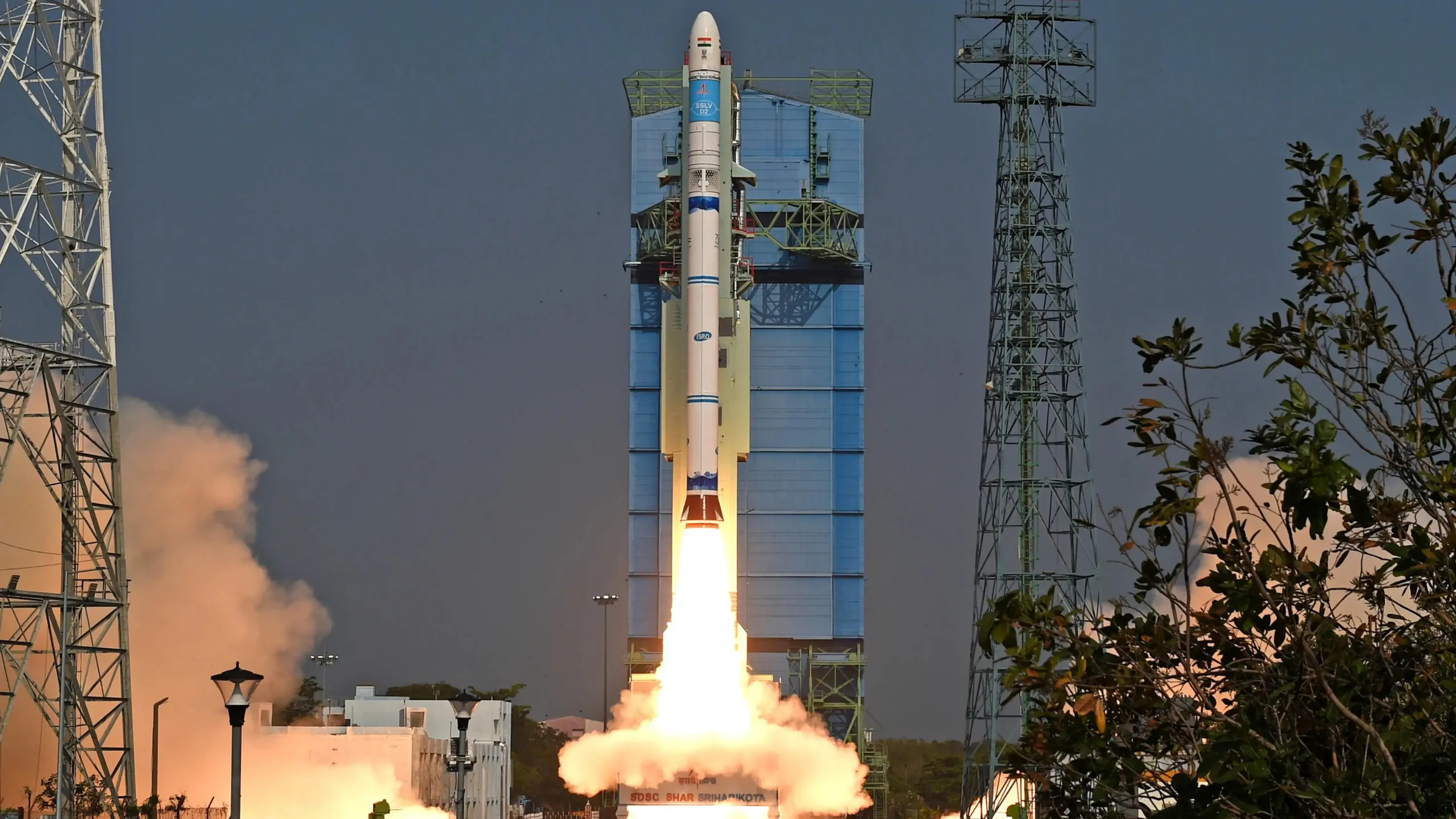
India now operates a substantial fleet and launches regularly, including recent vehicles like the SSLV-D3 aimed at the small-satellite market. That makes debris an operational concern, not a theoretical one.
ISRO runs a space situational awareness programme that tracks objects threatening Indian assets and issues collision warnings, and has committed to making its missions debris-free — passivating upper stages, deorbiting spent hardware and designing disposal into missions from the start rather than bolting it on.
The organisation has also experimented with giving spent rocket stages a second life as orbital platforms instead of abandoning them, which turns a future debris object into a working instrument. As India moves toward human spaceflight and space tourism, the standard rises again: crewed vehicles cannot simply manoeuvre around a debris cloud.
What Happens, By Orbit
| Orbit | Altitude | What Happens to a Dead Satellite | Time to Clear |
|---|---|---|---|
| Very low LEO | Below 300 km | Drags down and burns up on its own | Weeks to months |
| Low LEO | 300–600 km | Natural decay; often an assisted burn | Years to ~25 years |
| High LEO | 800–1,200 km | Stays in the most congested band | Centuries |
| Upper LEO | Above 1,200 km | Effectively permanent | Millennia |
| MEO | 2,000–35,000 km | Moved to a disposal orbit | Indefinite |
| GEO | 35,786 km | Raised ~300 km to the graveyard orbit | Permanent |
Frequently Asked Questions
What happens to a satellite when it stops working?
It keeps orbiting. If it is in low Earth orbit, atmospheric drag will eventually pull it down and it will burn up on reentry — anywhere from weeks to centuries later depending on altitude. If it is in geostationary orbit there is no atmosphere to slow it, so it is instead pushed about 300 km higher into a graveyard orbit before its fuel runs out.
Do dead satellites fall back to Earth?
Only those in low Earth orbit. Below about 600 km, atmospheric drag brings a satellite down within years or decades and almost all of it burns up during reentry. Above roughly 1,200 km, and certainly in geostationary orbit, a dead satellite will not come down on any human timescale.
What is a graveyard orbit?
A disposal orbit roughly 300 km above the geostationary belt, where retired communications and weather satellites are parked. Because a geostationary satellite cannot be deorbited affordably, it is moved up and away from the operational ring instead. The manoeuvre uses about three months' worth of station-keeping fuel and must be performed while the satellite still works.
What is Point Nemo?
The point in the South Pacific furthest from any land, around 2,700 km from the nearest coast. It is used as a spacecraft cemetery: large objects are steered to reenter above it so that any surviving debris lands in empty ocean. The Mir space station was brought down there in 2001.
How much space debris is in orbit?
About 40,000 objects are large enough to track and catalogue. Beyond those, an estimated 1.2 million fragments between 1 and 10 centimetres are in orbit — too small to track, but large enough to destroy a satellite on impact — along with well over a hundred million smaller pieces.
What is Kessler Syndrome?
A cascade scenario described by NASA scientist Donald Kessler in 1978. Once debris density in an orbital band passes a threshold, collisions create fragments faster than the atmosphere removes them, and each collision triggers more. Many researchers believe the crowded 800–1,000 km band may already have crossed that point.
Has a dead satellite ever hit a working one?
Yes. On 10 February 2009, the defunct Russian satellite Kosmos 2251 collided with the operational Iridium 33 at about 789 km over Siberia. Both were destroyed, producing more than 2,000 trackable fragments. It was the first accidental collision between two intact satellites.
What is the 25-year rule, and did it change?
It was the long-standing international guideline that a satellite should be removed from low Earth orbit within 25 years of ending its mission. In 2022 the US Federal Communications Commission shortened this to five years for satellites it licenses, and because most operators need a US licence, that shorter deadline has effectively become the global standard.
Can space debris be cleaned up?
Removal missions are in development, using robotic arms, nets, harpoons, magnetic capture plates and ion beams. The technical challenge of catching a tumbling object with no docking points is real, but the harder obstacles are legal and financial — debris legally remains the property of its launching state, and nobody has agreed who pays to remove it.
Is space debris dangerous to people on the ground?
Very rarely. The overwhelming majority of a reentering satellite vaporises at over 1,500°C. Dense, heat-resistant components such as titanium tanks can survive, which is why large objects are given controlled reentries over the ocean. No one has ever been killed by reentering space debris.
Conclusion
A satellite that stops working does not disappear. It becomes a object with mass, velocity and no ability to get out of anyone's way — and whether that matters depends almost entirely on how high it was when it died.
Low enough, and physics handles the disposal: the atmosphere drags it down and fire takes care of the rest. High enough, and it joins a permanent population of hardware that will outlast every institution that built it. In between sits the band where most of the risk now lives, where a single collision can produce thousands of fragments that nobody can track and nobody can remove.
What has changed in the last decade is that the industry stopped treating this as someone else's problem. Disposal is designed in from the start. Satellites fly lower so they fall faster. Tanks are vented and batteries discharged before a spacecraft is let go. The deadline for clearing low Earth orbit went from twenty-five years to five.
None of that removes what is already up there. That will take removal missions that are still being built, and legal agreements that have not been written. But the direction has reversed, and the question has shifted from whether dead satellites matter to how quickly we can deal with the ones we have already left behind.
Every satellite launched today is designed with its own ending in mind. Given what is already circling above us, that is not caution. It is the minimum.





0 Comments