
Robots in Indian Hospitals: How Automation Is Changing Patient Care in 2026
Walk into a growing number of Indian hospitals in 2026, and you will find something that would have sounded like
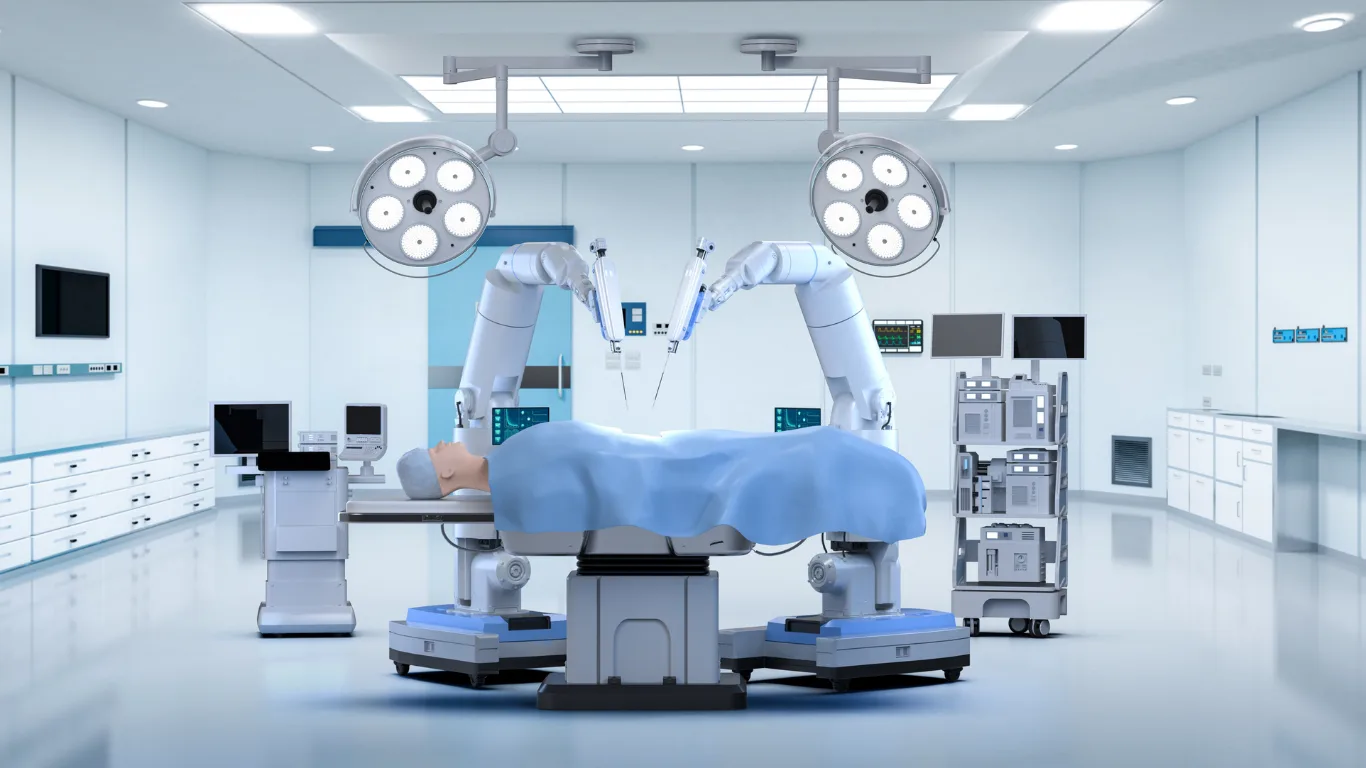
Walk into a growing number of Indian hospitals in 2026, and you will find something that would have sounded like science fiction barely a decade ago: robots in Indian hospitals performing surgery, delivering medicines through corridors, disinfecting ICU wards, and even allowing a surgeon sitting 10,000 kilometres away to operate on a patient in real time. This is not a future prediction — it is happening right now, across both India’s largest metro hospitals and increasingly its tier-2 and tier-3 cities.
India’s medical robotics market was valued at roughly USD 1.32 billion in 2024 and is projected to reach USD 8.12 billion by 2033, growing at a compound annual growth rate of approximately 20.6%. The country now has over 300 surgical robots installed across its hospitals, performing around 60,000 robotic procedures annually. In this article, we explore exactly how automation is reshaping Indian patient care in 2026 — from surgical precision and telesurgery breakthroughs to hospital logistics, disinfection, and the homegrown Indian companies leading this transformation.
Why Are Robots Suddenly Everywhere in Indian Hospitals?
Several forces are converging at once to accelerate hospital automation in India. India’s healthcare system faces real staff shortages and administrative burnout, particularly with an ageing population that requires more round-the-clock monitoring than the current workforce can comfortably provide. At the same time, rising demand for minimally invasive surgery is pushing hospitals to invest in robotic systems that reduce complications and shorten recovery times. Government initiatives like Make in India are also actively encouraging domestic medical robotics manufacturing, reducing reliance on expensive imported systems and making advanced robotic care more financially accessible to a broader range of hospitals.
Surgical Robots in Indian Hospitals: Real Results, Real Hospitals
Surgical robotics is where automation’s impact on Indian patient care is most measurable and most dramatic. Robotic-assisted surgery was first introduced in India back in 2006, and by 2019 had already crossed 12,800 robotic-assisted procedures. The pace has accelerated sharply since.
At Kauvery Hospital in Bangalore, robotic technology is deployed across a wide range of procedures, including kidney transplants and bypass operations. The hospital performed 500 robotic procedures in just over a year — a pace that puts it among the busiest robotic surgery centres in Asia. The clinical results speak for themselves: patients undergoing robotic CABG (coronary artery bypass graft) surgery are often mobile within a day and discharged by the fourth day, compared to at least a week’s hospital stay with conventional surgery. For prostate surgery, robotic procedures have cut hospital stays from 10 days down to just three.
At Apollo Hospital, Delhi, orthopaedic and spine surgeons use the Cuvis joint robotic system, now deployed across 62 hospitals in India, which uses AI algorithms to study multi-dimensional images of bone and tissue and precisely position its robotic arms during spinal surgery. According to Dr. Rajesh Malhotra, a noted orthopaedic surgeon at Apollo, the system functions “like a periscope,” allowing surgeons to see and access areas behind organs that would otherwise be extremely difficult to reach safely — significantly improving precision while reducing tissue trauma and physical strain on the surgeon.
SSI Mantra: India’s Own Indigenous Surgical Robot
Perhaps the most remarkable story in this space is entirely homegrown. SS Innovations International, a Gurugram-based company, developed SSI Mantra — India’s first indigenous surgical robotic system, built specifically to make advanced robotic surgery more cost-effective and accessible, both within India and across other developing healthcare markets.
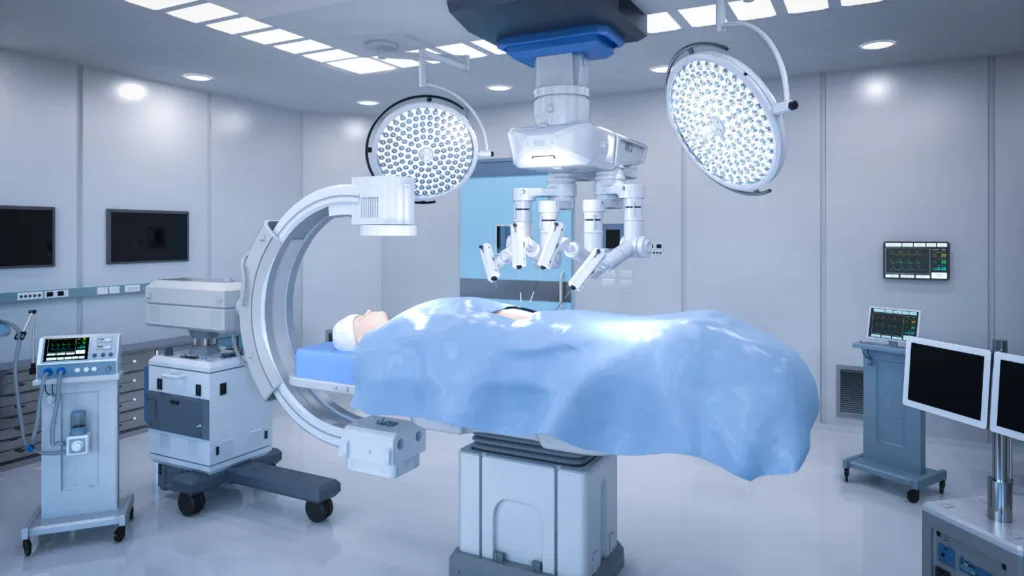
The SSI Mantra 3, the latest generation of the platform, features five slimmer robotic arms, an immersive 3D HD headset for the operating surgeon, and a 3D 4K vision cart that lets the entire surgical team see the same high-definition view simultaneously. Its eight degrees of freedom and autonomous camera control allow for complex manoeuvres like precision suturing, even in challenging cases.
What makes SSI Mantra genuinely historic, though, is its role in telesurgery — and this is where India has quietly become a global pioneer.
Telesurgery in India: Operating From 10,000 Kilometres Away
SS Innovations holds a unique distinction: it is the only surgical robotics company to receive Central Drugs Standard Control Organisation (CDSCO) regulatory approval for both tele-proctoring and telesurgery in India. This has enabled a string of genuinely historic procedures.
India’s first human telesurgery trial used the SSI Mantra system to perform a robotic cholecystectomy between the World Laparoscopy Hospital and SSI’s headquarters, a distance of 5 kilometres, transmitted over Airtel’s fibreoptic network with no perceptible delay. The technology has since scaled dramatically: in a landmark international demonstration during the Royal Australasian College of Surgeons’ 2026 Annual Scientific Congress, a surgeon based in Perth, Australia, remotely performed a robotic gastrojejunostomy on a patient in Indore, India — a distance of over 10,000 kilometres — completing the highly complex procedure in under three minutes with round-trip latency maintained below 150 milliseconds.
Closer to home, the technology is already reaching India’s underserved regions. In Andhra Pradesh, a robotic cholecystectomy was performed remotely at Tirumala Medicover Hospital in Vizianagaram, a tier-3 city, by a surgeon operating from SS Innovations’ headquarters — directly bridging the gap between advanced surgical expertise and smaller-city patients who would otherwise need to travel long distances for equivalent care. A separate inter-hospital telesurgery was also successfully completed between Chennai and Salem, with the patient discharged uneventfully the following day.
According to Dr. Mohit Bhandari, President of IRCAD India, who conducted the Perth-to-Indore procedure: this milestone demonstrates that distance is no longer a barrier in delivering advanced surgical care, validating both the robustness of the made-in-India SSI Mantra platform and a genuinely new model for collaborative, patient-centred healthcare delivery.
Misso: India’s AI-Powered Robotic Knee Replacement System
Another major indigenous innovation is Misso, India’s first artificial intelligence-powered robotic system designed specifically for knee replacement surgery, developed by Meril Life Sciences. Misso was demonstrated to Prime Minister Narendra Modi during the inauguration of the first phase of the 450-bed Namo Hospital in Silvassa, Dadra and Nagar Haveli — a moment widely regarded as a landmark in India’s medical technology journey.
Misso uses AI guidance to enhance surgical precision, aiming to reduce recovery time and improve overall patient outcomes for one of the most commonly performed orthopaedic procedures in the country. Its launch underscores a broader shift: India is no longer simply a buyer of imported medical robotics — it is increasingly becoming a developer and exporter of its own.
Beyond Surgery: How Hospital Logistics and Disinfection Robots Are Changing Daily Patient Care
While surgical robots get most of the headlines, a quieter but equally important automation revolution is happening in the day-to-day operations of Indian hospitals.
Disinfection and Infection Control Robots
Robots equipped with UV-C light or hydrogen peroxide vapour systems are increasingly used to disinfect hospital rooms and reduce hospital-acquired infections, particularly in sensitive environments like maternal and neonatal care units. These robots played a meaningfully important role in India during the COVID-19 pandemic, helping maintain sterile environments while protecting frontline healthcare workers from repeated direct exposure.
Hospital Logistics Robots
Autonomous robots are now handling medicine delivery, lab sample transport, and movement of consumables throughout hospital corridors — freeing up nursing and support staff for direct patient care instead of repetitive movement tasks. The global hospital logistics robots market was estimated at USD 2,204.30 million in 2025 and is projected to reach USD 8,784.16 million by 2032, reflecting just how rapidly this segment of “invisible” hospital automation is scaling.
Patient Monitoring and Telepresence Robots
Safety and monitoring robots use AI-assisted vision and telepresence systems to track patient vitals and communicate with patients remotely, reducing the burden on overstretched nursing staff. Given India’s large ageing population and ongoing healthcare staff shortages, these systems offer a practical way to extend round-the-clock monitoring capacity without proportionally increasing headcount.
India’s Push for Domestic Medical Robot Manufacturing
India’s medical robotics ambitions extend well beyond surgery. Shukra Pharmaceuticals, through its robotics subsidiary, entered into a partnership with US-based Borns Medical Robotics in January 2026 to introduce and commercialise next-generation AI-enabled soft-tissue surgical robotic systems across India and select South Asian countries. Separately, indigenous innovation is also extending into hospital monitoring technology, with new AI-driven robotic assistants — sometimes referred to under the umbrella term MedBot in industry coverage — designed to reduce manual monitoring workloads and support earlier disease detection, with hospital deployment targeted from a manufacturing facility at YEIDA’s Medical Device Park in Greater Noida.
This pattern — international partnerships combined with genuine domestic manufacturing investment — reflects a deliberate strategic shift. Rather than simply importing expensive surgical robots from established global players like Intuitive Surgical or Medtronic, India is increasingly building its own robotics ecosystem, in much the same way it has pursued self-reliance in pharmaceuticals and electronics manufacturing.
Who Are the Top Medical Robotics Companies in India?
| Company | Known For | Origin |
| SS Innovations International | SSI Mantra surgical robot, telesurgery pioneer | Indigenous (India) |
| Meril Life Sciences | Misso AI-powered knee replacement robot | Indigenous (India) |
| Theranautilus Private Limited | Medical robotics R&D | Indigenous (India) |
| DiFACTO Robotics and Automation | Medical automation systems | Indigenous (India) |
| Intuitive Surgical | da Vinci surgical system (global leader) | International |
| Medtronic | Hugo surgical robotic system | International |
| CMR Surgical | Versius modular surgical robot | International (UK) |
| Stryker India | Robotic-assisted orthopaedic systems | International, India operations |
It’s worth noting the broader global context too: Medtronic’s modular Hugo system and CMR Surgical’s portable Versius robot reflect an industry-wide shift toward space-efficient, scalable surgical robotics — a trend that is particularly relevant for Indian hospitals, many of which operate with tighter operating room space than their Western counterparts and benefit significantly from this modular, flexible approach.
What Does Hospital Automation Actually Mean for Patients?
- Shorter hospital stays: Robotic CABG patients are often discharged by day four versus a week or more conventionally; robotic prostate surgery has cut stays from 10 days to three
- Fewer complications: Enhanced precision and 3D visualisation reduce tissue trauma and surgical errors
- Access to specialist care regardless of location: Telesurgery now allows patients in tier-3 cities to receive surgery performed by specialists located anywhere in the country, or even the world
- Reduced infection risk: UV-C and vapour disinfection robots lower hospital-acquired infection rates, particularly in maternal and neonatal units
- More attentive nursing care: Logistics and monitoring robots free up nursing staff from repetitive tasks, allowing more time for direct patient interaction
- Lower long-term costs: Indigenous systems like SSI Mantra are specifically designed to make robotic surgery more cost-effective, gradually narrowing the price gap with conventional surgery
Challenges Facing Robotic Adoption in Indian Hospitals
Despite the rapid progress, real challenges remain. Infrastructure and accessibility issues continue to limit adoption outside large hospitals — while major metro and tier-1 hospitals are adopting robotics quickly, smaller healthcare centres in rural and semi-urban India still face meaningful limitations in funding, trained staff, and reliable high-speed connectivity needed for telesurgery specifically.
The high upfront and ongoing costs of imported surgical robotic systems also remain a genuine barrier for many hospitals, which is precisely why the rise of indigenous, lower-cost platforms like SSI Mantra is considered so strategically important for India’s long-term healthcare equity goals. Surgeon training and credentialing for robotic systems also takes time, meaning the pace of adoption is naturally gated by how quickly enough specialists can be properly trained on each platform.
The Road Ahead: India’s Medical Robotics Market Through 2033
The trajectory is unambiguous. Beyond the overall market growing from USD 1.32 billion to a projected USD 8.12 billion by 2033, India’s telesurgery market specifically was valued at USD 35.36 million in 2024 and is projected to reach USD 177.96 million by 2033, growing at roughly 18% annually. The overall surgical robotics segment is projected to continue growing at around 10% CAGR through 2036.
What makes this growth particularly significant for India specifically is the telesurgery angle: advancements in AI integration and remote healthcare technology are expected to meaningfully improve access to specialised surgical care in rural and currently underserved regions — precisely the populations that have historically had the least access to advanced medical treatment in India’s healthcare system.
Frequently Asked Questions: Robots in Indian Hospitals
Q1. How are robots being used in Indian hospitals in 2026?
Robots in Indian hospitals are used for surgical procedures (orthopaedic, cardiac, urological, gynaecological), telesurgery across long distances, hospital disinfection using UV-C light, medicine and lab sample delivery, and AI-powered patient monitoring to reduce nursing staff burden.
Q2. How many surgical robots are currently installed in Indian hospitals?
India has over 300 surgical robots installed across its hospitals as of recent data, performing approximately 60,000 robotic-assisted procedures annually.
Q3. What is SSI Mantra?
SSI Mantra is India’s first indigenous surgical robotic system, developed by SS Innovations International. It is designed to make advanced robotic surgery more cost-effective and accessible, and is the only surgical robotic platform currently approved by India’s CDSCO for both tele-proctoring and telesurgery.
Q4. What is telesurgery and has it actually been performed in India?
Telesurgery is a robotic surgical procedure performed remotely, with the surgeon operating controls from a different location than the patient. India has performed multiple real telesurgeries, including a historic procedure where a surgeon in Perth, Australia operated on a patient in Indore, India — a distance of over 10,000 kilometres — using the SSI Mantra system.
Q5. How much does India’s medical robotics market grow each year?
India’s medical robotics market is growing at a compound annual growth rate (CAGR) of approximately 20.6%, expected to grow from USD 1.32 billion in 2024 to USD 8.12 billion by 2033.
Q6. Do robotic surgeries reduce hospital stay time?
Yes, significantly. At Kauvery Hospital in Bangalore, robotic CABG (bypass) patients are often mobile within a day and discharged by day four, compared to at least a week with conventional surgery. Robotic prostate surgery has reduced hospital stays from 10 days to just three.
Q7. What is Misso, India’s AI knee replacement robot?
Misso is India’s first AI-powered robotic system designed for knee replacement surgery, developed by Meril Life Sciences. It was demonstrated to Prime Minister Narendra Modi during the inauguration of Namo Hospital in Silvassa, and uses AI guidance to improve surgical precision and reduce recovery time.
Q8. Are robots used for hospital cleaning and disinfection in India?
Yes. Robots equipped with UV-C light or hydrogen peroxide vapour systems are used to disinfect hospital rooms in India, particularly in maternal and neonatal care units, reducing hospital-acquired infections. These robots played a significant role during the COVID-19 pandemic.
Q9. Can robots deliver medicines and lab samples inside hospitals?
Yes, autonomous logistics robots are increasingly deployed in Indian hospitals to transport medicines, lab samples, and consumables through corridors, reducing manual workload for nursing and support staff.
Q10. What was India’s longest-distance telesurgery?
The longest publicly reported telesurgery linked to India spans over 10,000 kilometres, performed between Perth, Australia, and Indore, India, using the SSI Mantra Surgical Robotic System, with round-trip latency maintained below 150 milliseconds.
Q11. Has telesurgery reached smaller Indian cities, not just metros?
Yes. A robotic cholecystectomy was performed via telesurgery at Tirumala Medicover Hospital in Vizianagaram, a tier-3 city in Andhra Pradesh, demonstrating how the technology is beginning to bridge the urban-rural healthcare access gap.
Q12. What is the Cuvis robotic system used for in India?
Cuvis is a joint (orthopaedic) robotic system deployed in 62 hospitals across India, used primarily for spinal and joint surgeries. It uses AI algorithms to analyse CT scans and precisely position robotic arms during complex procedures, improving access and reducing tissue trauma.
Q13. Are Indian-made surgical robots cheaper than imported ones?
Indigenous systems like SSI Mantra are specifically designed and positioned to be more cost-effective than established imported systems like Intuitive Surgical’s da Vinci, helping make advanced robotic surgery accessible to a broader range of Indian hospitals, including those outside major metro cities.
Q14. What regulatory approval do surgical robots need in India?
Surgical robotic systems require approval from India’s Central Drugs Standard Control Organisation (CDSCO). SS Innovations International is currently the only surgical robotics company to hold CDSCO approval specifically for both tele-proctoring and telesurgery in India.
Q15. What challenges are slowing robotic adoption in Indian hospitals?
Key challenges include high upfront and ongoing costs of robotic systems (particularly imported ones), limited infrastructure and connectivity in smaller and rural hospitals, and the time required to properly train and credential surgeons on new robotic platforms.
Q16. How big is India’s telesurgery market expected to become?
India’s telesurgery market was valued at USD 35.36 million in 2024 and is projected to reach USD 177.96 million by 2033, growing at a CAGR of approximately 18.14%.
Q17. Do robots fully replace doctors and surgeons in Indian hospitals?
No. Surgical robots are tools controlled and guided by human surgeons in real time; they enhance precision, visualization, and dexterity but do not operate autonomously without a surgeon’s direct control. Robots in hospital logistics and monitoring similarly support staff rather than replace clinical decision-making.
Q18. Which Indian hospitals use the most advanced robotic surgery technology?
Notable examples include Kauvery Hospital (Bangalore) for cardiac and transplant robotic surgery, Apollo Hospital (Delhi) for AI-guided spinal robotics using the Cuvis system, and multiple hospitals across India using the indigenous SSI Mantra platform for general, urological, and gynaecological robotic surgery.
Q19. How does AI work alongside robots in Indian hospital care?
AI is integrated into many robotic systems to assist with image analysis (such as CT scan interpretation), precision guidance during surgery, and predictive patient monitoring, reducing manual workload for medical staff and supporting earlier disease detection in some emerging platforms.
Q20. Is robotic surgery covered by health insurance in India?
Coverage varies by insurer and policy. Many major health insurance providers in India now cover robotic-assisted surgery for specific procedures, but coverage details, sub-limits, and co-payment requirements differ significantly between insurers and individual policies, so checking directly with your insurer before a planned procedure is strongly recommended.
Final Thoughts
Robots in Indian hospitals have moved decisively from experimental novelty to genuine clinical infrastructure in 2026. From the precision of AI-guided knee replacement systems like Misso, to the world-record-setting telesurgery achievements of the indigenous SSI Mantra platform, to the quieter but equally vital work of disinfection and logistics robots throughout hospital corridors, automation is measurably improving patient outcomes — shorter hospital stays, fewer complications, and surgical expertise that can now reach a tier-3 city in Andhra Pradesh just as easily as a top hospital in Delhi or Bangalore.
The next decade will likely be defined by how successfully India scales this technology beyond its largest metro hospitals — and based on the trajectory so far, with homegrown innovation increasingly leading rather than following global trends, the outlook for Indian patient care looks genuinely promising.
Have you or a family member experienced robotic surgery in an Indian hospital? Share your experience in the comments below.
*This article reflects publicly reported data, hospital case studies, and company statements as of June 2026. Always consult your treating physician and hospital directly regarding specific procedure availability and insurance coverage.






0 Comments