
Best Electric Cars Expected in India in 2027
2027 is when EVs in India finally reach mainstream prices. Here are the electric cars expected, what each should cost, and why every date on the list is provisional.
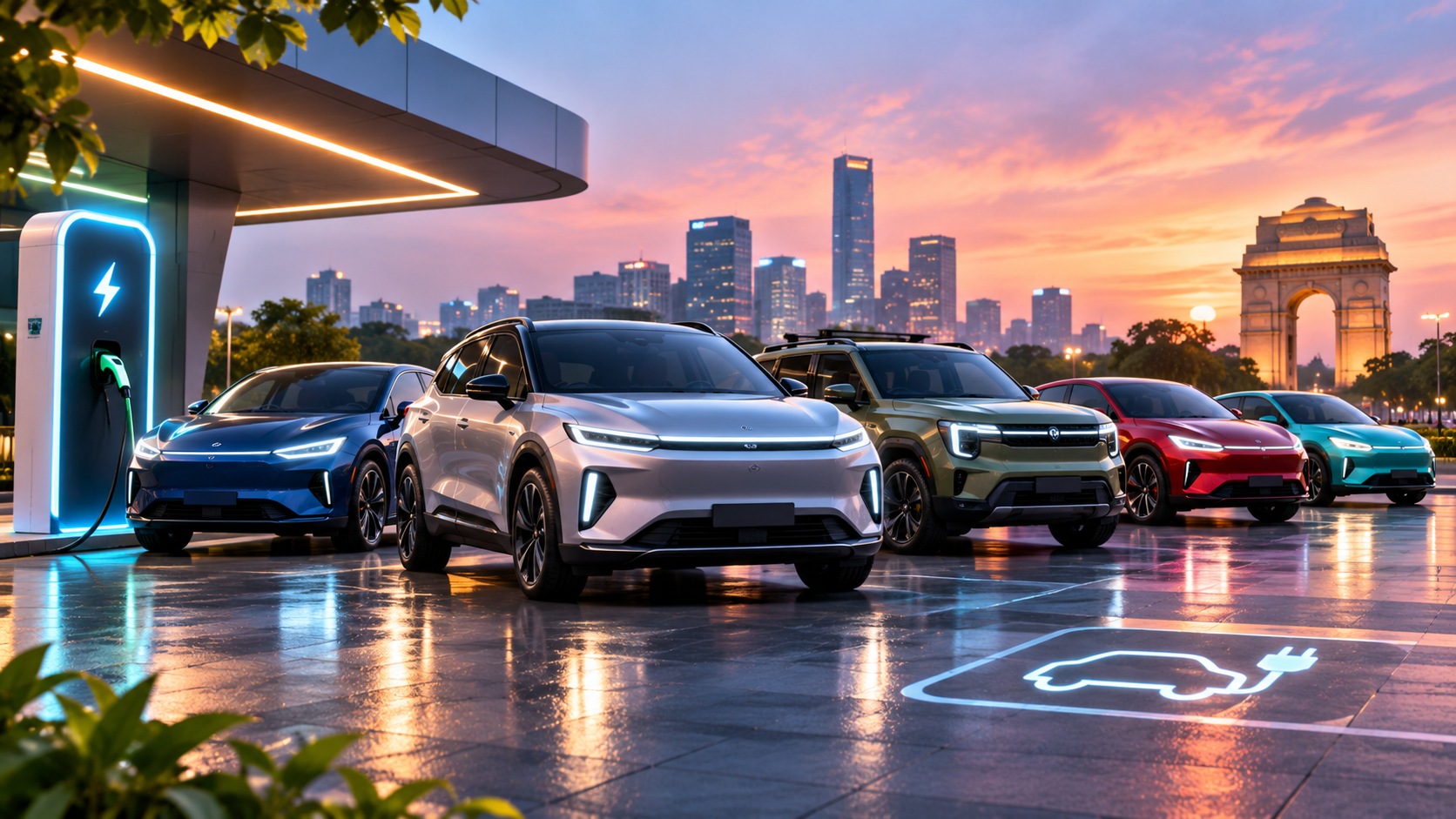
2027 is shaping up to be the year the Indian electric car market stops being a story about early adopters and starts being a story about ordinary buyers.
The reason is simple arithmetic. Until now, almost every credible EV in India has started above ₹15 lakh, which puts it beyond the segment where most cars in this country are actually sold. The models expected in 2027 change that. Several are projected to land near ₹12 lakh, and at least one is talked about closer to ₹10 lakh — squarely in the territory where a family replacing a petrol hatchback might genuinely consider going electric instead.
This guide covers the upcoming electric cars in India in 2027, what each one is expected to offer, the realistic price bands, and — just as importantly — why you should treat every date here as provisional.
One honest warning before we start: EV launch timelines in India slip constantly. Models announced for one year routinely arrive the next, and several cars in this list have no officially confirmed date at all. Treat this as a map of what is coming, not a calendar.
Why 2027 Is the Year That Matters
Three things are converging, and each one is pushing prices down.
Policy Is Actively Pulling Prices Down
Central and state incentives continue to shape what buyers actually pay. Schemes like PM E-DRIVE support both vehicles and charging infrastructure, while GST on electric vehicles remains far lower than on petrol and diesel equivalents. Several states layer on registration and road tax exemptions.
The practical effect is that an EV's sticker price understates the gap in its favour. We covered this in detail in our look at why the Indian government is pushing EVs — the policy direction has been consistent for years, and manufacturers are planning around it.
Batteries Are Finally Being Made Here
The single biggest cost in an electric car is its battery pack, and for years India imported almost all of them. That is changing. Domestic cell manufacturing capacity is scaling up, and localisation directly cuts the landed cost of a pack.
Battery chemistry is improving alongside it. LFP packs have become the default for affordable EVs because they are cheaper, more thermally stable and longer-lived than older alternatives, even if they carry slightly less energy for their weight. Further out, solid-state batteries promise another significant jump — though not in time for these 2027 launches.
Charging Has Stopped Being a Dealbreaker
The charging network along major highways has expanded enormously, and the corridors that mattered most — Delhi–Jaipur, Mumbai–Pune, Bengaluru–Chennai — are now genuinely usable rather than theoretically covered.
For most owners this matters less than expected anyway. The overwhelming majority of charging happens overnight at home, and a car that starts every morning full changes the ownership experience more than any public network does.
Best Electric Cars Expected in India in 2027
Listed roughly from most affordable to most expensive. Prices are industry expectations rather than official figures, and specifications for several models have not been published.
VinFast VF3 — Expected around ₹10 lakh
The smallest and cheapest entry on this list. The VF3 is a compact two-door electric micro-SUV, designed for city driving rather than highway touring, and it is frequently cited as one of the most affordable EVs headed for India.
Its appeal is narrow but real: a genuinely small, genuinely cheap electric car for dense urban use, where a second vehicle does short daily runs and charges at home overnight.
The compromise is equally clear — modest range, limited space, and a brand still establishing its service footprint in India. No confirmed launch date has been announced.
Watch it if: you want a cheap second car purely for city use.
Maruti Suzuki Fronx EV — Expected around ₹12 lakh, early 2027
This is the most significant car on the list, and it is not close.
Maruti Suzuki sells more cars in India than anyone else, with a service network that reaches places rivals simply do not. When Maruti puts an electric version of a popular compact SUV at roughly ₹12 lakh, it stops being a niche product and becomes a mainstream option overnight.
Industry expectations point to a launch around March 2027, though Maruti has not officially confirmed a date, and battery, motor and range specifications have not been published. Price estimates vary between ₹12 lakh and ₹15 lakh depending on who you ask.
What makes it compelling is not the car itself so much as what surrounds it: resale confidence, parts availability, and a workshop in almost every town. For a first-time EV buyer, that matters more than a few extra kilometres of range.
Watch it if: you want an EV that behaves like a normal car to own.
Hyundai Compact Electric SUV — Expected late 2026 to early 2027
Hyundai is developing a sub-four-metre electric SUV built specifically for India rather than adapted from a global model, which usually produces sharper pricing and packaging suited to Indian roads.
Hyundai has form here. The company has been consistently strong on interior quality and features at every price point, and its existing electric models have been well received. Timing has been pointed at the end of 2026, which in practice often means early 2027.
Watch it if: you prioritise features and cabin quality.
Kia Syros EV — Expected 2027
Kia shares engineering with Hyundai, which means an electric Syros would likely draw on the same platform and components while wearing a sharper, more distinctive design.
Details remain thin — no price or date has been confirmed, and the model is currently discussed as a likely rival to the other compact electric SUVs in this list rather than as a fully detailed product.
Watch it if: you like Hyundai engineering but want bolder styling.
Renault's Two New EVs — Expected by 2027
Renault has signalled plans for two new electric cars in India by 2027. The company has a history of pricing aggressively in this market, and it already understands how to build small cars to an Indian cost target.
If Renault applies that discipline to electric vehicles, it could produce some of the most affordable EVs on sale. Specifics have not been announced.
Watch it if: affordability is your single biggest priority.
Tata Sierra EV — Expected 2026, likely rolling into 2027
Tata has dominated India's EV market for years, and the Sierra revives one of the most fondly remembered nameplates in Indian motoring. The original was a boxy, glasshouse-heavy SUV with a cult following; the electric version carries that identity into a modern package.
Timing has been discussed for 2026, but given how often launches shift, many buyers will realistically be shopping for this car in 2027. Tata's advantage is experience — the company has sold electric cars in volume here longer than anyone, and that shows in charging support and service familiarity.
Watch it if: you want proven EV experience with genuine character.
Mahindra BE.07 — Expected 2027
Mahindra's born-electric range has been one of the more confident efforts from an Indian manufacturer — purpose-built electric platforms rather than converted petrol models, with sharply futuristic styling that genuinely stands apart.
The BE.07 extends that family upward into a larger SUV. Mahindra has indicated the production name may differ from the concept designation, and full specifications have not been released.
Mahindra's strength here is that these cars feel designed rather than adapted. Interior packaging is better, floors are flatter and proportions work in a way converted models rarely match.
Watch it if: you want a larger SUV built as an EV from the ground up.
Maruti Three-Row Electric MPV — Expected 2027
Currently known only by an internal codename, this is a seven-seat electric MPV aimed at a gap nobody has properly filled. India buys three-row vehicles in large numbers, and electric options are almost nonexistent.
Production name, specifications and launch date are all unconfirmed, with reports suggesting late 2026 or 2027. If Maruti prices it sensibly, it could open a genuinely new segment.
Watch it if: you need seven seats and want to go electric.
Honda 0 Alpha — Expected 2027
Honda has been cautious about electrification, which has cost it ground. The 0 Series represents its serious global effort, and the 0 Alpha is the model expected to reach India.
Honda's reputation for mechanical reliability and refinement is strong enough that a credible EV would find buyers quickly. The question is pricing — Honda has not positioned itself as a value brand in India recently.
Watch it if: brand reliability outweighs chasing the lowest price.
Skoda Elroq — Expected early 2027, around ₹50 lakh
Skoda's electric SUV sits at the premium end of this list. European build quality, serious driving dynamics and a well-developed electric platform — but at an expected price that places it in a completely different conversation from the Fronx EV.
At this level you are buying into a different proposition: refinement and engineering rather than running-cost savings.
Watch it if: you want European engineering and the budget allows it.
Tata Avinya — Expected early 2027, ₹35–50 lakh
The Avinya is Tata's flagship statement — a born-electric luxury model on a dedicated platform, with design language far removed from anything else the company sells. Launch has been discussed for early 2027.
It matters beyond its own sales numbers. An Indian manufacturer competing credibly at ₹35–50 lakh against established global brands would be a meaningful shift, and the technology tends to filter downward into cheaper models within a few years.
Watch it if: you want a premium EV from an Indian manufacturer.
Expected Price Bands at a Glance
| Model | Expected price | Expected timing | Type |
|---|---|---|---|
| VinFast VF3 | ~₹10 lakh | Not confirmed | Micro city SUV |
| Maruti Fronx EV | ~₹12 lakh | Around March 2027 | Compact SUV |
| Hyundai compact electric SUV | Not announced | Late 2026 – early 2027 | Sub-4m SUV |
| Kia Syros EV | Not announced | 2027 | Compact SUV |
| Renault EVs (two models) | Not announced | By 2027 | Small cars |
| Tata Sierra EV | Not announced | 2026, may slip | Mid-size SUV |
| Mahindra BE.07 | Not announced | 2027 | Born-electric SUV |
| Maruti electric MPV | Not announced | 2027 | Seven-seat MPV |
| Honda 0 Alpha | Not announced | 2027 | Electric SUV |
| Skoda Elroq | ~₹50 lakh | Early 2027 | Premium SUV |
| Tata Avinya | ₹35–50 lakh | Early 2027 | Flagship EV |
Note how many entries read "not announced". That is the honest state of this market — manufacturers confirm intent long before they confirm numbers.
Should You Wait for 2027, or Buy Now?
This is the real question behind every article like this one, and the answer depends on what you are replacing.
Buy now if your current car is unreliable or you need a vehicle within months. Today's EVs are already competent, and waiting fourteen months to save a modest amount rarely justifies the inconvenience. Our guide to the best EV cars in India right now covers what is actually on sale.
Wait if your budget sits near ₹12 lakh and nothing at that price currently appeals. This is precisely the segment 2027 is expected to transform, and the difference between what ₹12 lakh buys now and what it may buy then could be substantial.
Wait if you need three rows. There is very little electric choice there today, and that is explicitly being addressed.
One caution worth stating plainly: buyers have been told "wait for next year" in this market for several years running, and dates have slipped repeatedly. Waiting for a specific unconfirmed model is a gamble. Waiting for a price segment to mature is a safer bet.
What to Check Before Buying Any EV
Be Realistic About Range
Claimed range figures are generated under test conditions that do not resemble Indian driving. Expect real-world range to land roughly 20–30% below the claimed number, and further in heavy traffic with air conditioning running continuously.
For most people this is still comfortably sufficient. The average Indian commute is far shorter than range anxiety suggests, and a car charged overnight at home starts every day full.
Sort Out Home Charging First
This is the detail that determines whether EV ownership feels effortless or irritating. If you have a dedicated parking space where a charger can be installed, ownership is genuinely easier than running a petrol car — you never visit a fuel station again.
If you park on the street or in a shared society lot with no charging provision, think carefully. Relying entirely on public charging turns a convenience into a chore.
Understand the Battery Warranty
The pack is the most expensive component by a wide margin. Read the warranty terms properly: how many years, how many kilometres, and what percentage of capacity retention is actually guaranteed. A warranty that covers outright failure but not gradual degradation is far weaker than it sounds.
Think About Resale Honestly
The used EV market in India is still immature, and values have been less predictable than for petrol cars. Established brands with wide service networks hold value better — one more reason a mainstream nameplate carries real advantages beyond the showroom.
What Could Go Wrong With These Timelines
Three things routinely delay Indian car launches, and all three are in play.
Supply chains. Battery cells, rare-earth magnets and semiconductors have all caused delays in recent years, and EV production is more exposed to each than petrol manufacturing.
Policy changes. Incentive structures shift, and manufacturers adjust launch timing to land when support is most favourable.
Pricing pressure. If a competitor launches at an aggressive price, rivals often delay to reposition rather than arrive and lose money.
The sensible expectation is that most of these cars arrive within roughly six months of their talked-about dates, and that at least one slips into 2028 entirely. That is not pessimism — it is simply what this market has done consistently.
Frequently Asked Questions
Which electric cars are expected in India in 2027?
The most anticipated include the Maruti Suzuki Fronx EV, Tata Avinya, Mahindra BE.07, Honda 0 Alpha, Skoda Elroq, a Hyundai compact electric SUV, the Kia Syros EV, a Maruti three-row electric MPV and two new Renault electric models. Most of these do not yet have officially confirmed launch dates.
What is the cheapest electric car expected in India in 2027?
The VinFast VF3 is frequently cited at around ₹10 lakh, with the Maruti Suzuki Fronx EV expected near ₹12 lakh. Both figures are industry estimates rather than official prices, and Renault's upcoming models could also land in this range.
When will the Maruti Fronx EV launch in India?
Industry expectations point to a launch around March 2027, though Maruti Suzuki has not officially confirmed a date. Expected pricing sits between ₹12 lakh and ₹15 lakh, and battery, motor and range specifications have not been published.
Should I wait until 2027 to buy an electric car?
Wait if your budget is around ₹12 lakh and nothing currently available appeals, or if you need a seven-seater. Buy now if you need a car within months, since launch dates in this segment slip frequently and today's EVs are already capable.
How much does an electric car cost in India?
Current electric cars start at roughly ₹8 lakh for the smallest models and extend beyond ₹60 lakh for premium imports. The 2027 wave is expected to add significantly more choice between ₹10 lakh and ₹15 lakh, which is where most Indian car sales actually happen.
What is the real-world range of electric cars in India?
Expect roughly 20 to 30 percent less than the claimed figure, and more in heavy traffic with air conditioning running. A car claiming 450 kilometres will realistically deliver somewhere around 320 to 360 in mixed Indian conditions.
Is charging infrastructure in India good enough for an EV?
For most owners, yes. Major highway corridors are now well covered, and the overwhelming majority of charging happens overnight at home. Public charging matters mainly for long-distance travel, and is less critical if you can install a home charger.
How long do EV batteries last in India?
Most manufacturers warranty battery packs for eight years or a specified distance, and packs typically retain a substantial share of their capacity well beyond that. Indian heat does accelerate degradation, which is one reason LFP chemistry has become popular here for its thermal stability.
Are electric cars cheaper to run than petrol cars in India?
Considerably, yes. Charging at home costs a fraction of petrol per kilometre, and electric vehicles have far fewer moving parts, which lowers servicing costs. The savings offset the higher purchase price over several years of ownership.
Do electric cars get government subsidies in India?
Electric vehicles attract a much lower GST rate than petrol and diesel cars, and central schemes support vehicles and charging infrastructure. Many states add registration and road tax exemptions, so the benefit varies by where you live.
Which Indian company makes the best electric cars?
Tata Motors has the longest track record and the largest EV sales volume in India, while Mahindra has built the most ambitious born-electric platforms. Maruti Suzuki's entry is expected to reshape the mass-market segment given its unmatched service network.
Will electric car prices fall in India by 2027?
Prices in the mass-market segment are widely expected to fall as domestic battery manufacturing scales up and competition intensifies. Premium EV prices are less likely to drop significantly, since those models compete on features rather than cost.
Is it worth buying an electric car in India in 2027?
For most buyers with home charging and a typical daily commute, yes. Running costs are dramatically lower, the model choice is expanding rapidly, and the 2027 wave is expected to bring genuinely affordable options into the segment where most Indians actually buy cars.
The Verdict
2027 looks like the year India's EV market finally reaches the people it has been promising to reach.
The single most important car on this list is the Maruti Suzuki Fronx EV. Not because it will be the fastest, the longest-range or the best equipped, but because an electric car at roughly ₹12 lakh from the company with the widest service network in the country removes the two objections that have mattered most: price and peace of mind.
Beyond it, the Tata Sierra EV and Mahindra BE.07 bring genuine character to the mid-market, the Maruti electric MPV targets a gap nobody has filled, and the Tata Avinya tests whether an Indian manufacturer can compete seriously at ₹35–50 lakh.
Just hold the dates loosely. Every timeline here is provisional, several have already moved once, and at least one will move again. The direction of travel is certain; the calendar is not.


0 Comments