
Why India Government Is Promoting EV Vehicles in 2026
Walk into any petrol pump in India today, and you will notice something has changed. The fuel going into your
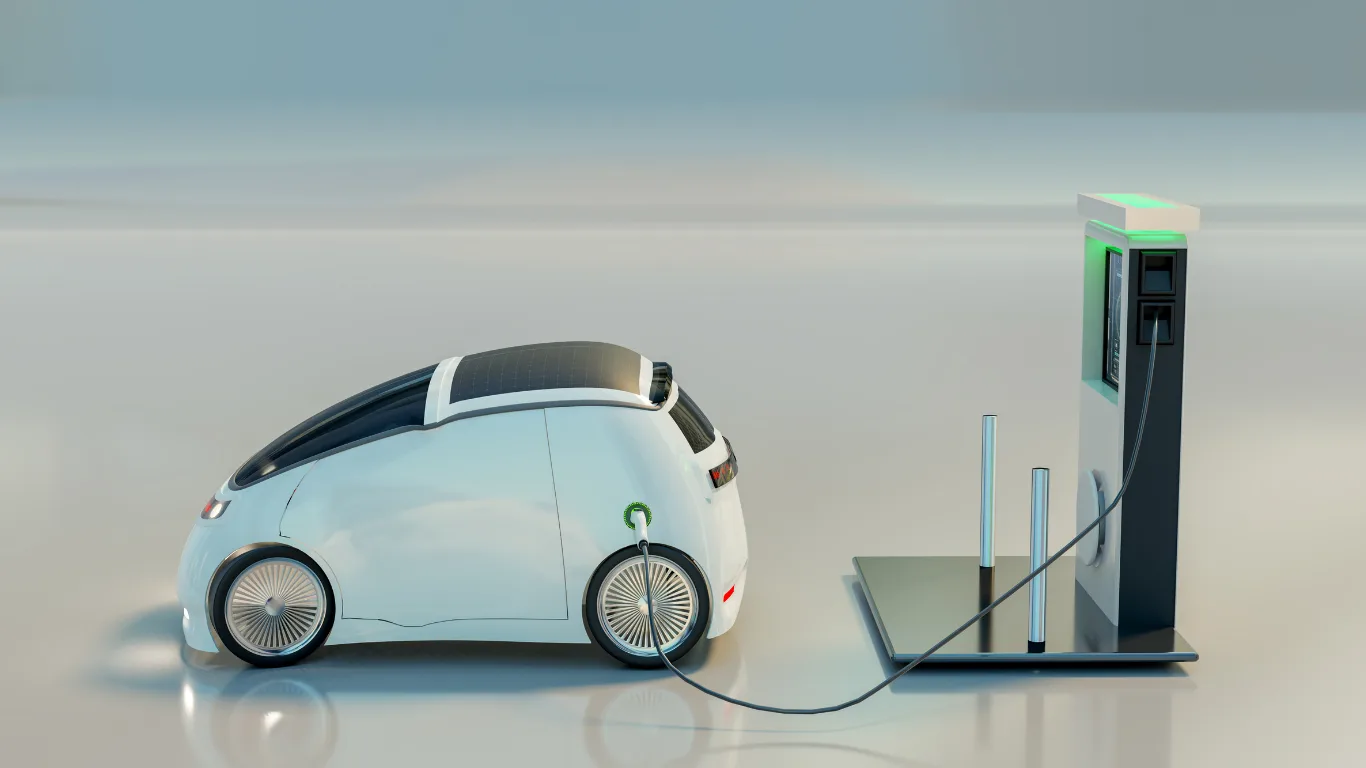
Walk into any petrol pump in India today, and you will notice something has changed. The fuel going into your tank is no longer pure petrol — it is E20, a blend of 80% petrol and 20% ethanol, mandated nationwide from April 1, 2026. At the same time, showrooms across the country are pushing electric vehicles harder than ever, backed by government subsidies, tax breaks, and an aggressive policy push that shows no signs of slowing down.
This is not a coincidence. Why is the Indian government promoting EV vehicles so aggressively in 2026, even while simultaneously rolling out ethanol-blended fuels like E20 and the newly launched E85? The answer lies in a single number that dominates India’s economic and strategic planning every single year: the country’s crude oil import bill.
In this article, we break down exactly why the Indian government has made electric vehicles a national priority, how schemes like PM E-DRIVE and state EV policies work, what the E20 and E85 petrol rollout really means for current vehicle owners, and which electric cars are leading India’s EV transition in 2026.
Why Is the India Government Promoting EV Vehicles? The Core Reason
India imports more than 85% of the crude oil it consumes. Every time global oil prices spike — and they have spiked repeatedly due to geopolitical conflicts in recent years — India’s trade deficit widens, the rupee weakens, and the cost of nearly everything in the economy rises. Reducing dependence on imported crude oil is, without exaggeration, a matter of national economic security for India.
Electric vehicles attack this problem directly. An EV running on electricity generated domestically — increasingly from solar and renewable sources — does not require a single drop of imported crude oil to operate. Multiply that by the tens of millions of vehicles on Indian roads, and the impact on the country’s import bill becomes substantial. This single strategic reason underpins almost every EV policy decision the Indian government has made over the past decade.
But oil dependency is only one part of the picture. The government’s EV push rests on four pillars:
- Energy security: Reducing reliance on imported crude oil and volatile global oil markets
- Environmental health: Cutting vehicular emissions that contribute heavily to urban air pollution
- Domestic manufacturing: Building an Indian EV and battery manufacturing ecosystem under “Make in India”
- Economic opportunity: Creating new industries, jobs, and export potential in batteries, components, and charging infrastructure
How the Indian Government Is Promoting EVs: Key Schemes and Policies
The Indian government’s EV push is not just rhetoric — it is backed by structured, well-funded schemes that have evolved significantly over the past several years.
1. From FAME to PM E-DRIVE: The Evolution of EV Subsidies
The FAME scheme (Faster Adoption and Manufacturing of Electric Vehicles) was India’s original flagship EV incentive programme, launched in 2015. FAME-I ran until March 2019, and FAME-II followed from April 2019 to March 2024 with an outlay of ₹10,000 crore, covering electric two-wheelers, three-wheelers, passenger vehicles, buses, and charging infrastructure.
When FAME-II concluded, the government replaced it with the PM E-DRIVE scheme (PM Electric Drive Revolution in Innovative Vehicle Enhancement), notified in September 2024 with a total outlay of ₹10,900 crore, running from October 1, 2024. This scheme has since been amended to reflect a maturing EV market — demand incentives for electric two-wheelers were extended to July 31, 2026, while support for e-rickshaws, electric buses, trucks, and charging infrastructure has been extended all the way to March 2028.
| Scheme | Duration | Outlay | Coverage |
| FAME-I | 2015 – March 2019 | — | Hybrid + electric vehicles, all categories |
| FAME-II | April 2019 – March 2024 | ₹10,000 crore | 2W, 3W, 4W, buses, charging infra |
| PM E-DRIVE | Oct 2024 – March 2026 (extended to 2028 for some segments) | ₹10,900 crore | 2W, 3W, buses, trucks, ambulances, charging infra |
Under PM E-DRIVE, the demand incentive structure is capped at ₹2,500 per kWh (reduced from the original ₹5,000 per kWh to encourage gradual market maturity), with a maximum subsidy of ₹5,000 per vehicle for electric two-wheelers meeting advanced battery standards. A substantial ₹2,000 crore of the total outlay is specifically earmarked for expanding public charging infrastructure, targeting approximately 72,000 new charging stations across the country by FY 2025-26 — a massive jump compared to the roughly 9,300 chargers FAME-II supported over five years.
2. Charging Infrastructure Push
One of the biggest barriers to EV adoption in any country is “range anxiety” — the fear of running out of charge with nowhere to plug in. The Indian government has directly targeted this problem by funding charger installation across 50 national highway corridors and high-footfall public locations including metro stations, airports, bus depots, and fuel stations. The plan includes roughly 22,100 fast chargers for cars, 1,800 stations for e-buses, and 48,400 chargers for two- and three-wheelers.
3. Tax Benefits and Customs Duty Exemptions
Beyond direct purchase subsidies, the government has layered in multiple tax incentives:
- Concessional 5% GST on electric vehicles, compared to 28-43% GST plus cess on petrol and diesel vehicles
- Income tax rebates under Section 80EEB on interest paid for EV loans
- Customs duty exemptions on critical battery inputs like cobalt, lithium-ion waste, and nickel compounds, announced in Budget 2025
- A 713% budget increase for the Production-Linked Incentive (PLI) scheme covering EV components and battery manufacturing
- A ₹10,000 crore National Clean Tech Mission to support domestic battery and solar panel production
4. State-Level EV Policies
Beyond central schemes, individual states have rolled out their own aggressive EV policies. Delhi’s EV policy offers a 100% subsidy of up to ₹6,000 per home charging point and one of the lowest EV electricity tariffs in the country at ₹4.5 per kWh. Karnataka’s EV Policy (2023-2028) provides a 25% capital subsidy on charging equipment and has built the highest number of charging stations in India, driven heavily by Bengaluru’s tech-forward adoption. Maharashtra’s EV policy runs through 2030, among the longest-running state commitments in the country.
E20 Petrol and E85 Fuel: India’s Parallel Strategy Alongside EVs
Here is where the picture gets genuinely interesting — and where many people get confused. If the government is pushing EVs so hard, why is it also rolling out ethanol-blended petrol like E20 and the newly launched E85? The answer is that these are not competing strategies — they are two parallel tracks of the same mission: reducing India’s dependence on imported crude oil.
What Is E20 Petrol and Why Was It Mandated?
From April 1, 2026, the Ministry of Petroleum and Natural Gas mandated that all petrol sold across India must be E20 — a blend of 80% petrol and 20% ethanol, with a minimum Research Octane Number (RON) of 95. There is no longer a plain-petrol or E10 option available at retail pumps nationwide; E20 is now the default. The only alternative is ethanol-free premium petrol sold under brand names like XP100, Speed 100, and Power100, priced significantly higher at around ₹160 per litre.
The reasoning behind E20 is straightforward: ethanol is produced domestically from sugarcane, maize, and other agricultural feedstocks. Every litre of ethanol blended into petrol is a litre of crude oil India does not need to import. Beyond the energy security angle, E20 also cuts carbon monoxide and greenhouse gas emissions by up to 35% compared to pure petrol, and the higher octane rating helps prevent engine knocking, leading to smoother combustion in compatible engines.
The Real Impact of E20 on Your Vehicle
For vehicles manufactured after April 2023, E20 compatibility is built-in by regulation — these engines come with upgraded rubber seals, fuel lines, and gaskets designed to handle ethanol’s corrosive properties. No changes or precautions are needed.
For older vehicles, particularly those built to BS3 and BS4 standards designed for E5 or E10 fuel at most, the picture is more nuanced. Reports indicate mileage drops of 3-7% in most BS6-era vehicles (2020-2023), while some very old engines have reported drops of up to 20% under real-world conditions. Major manufacturers including Maruti Suzuki, Honda, Hyundai, and Skoda have published model-wise E20 compatibility lists, and SIAM (Society of Indian Automobile Manufacturers) has clarified that manufacturers will honour warranties on older vehicles running E20 regardless of owner’s manual specifications.
| Vehicle Age | E20 Compatibility | Expected Mileage Impact |
| Made after April 2023 | Fully compliant by design | Minimal to none |
| 2020 – early 2023 (BS6 Phase 1) | Material-compatible, not factory-tuned | 3–7% drop |
| Before 2020 (BS4 or older) | Risk of corrosion, seal degradation | Up to 20% drop in some cases |
E85: India’s Next Big Fuel Move
If E20 is the present, E85 is where India is headed next. In June 2026, Union Petroleum Minister Hardeep Singh Puri formally launched E85 fuel — a high ethanol-blended petrol containing 80-85% ethanol — in New Delhi, describing it as a transformative step toward cleaner mobility, stronger energy security, and greater self-reliance.
The rollout plan starts with 50-100 Flex-Fuel Vehicle (FFV) ready fuel stations across the Delhi-NCR and Mumbai-Pune-Nagpur corridors in the first phase, expanding to around 500 outlets by the end of 2026 and nearly 5,000 outlets across major cities by the end of 2027. The government is also considering road tax concessions, pricing incentives, and consumer awareness campaigns to accelerate adoption of Flex-Fuel Vehicles capable of running on E85.
In a significant policy move, NITI Aayog has classified ethanol-based flex-fuel vehicles, including those running on E85, as zero-emission vehicles — putting them in the same regulatory bracket as EVs for emissions purposes, since E85 combustion generates near-zero particulate matter. E85 has also been identified as the mono-fuel standard for Flex-Fuel Vehicles under Bureau of Indian Standards (BIS) specifications, and is expected to be substantially cheaper than conventional petrol for compatible vehicles.
Why Both EVs and Ethanol Fuels Matter to India’s Strategy
This is the key insight that ties the whole picture together: India cannot solve its oil dependency problem with EVs alone, at least not in the near term. The country has over 34 crore registered vehicles, the overwhelming majority of which run on petrol or diesel and will remain on the road for the next decade or more. EVs are the long-term destination for new vehicle purchases, but ethanol blending is the pragmatic bridge that reduces oil dependency across the entire existing vehicle fleet, immediately — without requiring anyone to buy a new car.
Ethanol blending also creates a direct economic benefit that EVs do not: it boosts demand for domestic agricultural produce like sugarcane and maize, supporting rural farming incomes — an important political and economic consideration in India’s largely agrarian economy.
Pollution, Public Health, and the EV Push
Beyond economics, India’s EV promotion is also a direct response to a public health crisis. Several Indian cities consistently rank among the most polluted in the world, with vehicular emissions being a major contributing factor to dangerous air quality, especially in the National Capital Region during winter months. Electric vehicles produce zero tailpipe emissions, directly reducing particulate matter and nitrogen oxide pollution in dense urban areas where the health impact of bad air is most severe.
This is also why ethanol-blended fuels like E85 carry the “zero-emission vehicle” classification from NITI Aayog despite still being combustion-based — their near-zero particulate matter output makes them a meaningfully cleaner option compared to pure petrol, even if they are not zero-emission in the same way a battery EV is.
Building an Indian EV Manufacturing Ecosystem
The Indian government’s EV strategy is not just about getting people to buy electric vehicles — it is equally about ensuring those vehicles, and crucially their batteries, are manufactured in India. The 713% budget increase for the PLI (Production-Linked Incentive) scheme for EV components reflects this priority directly. Customs duty exemptions on critical battery raw materials like cobalt and lithium-ion waste are designed to make domestic battery cell manufacturing more economically viable.
This matters because batteries represent the single largest cost component of any electric vehicle. If India can build a strong domestic battery and component manufacturing base, the cost of EVs will fall further, accelerating adoption while also creating a genuine export industry — something India has historically struggled to do in the auto component space at the cell-chemistry level.
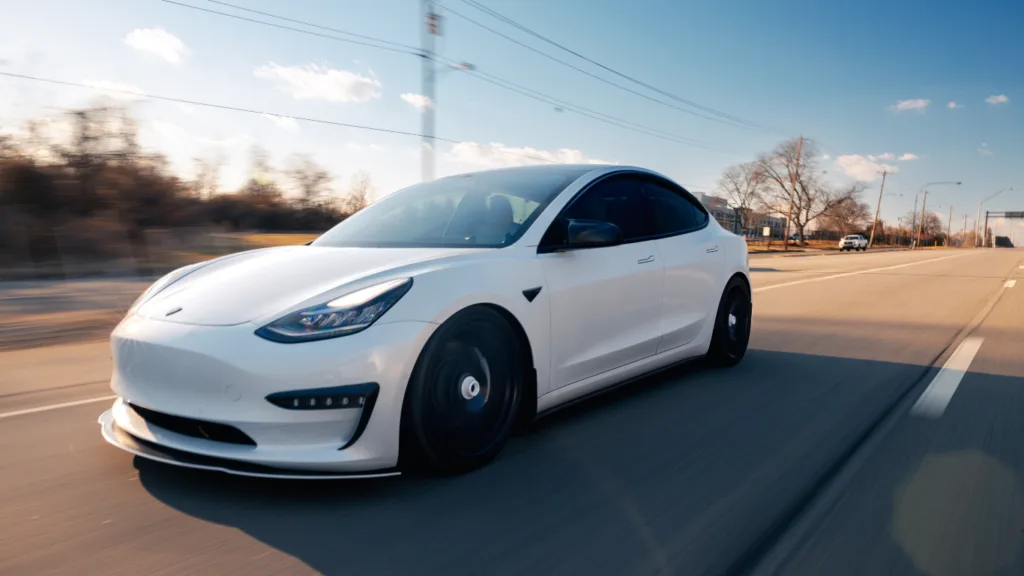
Best EV Cars in India Driving This Government-Backed Transition
With subsidies, tax breaks, and infrastructure support all converging, Indian consumers now have a genuinely strong lineup of electric cars to choose from across every budget. Here are some of the best EV cars in India in 2026 benefiting directly from this policy push:
| Electric Car | Price Range (ex-showroom) | Why It Matters |
| Tata Tiago EV | ₹5.84 – ₹9.99 lakh | India’s most affordable mainstream EV; benefits hugely from 5% GST slab |
| Tata Punch EV | ₹8.09 – ₹12.59 lakh | Best value EV; 5-star safety; ideal for subsidy-driven mass adoption |
| Tata Nexon EV | ₹12.49 – ₹17.49 lakh | India’s best-selling EV; built largely with localised components under PLI push |
| MG Windsor EV | ₹12.04 – ₹16.10 lakh | Battery-as-a-Service model lowers upfront cost, aligning with govt affordability goals |
| Mahindra BE 6 | ₹18.90 – ₹28.49 lakh | Built on indigenous INGLO EV platform — a Make in India manufacturing showcase |
| Maruti Suzuki e Vitara | ₹13.49 – ₹20.01 lakh | India’s largest carmaker entering EVs signals mainstream market maturity |
These vehicles are not just product launches — each one represents the tangible outcome of years of subsidy support, GST concessions, and manufacturing incentives. The fact that India now builds genuinely competitive EVs domestically, across multiple price segments, is the clearest sign that the government’s policy push is translating into real market results.
Challenges That Remain in India’s EV Transition
Despite the strong policy push, India’s EV transition faces real challenges. Adoption rates for electric two-wheelers remained modest at around 4% by late 2023, despite the FAME-II scheme delivering a reported 9x market multiplier effect. Commercial four-wheelers — taxis, fleet vehicles, and delivery cars — represent one of the biggest untapped opportunities, having shown the strongest policy responsiveness of any segment with 211% higher sales growth in states offering purchase subsidies, yet this segment remains largely excluded from PM E-DRIVE’s current incentive structure.
High upfront costs, charging infrastructure that is still concentrated in metro cities, and limited awareness in smaller towns continue to slow adoption outside India’s largest urban centres. As central subsidies for two- and three-wheelers taper off after July 2026, state governments will need to step in more aggressively to sustain momentum.
Frequently Asked Questions
Q1. Why is the Indian government promoting EV vehicles?
The Indian government is promoting EVs primarily to reduce dependence on imported crude oil, which accounts for over 85% of the country’s oil consumption. Other major reasons include cutting urban air pollution, building a domestic EV and battery manufacturing ecosystem under “Make in India,” and creating new economic opportunities in clean technology.
Q2. What is the PM E-DRIVE scheme?
PM E-DRIVE (PM Electric Drive Revolution in Innovative Vehicle Enhancement) is India’s current flagship EV incentive scheme, replacing FAME-II. It runs from October 2024 with a ₹10,900 crore outlay, offering purchase subsidies for electric two-wheelers and three-wheelers (extended to July 2026), and support for electric buses, trucks, and charging infrastructure extended to March 2028.
Q3. What is E20 petrol and is it mandatory in India?
E20 petrol is a fuel blend of 80% petrol and 20% ethanol. It has been mandatory at every petrol pump in India since April 1, 2026, replacing E10 and plain petrol as the default fuel nationwide. Only premium ethanol-free petrol variants remain available at a higher price.
Q4. Will E20 petrol damage my car?
Vehicles manufactured after April 2023 are fully E20-compliant and face no risk. Vehicles from 2020-2023 are material-compatible but may see a 3-7% mileage drop. Older vehicles (BS4 or earlier) face a higher risk of fuel system corrosion and mileage drops of up to 20% in some cases, and should have rubber fuel components inspected regularly.
Q5. What is E85 fuel and when will it be available in India?
E85 is a high ethanol-blended fuel containing 80-85% ethanol, launched in June 2026 by the Ministry of Petroleum and Natural Gas. It is designed for Flex-Fuel Vehicles (FFVs) and is being rolled out in phases — starting with 50-100 stations in Delhi-NCR and Mumbai-Pune-Nagpur, expanding to around 500 stations by end of 2026 and 5,000 stations by end of 2027.
Q6. Are flex-fuel vehicles considered zero-emission in India?
Yes. NITI Aayog has classified ethanol-based flex-fuel vehicles, including those running on E85, as zero-emission vehicles, citing their near-zero particulate matter emissions compared to conventional petrol vehicles.
Q7. Why is India promoting both EVs and ethanol-blended fuel at the same time?
Because they solve the same problem on different timelines. EVs are the long-term solution for new vehicle purchases, while ethanol blending (E20, E85) reduces oil dependency immediately across India’s existing fleet of over 34 crore vehicles, most of which will remain on the road for years. Ethanol blending also boosts rural farm incomes by increasing demand for sugarcane and maize.
Q8. What tax benefits does the Indian government offer on electric vehicles?
Electric vehicles in India attract a concessional 5% GST, compared to 28-43% GST plus cess on petrol and diesel vehicles. Buyers can also claim income tax deductions on EV loan interest under Section 80EEB, and several states offer additional road tax waivers and registration fee exemptions.
Final Thoughts
India’s push toward electric vehicles is not an isolated environmental gesture — it is a calculated, multi-pronged national strategy addressing energy security, public health, domestic manufacturing, and rural economic support all at once. The simultaneous rollout of E20 and E85 ethanol-blended fuels makes this strategy clearer rather than contradictory: the government is attacking oil dependency from every angle simultaneously — pushing new buyers toward EVs while making the existing petrol fleet less oil-dependent through ethanol blending.
For Indian consumers, the message is increasingly clear. Whether you are buying a new vehicle today or holding onto an existing petrol car, the direction of national policy is unmistakable: lower oil dependency, cleaner air, and a stronger domestic manufacturing base. With electric cars like the Tata Punch EV, Tata Nexon EV, and Mahindra BE 6 now offering genuinely competitive range, safety, and features — backed by real subsidies and tax benefits — 2026 may well be remembered as the year India’s EV transition stopped being a future promise and became the present reality.
Are you considering an EV for your next vehicle purchase, or sticking with petrol for now? Let us know in the comments below.
*Information on government schemes, subsidies, and fuel mandates is based on official notifications and public data available as of June 2026. Policy details, subsidy amounts, and timelines are subject to change; please verify current scheme details on official government portals before making purchase decisions.


0 Comments