
Your Job Might Not Exist in 2 Years. Here’s What To Do Before That Happens.
The Father of AGI claims that these three abilities will keep you current: They’re straightforward and uncomplicated. I’ll tell you

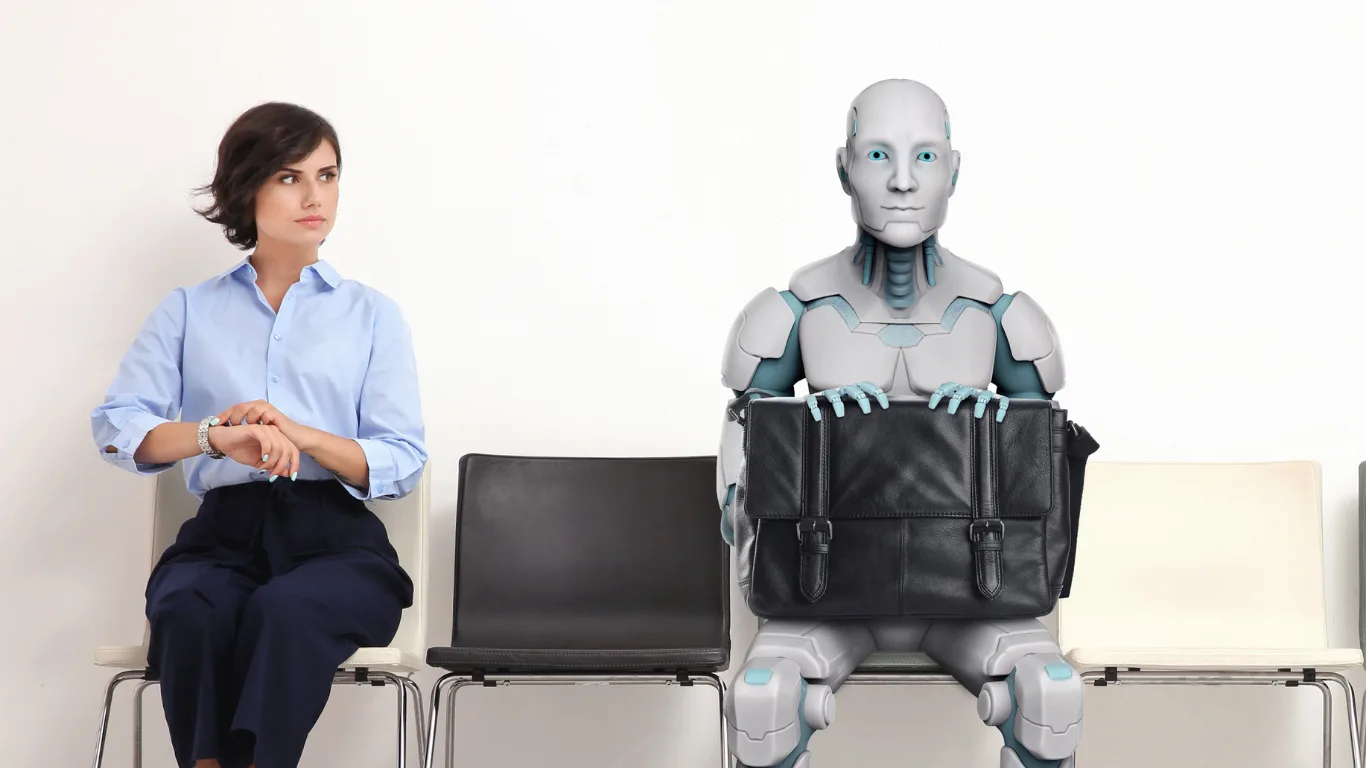
The Father of AGI claims that these three abilities will keep you current: They’re straightforward and uncomplicated. I’ll tell you the truth. I nearly skipped over the headline “Father of AGI warns human jobs will become obsolete” when I first noticed it. I’ve already seen that tale. When an IT employee says anything concerning, Twitter goes berserk for a day before everyone forgets by Friday.
The real scientist who first used the term “artificial general intelligence” in the early 2000s was Ben Goertzel. The man who has worked for thirty years to get precisely what he is saying. When he argues that the bulk of human employment might become obsolete, he is not making a guess. He is witnessing it firsthand from the inside out.
First — What Is AGI, Really?
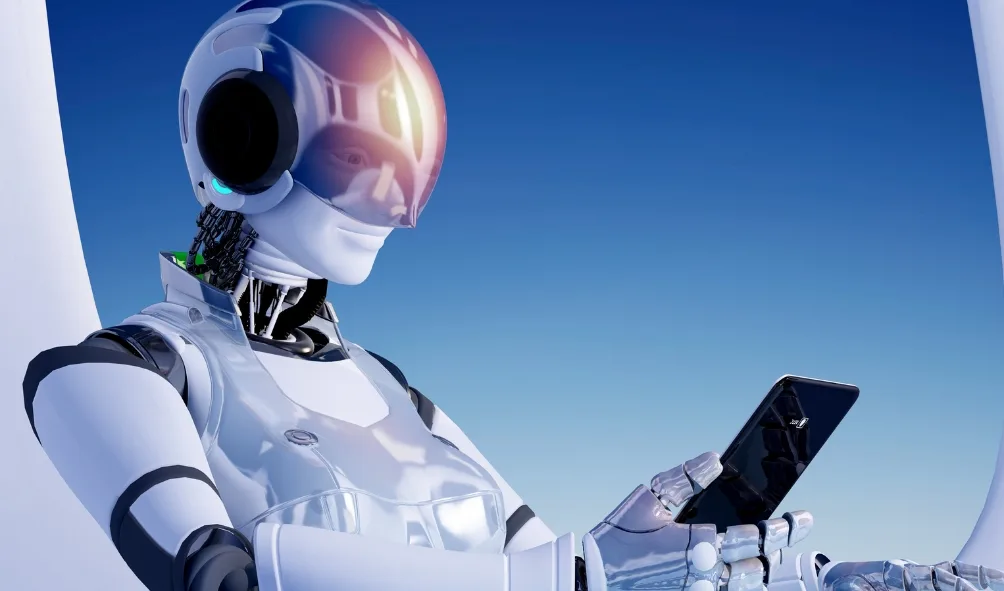
Narrow AI refers to the AI you use on a daily basis, such as ChatGPT, Gemini, or picture generators. It performs exceptionally well at specialized jobs. But it does not think. It matches the pattern. It forecasts. It accomplishes what it was trained to do effectively and inside its lane.
AGI differs. It would reason and learn in any domain—medicine, law, code, design, or relationships—in the same manner that a bright human generalist might, but without regard for speed, cost, or bandwidth.
Goertzel estimates that it will take one to two years to get there.
And what happens when we do? Following this, a superintelligent system emerges. At that moment, he claims, most employment as we know it will be obsolete.
The chronology is still being contested. According to some scholars, the year is 2027. Some say 2040. OpenAI’s Sam Altman stated in late 2025 that AGI has already come quietly and with less fanfare than predicted.
The Disruption Isn’t a Prediction. It’s Already Here.
You do not need AGI to see the fractures emerging.
A year ago, the World Economic Forum polled over 1,000 firms in 55 nations. Their conclusion: 92 million jobs will be lost in the next five years. Yes, 170 million new ones will be generated — but this is what the headline overlooks.
Who is losing their employment and who is required for new ones? They frequently don’t overlap. Various talents. Various backdrops. Different industries. The “net positive” statistic is both mathematically correct and extremely deceptive.
According to the same estimate, 39% of present skills would be obsolete by 2030. Almost four out of every ten skills you possess now will be obsolete within five years.
Goldman Sachs put it bluntly: generative AI might influence the equivalent of 300 million full-time jobs worldwide. According to McKinsey, 30 to 50% of current labor tasks are already automatable, depending on the industry.
And this isn’t only a problem for those who work by hand.
Graphic designers. Junior lawyers. Financial analysts. Junior Developers. Content writers. These are the jobs being discreetly reorganized at firms that most people appreciate. Meta eliminated 10% of its personnel, blaming AI. Microsoft provided buyouts to thousands of workers. Citing AI.
The interruption hasn’t arrived. It has been here for a while. We’ve simply been too busy to notice.
So What Does Goertzel Actually Recommend?
This is where it’s beneficial.
He did not issue a warning and then go off stage. He mentioned three concrete things—not tools to learn or diplomas to collect—but human traits that he feels will be valuable in the future.
1. Emotional Intelligence
AI can send a polite email. It can detect tone, recognize stress, and advise gentler language. It’s already doing so nicely. However, it cannot sense what is going on in a room.
It cannot detect that a client is planning to walk before they say anything. It can’t tell if the quietest member of your team hasn’t spoken up in weeks, and something is wrong. It cannot earn the trust that comes from constantly turning up for someone over the course of many years. That trust is developed between individuals. Not between an individual and a tool.
According to the World Economic Forum’s 2025 study, empathy, active listening, and genuine interpersonal skills will be key differentiators in the coming decade. These are not desirable features. The primary differentiators. Companies expressly said that these characteristics would become more important as automation handles more of the execution job—because as AI takes over the doing, people must be better at connecting.
Here’s an easy way to express it: As AI improves at tasks, humans take on increasing responsibility for relationships. Emotional intelligence is the driving force behind relationships.
It is no longer a soft skill. It all comes down to competence.
2. The Ability to Pivot—Fast and Without
Drama Goertzel made a comment that truly shocked me. He mentioned timely engineering as an example of a high-demand career.
By the way, I am using the past tense.
In 2022, this job was almost non-existent. In 2023, there was an explosion. By 2024, was earning a six-figure salary. And by 2025, it will have faded into automation or table stakes.
That is a talent with a shorter lifespan than an iPhone generation.
This represents the new normal. The particular elements that make you important now will change—some gradually, some quickly. People who remain relevant aren’t always those who have mastered the latest tools. They are the ones that can let go the fastest when something better comes along.
The World Economic Forum research backs this up. Resilience, flexibility, and agility are the second most essential skill clusters that companies need nowadays. Curiosity and a genuine desire for lifelong learning both rank in the top 10. Employers prioritize the desire to continue learning above specialized technical expertise. Read it again.
A junior developer who keeps experimenting with new AI tools and shares what they’re learning will often move faster than a senior developer stuck in the same stack and resisting change.
This decade’s winners aren’t the brightest. They’re the loosest. Those who do not cling with such determination to their knowledge that they are unable to learn anything new.
One simple thing you can do today: Find one item in your profession that makes you feel a little uneasy because it is strange, and spend 20 minutes a week just playing with it. Not a class. Not a certificate. Just play. Curiosity is a muscle. Use it or lose it.
3. Know Who You Are When the Job Title Is Gone
This is the one that no one brings up in the “AI future of work” discussion. And I believe it is the most quietly significant of the three.
Goertzel stated something that stuck with me. He encouraged people to deepen their connections—with others, their thoughts, and their bodies—because when jobs go, that’s all we’ll have left.
This sounds weighty out of context. But here’s what I believe he genuinely meant.
A large number of people have discreetly developed their whole identity around their profession. The title, firm name, habit, and position associated with “I work at X.” It is not deliberate. It sneaks up on you. However, when a job is disturbed — not eliminated, but just reformed or modified — the resulting identity crisis may be terrible.
You undoubtedly know someone who had this happen to them. Someone who lost their employment not only struggled financially but also broke apart as a person since the job defined them.
A large number of people have discreetly developed their whole identity around their profession. The title, firm name, habit, and position associated with “I work at X.” It is not deliberate. It sneaks up on you. However, when a job is disturbed — not eliminated, but just reformed or modified — the resulting identity crisis may be terrible.
You undoubtedly know someone who had this happen to them. Someone who lost their employment not only struggled financially but also broke apart as a person since the job defined them.
If your current identity is “I’m a UX designer at [Company],” you are just one product change away from a disaster. However, if you consider yourself someone who knows how people think, solves complicated problems, and makes things feel effortless, your identity is unaffected by the software you use or the firm you work for. It withstands change.
Understand who you are below the work. Create that version of yourself. The work is just where it seems to be right now.
Bringing It Together
The man who named AGI is telling us three things.
Invest in being human. Genuine empathy. Real relationships. Real trust is created over time with real people. AI has the ability to simulate many different things. It cannot replicate the ten years you have spent showing up for someone.
Stay curious, not comfy. Do not fall in love with your existing tools or knowledge. Hold them loosely. People who adapt the fastest are not always the most gifted; rather, they are the most willing to start over.
Develop yourself, not just your profession. Have a life away from work. Understand what you stand for, what you value, and who you are. That’s more than simply smart life counsel; in the AI decade, it’s also protection.
None of this qualifies for a certification. None of this appears on a LinkedIn badge. It develops gradually, via daily choices—how you treat others, how you deal with uncertainty, and how you define yourself when no one is looking.
The greatest irony of this period is that the most future-proof version of yourself is also the most human.
Not the most optimized. Not the most automatic.
Just be more honest, inquiring, and anchored in who you truly are.
Goertzel has been observing this wave for thirty years. He is not telling you to be terrified of it.
He is urging you to be ready.
That looks worthwhile.

What do you think is the most difficult of these three to build? I’d love to know—please leave a remark.
Source: Ben Goertzel, Work 2.0 Podcast; WEF Future of Jobs Report (2025); Goldman Sachs Global Investment Research and McKinsey Global Institute




0 Comments