
DOMS in Cars: Complete Guide to Driver and Occupant Monitoring System in Modern Vehicles
The automotive industry is evolving rapidly with smart safety technologies, artificial intelligence, connected systems, and advanced driver assistance features. Modern
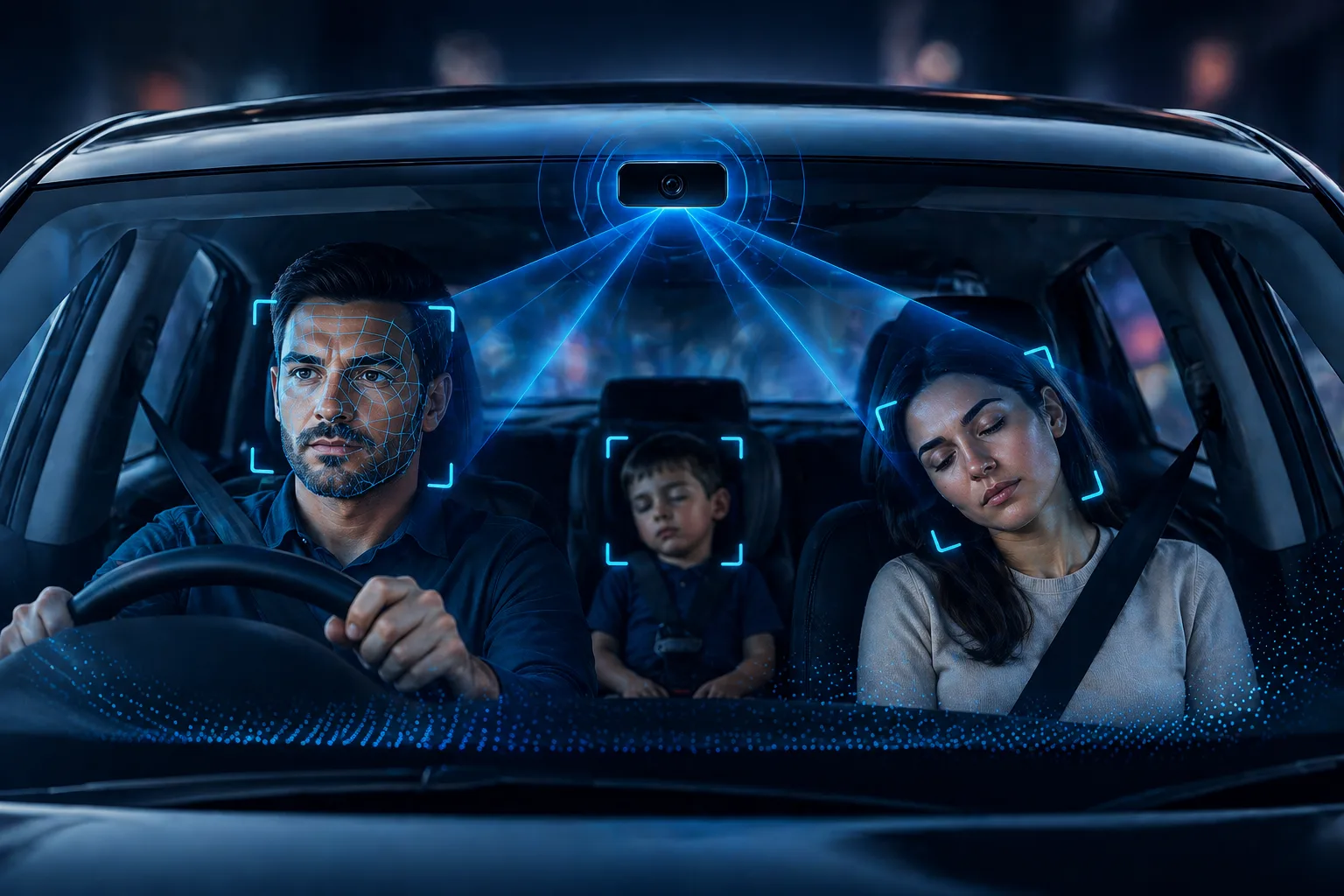
The automotive industry is evolving rapidly with smart safety technologies, artificial intelligence, connected systems, and advanced driver assistance features. Modern vehicles are no longer just machines for transportation. They are becoming intelligent systems designed to improve comfort, convenience, and most importantly, safety.
One of the latest innovations gaining attention in premium and next-generation vehicles is DOMS, which stands for Driver and Occupant Monitoring System. This technology has been highlighted in modern electric vehicles like the Mahindra XEV 9e, where advanced cabin intelligence plays a major role in user safety and driving experience.
DOMS is designed to monitor the driver’s alertness, behavior, and the presence of passengers inside the cabin. Using sensors, cameras, and artificial intelligence, the system can detect distraction, drowsiness, inattentiveness, and occupant status in real time.
In this guide, you will learn what DOMS is, how it works, key features, benefits, use cases, and why it is becoming essential in future vehicles.
What is DOMS?
DOMS stands for Driver and Occupant Monitoring System.
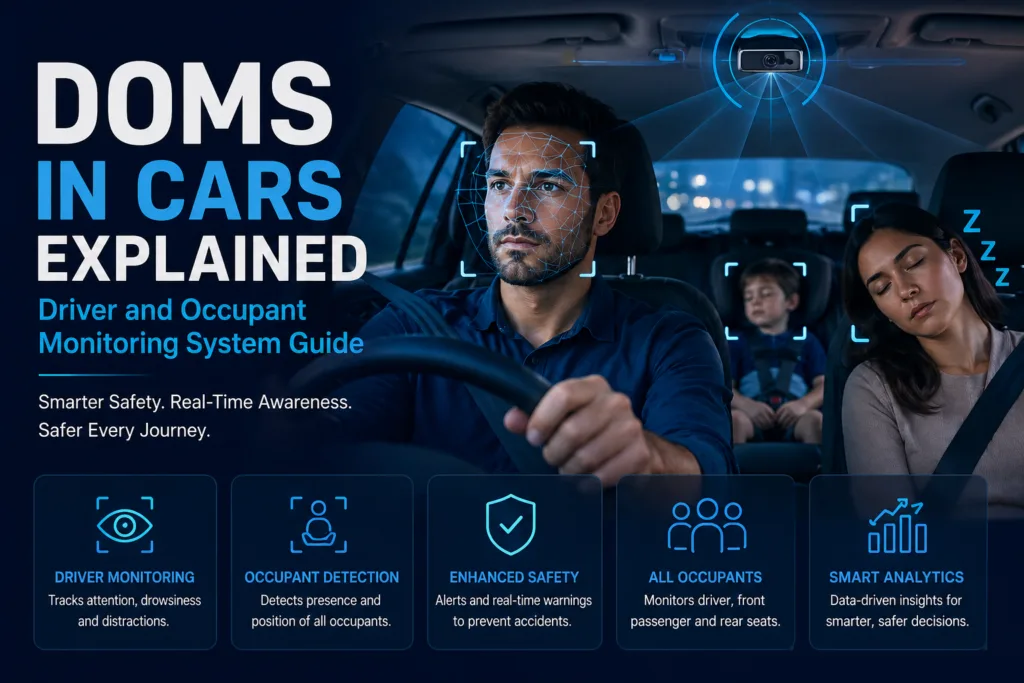
It is an intelligent in-cabin safety technology that continuously observes the driver and passengers using cameras, infrared sensors, radar sensors, and AI software.
The main purpose of DOMS is to improve road safety by:
- Monitoring driver attention
- Detecting fatigue or drowsiness
- Detecting distraction
- Monitoring occupant presence
- Enhancing airbag safety logic
- Improving seatbelt reminders
- Child presence alerts
- Personalized in-cabin experiences
DOMS is now becoming a key feature in premium vehicles and advanced EV platforms.
Why DOMS is Important in Modern Vehicles
Road accidents often happen because of human error. Common reasons include:
- Driver distraction
- Sleepiness while driving
- Using mobile phone while driving
- Looking away from road
- Sudden health issues
- Ignoring seatbelt safety
- Child left inside vehicle
Traditional safety systems like airbags and ABS help during accidents. But DOMS helps prevent accidents before they happen by monitoring real-time driver behavior.
That is why many automotive brands are investing heavily in Driver Monitoring Systems and Occupant Monitoring Systems.
How DOMS Works
DOMS typically combines hardware and software working together inside the cabin.
1. Cabin Camera System
A camera mounted near the dashboard, steering area, or rear-view mirror monitors facial movement, eye direction, head position, and posture.
2. Infrared Sensors
Infrared technology allows monitoring even in low light or night driving conditions.
3. AI Algorithms
Artificial intelligence analyzes:
- Eye closure rate
- Head tilt
- Gaze direction
- Hand movement
- Seat occupancy
- Passenger movement
4. Real-Time Alerts
If unsafe behavior is detected, the system may give:
- Audio warning
- Visual warning
- Seat vibration alert
- ADAS intervention support
Driver Monitoring Features of DOMS
1. Drowsiness Detection
If the system notices repeated blinking, eye closure, or sleepy posture, it can warn the driver to take a break.
This is highly useful during highway driving or long trips.
2. Distraction Detection
If the driver frequently looks away from the road, uses a phone, or loses attention, DOMS can alert them.
3. Head Position Monitoring
If the driver’s head is turned away for too long, the system recognizes inattentive driving.
4. Driver Presence Detection
Some advanced systems detect whether the driver is properly seated and ready to drive.
5. Health or Emergency Detection
Future systems may detect abnormal inactivity or possible driver distress.
Occupant Monitoring Features of DOMS
1. Passenger Presence Detection
DOMS can detect whether seats are occupied.
This helps with:
- Seatbelt reminders
- Smart airbag deployment
- Comfort controls
2. Child Presence Alert
One of the most important safety uses is detecting if a child or pet is left inside the vehicle.
The system can send alerts or activate warnings.
3. Smart Airbag Control
If the passenger seat is empty or occupied by a child, airbag deployment logic can adapt.
4. Cabin Security
Some systems can monitor cabin movement when parked.
DOMS in Mahindra XEV 9e
Mahindra has introduced advanced connected and intelligent features in new electric vehicles such as the Mahindra XEV 9e. DOMS is highlighted as part of the vehicle’s smart cabin technology.
This reflects how Indian automotive brands are moving toward global safety and premium technology standards.
In vehicles like the XEV 9e, DOMS supports:
- Intelligent driver alerts
- Occupant detection
- Premium digital cabin experience
- Safety enhancement systems
- Smart EV ecosystem integration
This positions Mahindra strongly in the modern EV market.
Benefits of DOMS in Vehicles
1. Better Road Safety
The biggest benefit is accident prevention through real-time driver attention monitoring.
2. Reduced Fatigue Driving Risks
Drivers often underestimate tiredness. DOMS helps recognize it early.
3. Enhanced Family Safety
Occupant monitoring improves child safety, seatbelt compliance, and airbag response.
4. Improved Insurance and Fleet Safety
Fleet companies may benefit from reduced accident risks.
5. Premium User Experience
Modern consumers now expect smart technology in vehicles.
DOMS vs Traditional Safety Features
| Feature | Traditional Safety | DOMS |
| Airbags | Protect during crash | Helps prevent crash |
| ABS | Improves braking | Monitors driver attention |
| Seatbelt Alarm | Basic reminder | Smart occupant alerts |
| Parking Sensors | External object detection | Internal cabin monitoring |
| Cameras | Road monitoring | Driver + passenger monitoring |
DOMS adds a new layer of proactive safety.
DOMS and ADAS Integration
DOMS works very well with ADAS (Advanced Driver Assistance Systems).
Examples:
- Lane keep assist with distracted driver alerts
- Adaptive cruise control with attention checks
- Emergency braking with inattentive driver warning
- Smart takeover alerts in semi-autonomous driving
This combination is shaping the future of mobility.
Why DOMS is Important for Electric Vehicles
Electric vehicles are usually technology-first platforms. Buyers expect:
- Smart screens
- AI systems
- Connected features
- Premium safety tech
That is why DOMS is especially common in EVs like the Mahindra XEV series and future intelligent cars.
Future of DOMS Technology
In coming years, DOMS may include:
- Emotion detection
- Stress monitoring
- Personalized seat settings by face recognition
- Driver identity verification
- Voice + face integrated controls
- Remote monitoring for fleets
- Semi-autonomous safety supervision
This will transform the car cabin into an intelligent digital space.
Is DOMS Useful in India?
Yes, DOMS can be highly valuable in India because:
- Long highway travel is common
- Driver fatigue can be risky
- Increasing focus on vehicle safety
- Family cars need occupant safety systems
- Premium EV adoption is rising
As Indian buyers become more safety-conscious, demand for such features will increase.
Challenges of DOMS
Like all new technologies, DOMS also faces some challenges:
- Higher vehicle cost
- Privacy concerns around cabin cameras
- False alerts in some conditions
- User adaptation time
- Dependence on sensor quality
However, as technology improves, these issues are reducing.
Should Buyers Consider DOMS?
If you are buying a premium modern vehicle, DOMS is definitely a valuable feature.
Especially useful for:
- Highway drivers
- Family buyers
- EV buyers
- Safety-conscious users
- Tech enthusiasts
It adds long-term value beyond just comfort.
Conclusion
DOMS, or Driver and Occupant Monitoring System, is one of the most important next-generation automotive safety technologies. It helps monitor the driver’s alertness, detect distraction or drowsiness, and improve passenger safety inside the cabin.
As seen in vehicles like the Mahindra XEV 9e, DOMS represents the shift toward intelligent, connected, and safer mobility. It does not just react after accidents—it helps reduce the chances of accidents happening in the first place.
With the growth of EVs, ADAS, and smart cars, DOMS is expected to become a standard feature in many future vehicles.
If you are planning to buy a modern vehicle, understanding features like DOMS can help you make a smarter and safer choice.
FAQs
1. What is DOMS in cars?
DOMS stands for Driver and Occupant Monitoring System.
2. What does DOMS do?
It monitors driver attention and passenger presence for safety.
3. Is DOMS available in Mahindra XEV 9e?
Yes, it is highlighted as part of the smart safety technology.
4. Can DOMS detect sleepiness?
Yes, many systems detect drowsiness and fatigue.
5. Does DOMS use cameras?
Yes, usually cabin cameras and sensors are used.
6. Is DOMS useful for families?
Yes, especially for child presence and occupant safety.
7. Is DOMS only for EV cars?
No, but it is more common in premium EVs and modern cars.
8. Will DOMS become common in future cars?
Yes, adoption is expected to grow rapidly.



0 Comments