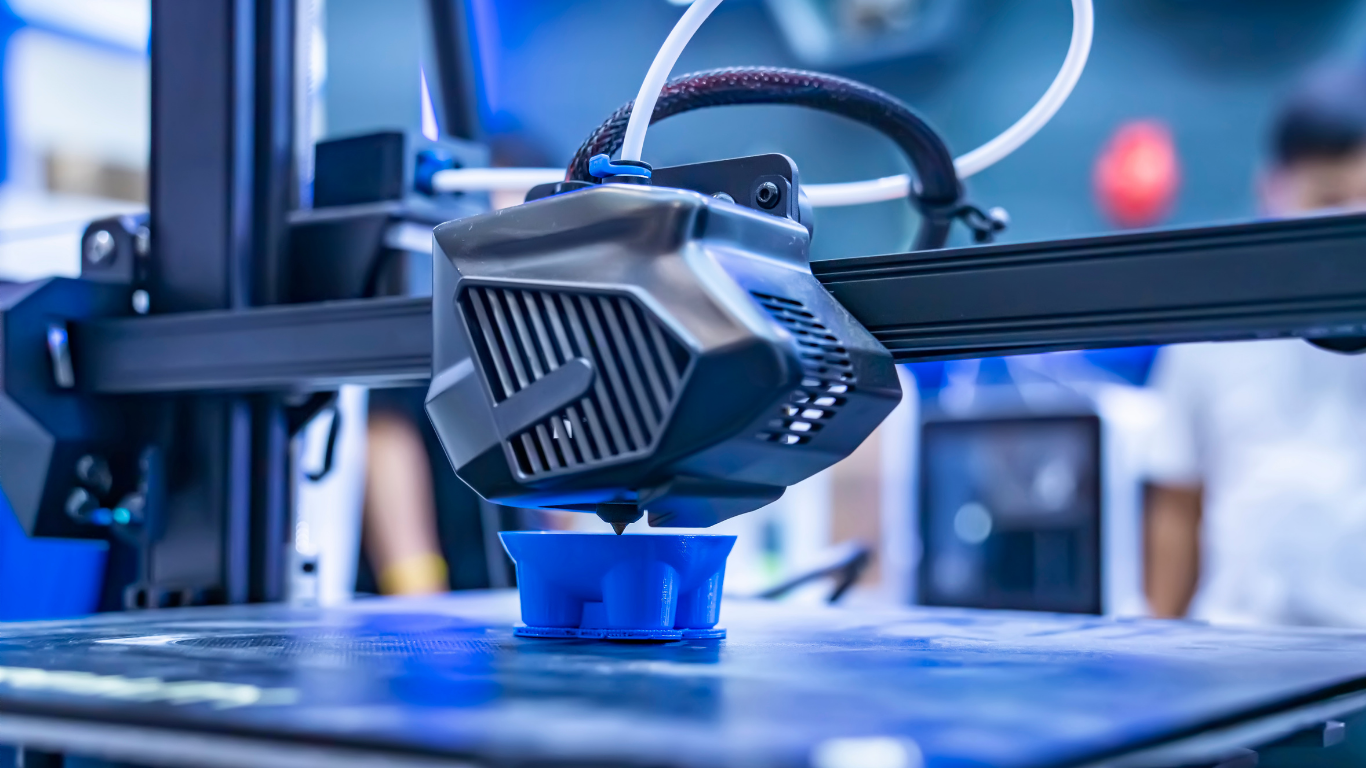
3D printing used to be for small toys. People also printed keychains. Decorative models were common too. By 2026, this perception is changing quickly.
3D printing has progressed beyond a pastime. It’s a practical manufacturing tool. It’s used in many fields. These include healthcare, automotive, aerospace, construction, and education. Small businesses also use it. Printers are not just getting faster. They are becoming easier to use. They are also smarter with AI. This allows them to produce genuine products, not just prototypes.
How do you envision the future of 3D printing in 2026? Let’s explore.
Why 2026 Is a Turning Point for 3D Printing
Not long ago, getting a 3D printer ready involved extensive calibration, dealing with unsuccessful prints, and becoming proficient in advanced software.
Modern printers today often include features such as the following:
• AI-assisted print monitoring
• Automatic bed leveling
• Multi-material printing
• Faster print speeds
• Better reliability
• Beginner-friendly software
Creators can thus dedicate more effort to product development rather than troubleshooting printers. The debate has switched from “Can I print this?” to “Can I sell this?”
A Real-Life Example
Consider yourself a small-business entrepreneur who sells desk accessories online.
In 2023, introducing a new product usually meant the following:
• Finding a manufacturer
• Ordering huge amounts
• Waiting weeks for production
• Investing substantial money beforehand
This implies reduced risk, faster testing, and increased innovation. For creators and businesspeople, this is one of the most significant benefits of modern 3D printing.
AI Is Making 3D Printing Smarter
One of the most important issues in 2026 is the integration of AI with 3D printing.
Instead of developing everything by hand, AI can now build basic printable 3D models, offer design changes, detect printing errors, and optimize prints before they ever start. AI-assisted processes are making it easier for novices while accelerating more seasoned designers.
This implies that even those with less CAD knowledge may begin producing useful items much more quickly.
Multi-Material Printing Is Becoming Mainstream
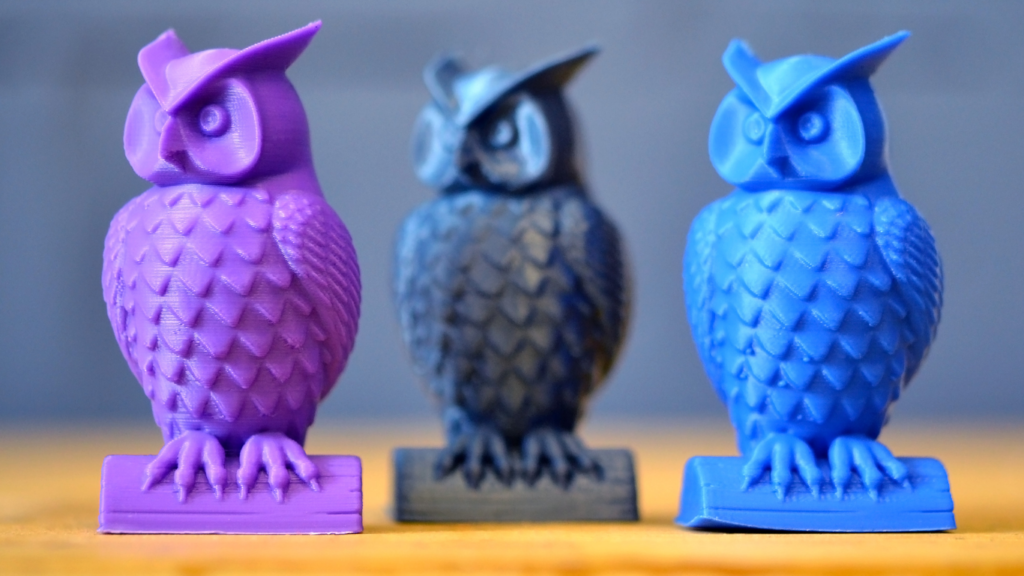
Previously, most home printers were limited to printing one material at a time. Modern machines can seamlessly swap between several colors and materials.
That opens many options, such as the following:
Flexible phone cases
Multi-colored figurines
Mechanical components that are functional
Complex engineering components
What was the result? Better goods need less physical labor.
Faster Printing Means Faster Business
Printing used to take all day. Modern high-speed printers can do several jobs in a few hours without sacrificing quality.
For companies, this implies:
Faster customer delivery
Faster product testing
Increased manufacturing capacity
Lower operational costs.
Instead of waiting days to test an idea, innovators may iterate several times in one day.
Sustainability Is Becoming a Priority
Another intriguing trend is the usage of eco-friendly materials. Manufacturers are experimenting with:
Recycled plastic
Bio-based materials
Recycled glass.
Manufacturing techniques that generate little waste
Because 3D printing creates products layer by layer, it frequently generates less waste than traditional production. New materials derived from recycled resources are increasing their environmental advantages.
Beyond Plastic: Printing Functional Products
3D printing is no longer just for plastic items. Researchers and corporations are currently working with:
Materials used include metals, ceramics, concrete, and medical implants.
Electronic components
Some research groups have even exhibited 3D-printed functioning electric motors and complex robotic components, demonstrating how additive manufacturing is progressing beyond prototypes to actual hardware.
Leading Consumer and Prosumer 3D Printers Shaping the Future in 2026
The new generation of 3D printers isn’t merely competing on speed. Manufacturers are currently focused on AI-powered print monitoring, automated calibration, enclosed printing for advanced materials, multi-color capabilities, and simple software. These advancements make 3D printing more accessible to beginners while also allowing pros to produce high-quality objects faster than ever before.
These are some of the most popular FDM 3D printers for 2026, serving amateurs, content producers, engineers, and large-scale manufacturers. While consumer models prioritize price and ease of use, prosumer and professional printers include sophisticated capabilities, higher build volumes, and support for engineering-grade materials, making them ideal for commercial and industrial applications.
Creality K2 Plus: Designed for Large, Multi-Color Projects
The Creality K2 Plus is an advanced CoreXY 3D printer with a big build capacity, fast printing speeds, and multi-color printing capabilities. This allows makers and small enterprises to produce bigger prototypes and functional parts while preserving print quality. Its enclosed form is ideal for technical materials like ABS and ASA.
Prusa CORE One: Precision Meets Reliability
The Prusa CORE One combines dependability with a new CoreXY motion technology to produce speedier prints. It is designed for professionals, educators, and amateurs, with encounters excellent quality of printing, an enclosed build chamber, and strong material support. Its open-source environment and consistent performance appeal to those who value long-term dependability.
Anycubic Kobra S1 Combo: Affordable Multi-Color Printing
The Anycubic Kobra S1 Combo provides superior features like automated bed leveling and enclosed printing at a low cost, making it perfect for beginners and enthusiasts. With quick print rates and simple software, it is a fantastic choice for everyday 3D printing jobs.
Elegoo Centauri Carbon: Built for Speed and Advanced Materials
The Elegoo Centauri Carbon is designed for high-speed printing using carbon fiber-reinforced and engineering-grade filaments. Its sturdy CoreXY frame, enclosed chamber, and durable parts make it suitable for functional prototypes and industrial applications, providing a high-performance solution for professionals looking for advanced capabilities without paying a premium.
Raise3D Pro3 HS: Industrial-Grade Production
The Raise3D Pro3 HS is a professional 3D printer designed for high-volume, continuous manufacturing.Its twin extrusion, wide build volume, and support for sophisticated materials make it perfect for industrial prototypes and production.
UltiMaker S8: Enterprise-Level Performance
The UltiMaker S8 is a high-end 3D printer recognized for its dependability, dual-material printing capabilities, and compatibility with engineering filaments. It is commonly utilized in manufacturing, healthcare, education, and product development.
FLSUN V400: Fast and Large-Format Printing
The FLSUN V400 is a high-speed delta 3D printer with a big building capacity of 300 × 410 mm. It is ideal for printing tall items such as helmets, vases, and cosplay props, making it a popular choice among innovators and small businesses.
Bambu Lab: Smart and Easy to Use
Bambu Lab printers, such as the P1S and X1 Carbon, are noted for their rapid printing, automated calibration, and AI-assisted monitoring, plus additional multi-color printing with the AMS. They provide outstanding print quality or require minimum setup, making them ideal for both beginners and experts.
| 3D Printer | Category | Best For |
| Bambu Lab P1S / X1 Carbon | Consumer / Prosumer | Beginners, creators, small businesses |
| FLSUN V400 | Consumer / Prosumer | Large-format printing, cosplay, home décor |
| Creality K2 Plus | Consumer / Prosumer | Large multi-color prints and advanced makers |
| Prusa CORE One | Prosumer | Professionals, educators, engineering enthusiasts |
| Anycubic Kobra S1 Combo | Consumer | Beginners and hobbyists |
| Elegoo Centauri Carbon | Prosumer | Engineering parts and advanced materials |
| Raise3D Pro3 HS | Professional / Industrial | Manufacturing and production environments |
| UltiMaker S8 | Professional / Industrial | Businesses, healthcare, education, product development |
The Future Beyond 2026
Industry leaders are rapidly acknowledging that 3D printing is transitioning from a novelty to a staple of production infrastructure. Instead of just raising machine speed, the emphasis is now on increasing dependability, scalability, software integration, and AI-driven processes.
AI-assisted design of printed goods, on-demand manufacturing in local businesses, personalized consumer products, more sustainable production processes, and dispersed manufacturing near clients are among the anticipated advances. This move might allow businesses to provide digital files for local manufacture rather than physically transporting things around the world.
The future of 3D printing goes beyond just generating items; it is poised to alter the whole product lifecycle, from design to manufacture and distribution. For artists, this technology offers an opportunity to start enterprises without the need for traditional manufacturing. Businesses will profit from speedier innovation processes, while customers should expect more tailored goods, shorter delivery times, and less waste. As AI changed digital labor in 2025, 2026 seems to be the year when 3D printing reshapes physical production.
FAQs
1. What is the future of 3D printing in 2026?
In 2026, 3D printing will be more AI-powered, quicker, more reliable, and it will be utilized to manufacture end-use things rather than prototypes.
2. Is 3D printing a good business in 2026?
Yes, especially if you prioritize original ideas, specialized items, and bespoke production over competing simply on commodity printing.
3. How is AI changing 3D printing?
AI helps produce designs, improve models, check print quality, and streamline operations, making 3D printing more accessible to both beginners and pros.
4. Can beginners start using 3D printers in 2026?
Yes. Modern printers are substantially easier to operate because of automated calibration, AI-assisted monitoring, and user-friendly software.
5. Which type of 3D printer is best for beginners?
FDM 3D printers are ideal for beginners since they are inexpensive, simple to use, and compatible with a variety of materials such as PLA and PETG. Popular models for beginners include the Bambu Lab P1S, Anycubic Kobra S1 Combo, and Creality K2 Plus.
6. Which 3D printer is best for professional use?
Professional customers frequently prefer printers such as the UltiMaker S8, Raise3D Pro3 HS, or Prusa CORE One reason is its increased dependability, support for engineering-grade materials, and sophisticated capabilities appropriate for business and production.
7. Can modern 3D printers print in multiple colors?
Yes. Many current 3D printers now allow multi-color printing with autonomous material systems. Models like the Bambu Lab X1 Carbon, Creality K2 Plus, and Anycubic Kobra S1 Combo can print in many colors without requiring manual filament changes.
8. What materials can a 3D printer use?
Common materials used in printers include PLA, PETG, ABS, TPU, nylon, ASA, carbon fiber composites, and different technical filaments. Resin printers employ liquid photopolymer resin instead of filament, whereas industrial printers may print in metals such as stainless steel and titanium.
9. Which type of 3D printer is best for small businesses?
For small enterprises, FDM CoreXY printers provide the optimum combination of speed, quality, and cost. Models including the Bambu Lab P1S, Creality K2 Plus, and Prusa CORE One is ideal for quick prototyping, product development, and low-volume production.
10. Are 3D printers worth buying in 2026?
Yes. Modern 3D printers are quicker, more dependable, and simpler to use than ever before. Whether you’re a hobbyist, content creator, engineer, or business owner, purchasing a 3D printer may help you save money on prototyping, expedite production, and open up new creative possibilities.